Repair guide
Water heater leaking
Updated 30 Sep 2026 · AR Logic LLC · 3 sources
Act today — water spreads
Where the water comes from decides everything. A leak from a pipe fitting on top, the drain valve at the bottom or the relief-valve pipe can usually be repaired; water seeping from the tank itself, or a rusty wet base with no other source, means the tank has corroded through and the heater needs replacing. Either way, turn off the cold-water supply valve and the heater’s power or gas first.
Is a leaking water heater an emergency?
A pool of water around the tank is urgent, and an emergency if it is spreading, reaching outlets or the panel, or coming through a ceiling. Turn off the cold-water valve on top of the heater and its power (breaker) or gas (valve to “off” or “pilot”). If you smell gas, leave and call the gas company or 911 from outside.
Snap a photo — see what it is, how urgent, who to call.
One photo of the problem. fixRAgent reads it and gives you a Triage Profile.
Triage a photo nowNo sign-up.
Take the photo. We’ll tell you what it is.
No sign-up · AR Logic LLC · Privacy
Managing this for someone else? Managers: set it up for your buildings →
Managing this for someone else? There is a version of this for whole portfolios.
Managers: set it up for your buildings →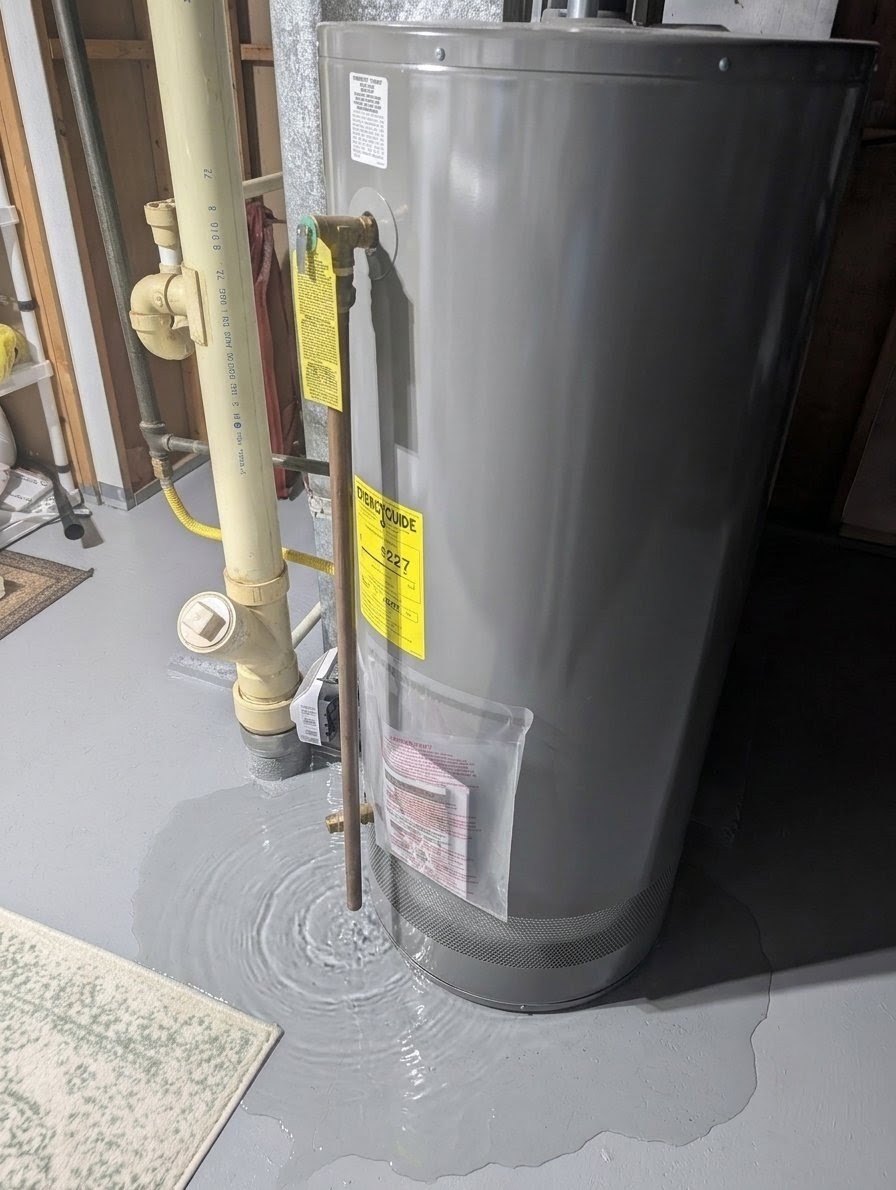
A real Triage Profile for this photo
- Reported
- “water on the floor around the water heater”
- What it is
- Gas water heater
- How urgent
- Emergency
- Who to call
- Plumber
A substantial pool of water around the base of the tank — an active, continuous leak.
Photo from a building we own. Read by fixRAgent on 30 Sep 2026; 3 of 3 independent reads agreed. Open this Triage Profile
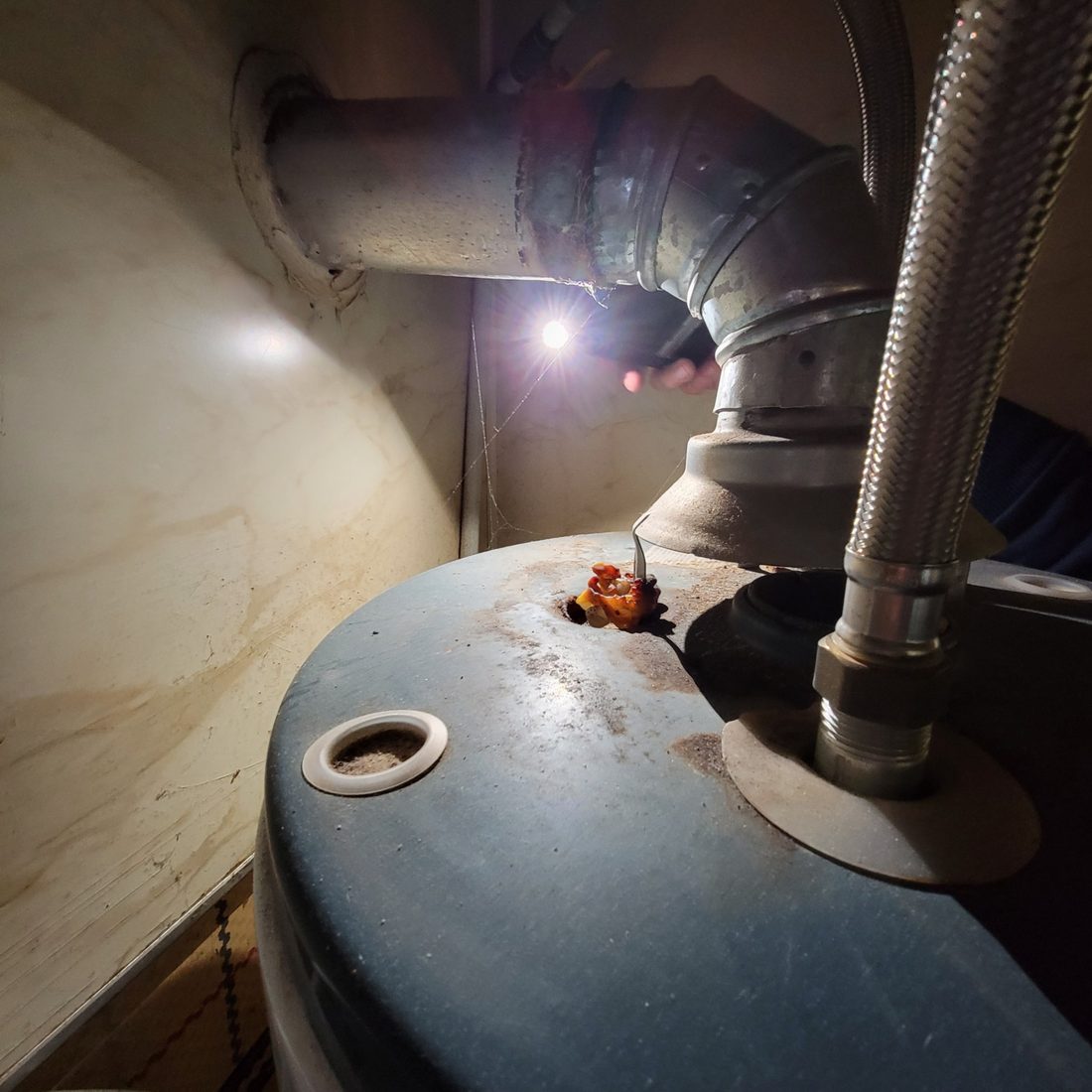
A real Triage Profile for this photo
- Reported
- “rust and water on top of the water heater”
- What it is
- Gas water heater
- How urgent
- Today
- Who to call
- Plumber
Rust and debris around the flue connection and draft diverter; a latent venting concern, no active life-safety emergency.
Photo from a building we own. Read by fixRAgent on 30 Sep 2026; 3 of 3 independent reads agreed. Open this Triage Profile
What to check, in order
Shut it down
Close the cold-water inlet valve on top of the heater. Switch off the breaker (electric) or turn the gas control to “off” or “pilot” (gas).
Relief-valve discharge pipe
The pipe running down the side from the temperature-and-pressure (T&P) valve should be dry. Water from it can mean the water is too hot, the pressure is too high — often thermal expansion in a closed system — or the valve itself is failing [1][2].
Drain valve at the bottom
A drip from the drain spout may just be a valve not closed fully; a leak where it threads into the tank is the fitting [2].
Fittings on top
Water on top of the tank usually comes from the inlet or outlet connections, the anode fitting or the relief valve threads, and runs down the side [2]. Rust around the top is a sign it has been happening for a while.
Condensation versus a leak
A gas heater can drip condensation on first firing with cold incoming water; it stops as the tank warms. A steady puddle is not condensation.
The tank itself
If none of the above is wet and water appears under the tank, the tank has leaked from inside. It cannot be repaired; the heater has to be replaced.
By brand
Safety first
- Do not stand in water to reach a breaker or the heater’s controls; if the floor at the panel is wet, call an electrician or the utility.
- Water from the heater can scald — let it cool before touching fittings.
- Keep water away from the heater’s wiring and the panel; switch off power first.
- Never plug or cap the relief-valve pipe.
When to call a pro
Call a plumber if the tank itself is leaking, the relief valve keeps discharging, or you cannot stop the water with the cold-inlet valve.
What to photograph
For the Triage Profile, photograph the whole heater from the floor up with the puddle in view, then close-ups of the top fittings and the relief-valve pipe. One clear photo in good light is enough; the Triage Profile says what it is, how urgent it is (emergency, today, this week or whenever), and which trade to call.
Questions people ask
Why is my water heater leaking from the top?
Usually a loose or corroded inlet or outlet fitting, the anode fitting or the relief valve threads — not the tank [2].
Can I keep using it with a small leak?
Only if the leak is from a fitting you have tightened. A leaking tank can fail without warning.
Sources
Not sure what you’re looking at?
Snap a photo of it. The Triage Profile says what it is, how urgent it is, and who to call.