

Water Heater Problems: Fixing No Hot Water & Leaks
Show us the water heater.
Snap a photo — see what it is, how urgent, who to call. One photo of the problem. fixRAgent reads it and gives you a Triage Profile.
Is a water heater problem an emergency? If you smell gas, or the relief valve is spraying or the tank is hissing loudly, leave and call 911 or the gas company from outside. Water pooling from the tank: turn off its cold-water supply and its power or gas. No hot water on its own is not an emergency.
Or say it in a sentence
AR Logic LLC · Privacy · Managing this for someone else? There is a version of this for whole portfolios. Managers: set it up for your buildings →
What Causes No Hot Water and Water Heater Leaks?
A water heater without hot water or actively leaking can leave your household without comfort and risk water damage to your home. Quick diagnosis is essential to prevent costly repairs or tank replacement.
The most common causes of no hot water and leaking water heaters are a faulty thermostat, sediment buildup in the tank, a broken heating element (electric) or gas pilot light (gas), a failed pressure relief valve, and corroded tank walls causing leaks. The specific cause depends on your water heater type and age, but all require proper diagnosis to avoid further water damage or safety hazards.
Faulty Thermostat or Temperature Control
The thermostat regulates water temperature and can fail over time, preventing the heating element from activating. Signs include water that's lukewarm or cold despite the thermostat being set high, no audible heating sounds, and the issue developing gradually over weeks. This is moderately severe—your heater isn't damaged, but you have no hot water until it's replaced.
Sediment Buildup in Tank
Mineral deposits accumulate at the tank bottom, insulating the heating element and reducing efficiency. You'll notice hot water taking longer to arrive, popping or rumbling sounds from the tank, rust-colored water, and reduced water temperature overall. Sediment buildup is common in hard-water areas and develops slowly; it's preventable with annual flushing but worsens if ignored.
Failed Heating Element (Electric) or Pilot Light (Gas)
Electric heaters rely on immersion heating elements that burn out; gas heaters need a lit pilot flame to ignite the burner. If your electric heater produces no heat and you see no indicator light, the element has failed. Gas heaters with an out pilot light won't heat at all; you'll see no flame through the viewing window. Both require component replacement and are moderately severe—you have zero hot water immediately.
Failed Pressure Relief Valve
This safety valve vents excess pressure and temperature; if it fails, pressure builds inside the tank, causing leaks at the valve opening (often at the drain pipe near the bottom). You'll see active dripping or pooling water, a hissing sound, or water spraying from the valve. This is a serious issue—the tank is under dangerously high pressure and needs immediate attention to avoid rupture.
Corroded Tank Walls or Connections
Internal rust or external corrosion at seams, fittings, or the tank base creates slow leaks. Rust-colored water, visible water pooling under the tank, wet spots on floors nearby, and discoloration on the exterior indicate corrosion. Tank corrosion is severe—it signals the tank's structural failure, and leaks will worsen rapidly, eventually requiring full replacement.
Everything else about water heater problems
How to Diagnose Water Heater Problems With AI
The fastest diagnosis method is uploading a photo to fixRAgent's AI tool. The AI will analyze:
- Visible rust, corrosion, or water stains on the tank exterior and connections
- Type and location of leaks—dripping valve, pooling base, seeping seams
- Pressure relief valve status and any active water discharge
- Sediment or discoloration around drain valves indicating internal buildup
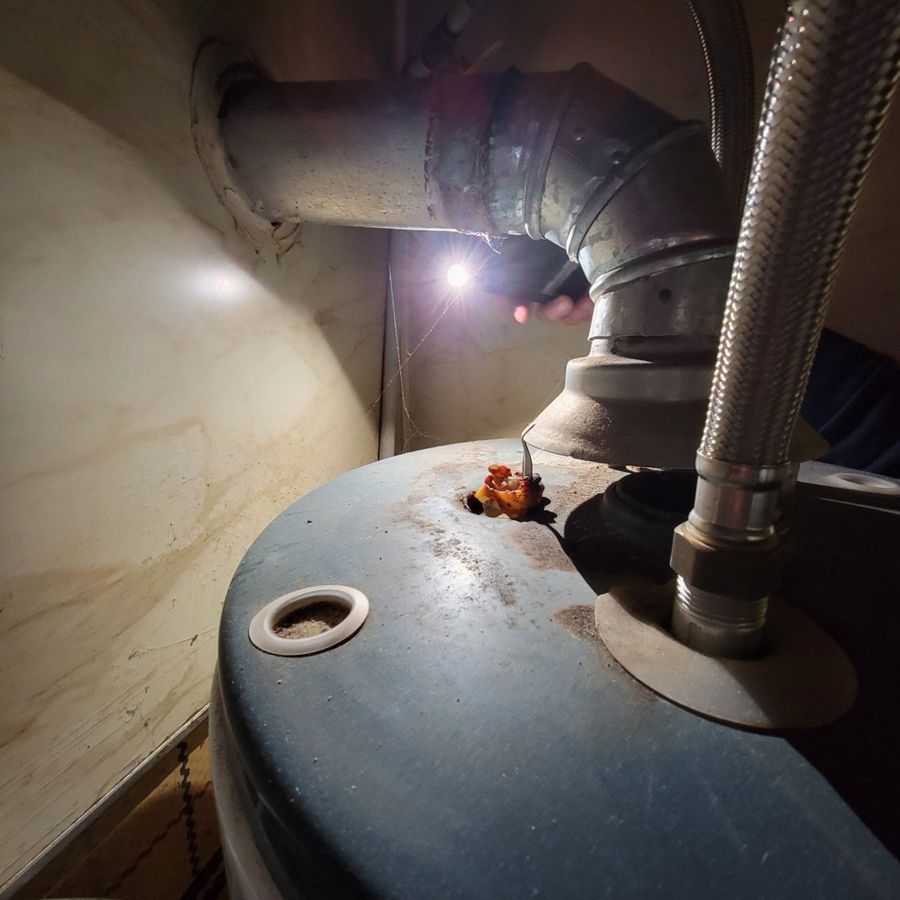
- Pilot light status (gas heaters) or heating element visibility (electric heaters)
For best results, take photos in natural light showing the full tank, any pooling water, the valve area, and pipe connections.
Upload your photo in the box at the top of this page and get an AI diagnosis—right on this page.
DIY Repair: Step-by-Step
DIY is appropriate only for simple fixes like relighting a gas pilot light, resetting a tripped breaker on electric heaters, or flushing sediment buildup. Do not attempt to replace the pressure relief valve, heating elements, or repair active leaks without professional help. If your tank is actively leaking or you smell gas, skip repairs and call a professional immediately.
What you'll need
- Flashlight or headlamp to see pilot light area clearly
- Long-handled lighter or matches (for relighting pilot light)
- Adjustable wrench (for flushing sediment)
- Bucket (for capturing sediment-filled water)
- Thermometer (optional, to verify water temperature)
Steps
- 1
Check the pilot light (gas heaters)
Look through the viewing window at the tank base. If there's no blue flame, the pilot is out. Turn the control knob to "Pilot," press and hold the ignition button while holding a lit lighter or match near the pilot burner opening. Hold for 30 seconds after it ignites. If it won't stay lit, a thermocouple has likely failed—call a professional.
- 2
Check the breaker (electric heaters)
Go to your electrical panel and verify the breaker serving the water heater is in the ON position. If it's tripped (switched to OFF), reset it by flipping it fully off, then back on. If it trips again immediately, an electrical fault exists—call a licensed electrician.
- 3
Flush sediment from the tank
Turn off the heater at the thermostat or breaker. Allow water to cool for 30 minutes. Attach a garden hose to the drain valve (faucet-like valve at the tank base) and run the other end into a bucket outdoors or a floor drain. Open the valve slowly and let 5-10 gallons drain. You may see brown, sandy water—this is sediment. Close the valve when water runs clear.
- 4
Test water temperature
After any repair, turn the heater back on (relight pilot or reset breaker). Wait 15-20 minutes for a gas heater or 30 minutes for electric. Run hot water at a nearby faucet and use a thermometer to verify it reaches 120°F. If it doesn't heat, the heating element or thermostat has failed—professional replacement is needed.
- 5
Inspect for active leaks
Place a bucket or towels under the tank and relief valve. If water pools within 1 hour, leaks are active. Do not continue using the heater; stop and call a plumber immediately.
Water inside the tank is extremely hot (120-140°F) and can cause severe burns. Never open the drain valve rapidly or attempt to drain the entire tank without allowing water to cool first. Do not attempt to replace the pressure relief valve yourself—a failed valve is under high pressure and can rupture. If you smell gas near a gas water heater, evacuate immediately and call your gas company and a professional plumber—never attempt repairs.
When to Call a Professional
Call a licensed plumber immediately if:
- Water is actively leaking from the tank base, seams, or relief valve and dripping into a bucket or pooling on the floor
- The tank is making loud banging, rumbling, or popping noises that don't stop after flushing sediment
- You smell gas near the heater, see no pilot light, or the pilot won't stay lit after relighting
- Hot water temperature is inconsistent or completely absent after checking the pilot light and breaker
- Water is rusty, discolored, or has a metallic smell (indicating internal corrosion)
- The pressure relief valve is leaking continuously or spraying water
- Your water heater is over 10 years old and showing signs of corrosion or multiple failures
Professional water heater repairs average $150–$300 for component replacement (thermostat, relief valve, heating element), while a full tank replacement ranges from $800–$2,500 depending on tank size and fuel type.
Frequently Asked Questions
Can I use my water heater if it's leaking slightly?
No. Even small leaks indicate internal pressure or corrosion problems that will worsen rapidly. Using a leaking heater risks water damage to floors, nearby drywall, and electrical systems. Stop using it and call a plumber immediately. A slow leak that's addressed today could prevent a burst tank tomorrow.
How long does a water heater typically last?
Most water heaters last 8–12 years with regular maintenance (annual flushing). Hard-water areas see failures as early as 5–7 years due to sediment buildup. If your heater is approaching 10 years old and showing problems, replacement is often more economical than repair.
Why is my water heater making noise?
Popping, rumbling, or banging sounds are almost always caused by sediment buildup on the tank bottom. As the heating element heats sediment pockets, they burst and cause noise. Flush the tank as described above. If noise continues after flushing, the heating element may be failing and needs professional inspection.
What's the difference between a gas and electric water heater problem?
Gas heaters rely on a pilot light and burner; if you see no pilot flame or the burner won't ignite, relight the pilot or call a plumber if it won't stay lit. Electric heaters depend on an immersion heating element powered by a dedicated breaker; if the breaker is tripped or the element fails, you have no heat. Both can develop sediment, leaks, and relief valve issues the same way.
Related problems
Not sure what you’re looking at?
Snap a photo of it. The Triage Profile says what it is, how urgent it is, and who to call.