

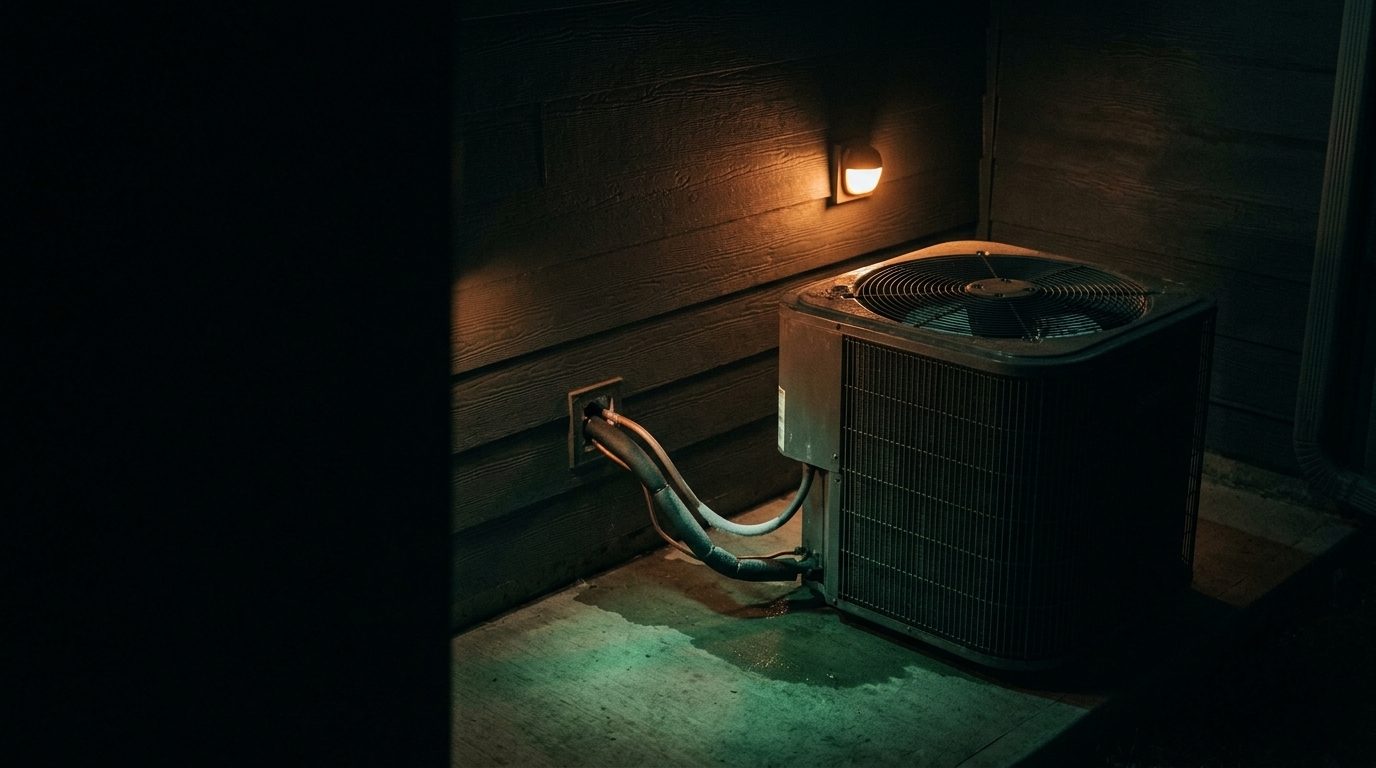
Kenmore HVAC: Making Loud Noise
Often a failing blower or condenser-fan motor, a worn belt, or a struggling compressor. Add a photo of your Kenmore HVAC in the box below: the Triage Profile says what it is, how urgent it is, and who to call.
Show us the system.
Snap a photo — see what it is, how urgent, who to call. One photo of the problem. fixRAgent reads it and gives you a Triage Profile.
Or start with a sentence
AR Logic LLC · Privacy · Managing this for someone else? There is a version of this for whole portfolios. Managers: set it up for your buildings →
In the next five minutes
Safe first steps, before the call. Nothing here needs a tool.
Note what the noise sounds like and when it happens, then switch the system off at the thermostat and at its breaker.
Take a photo of the unit and the thermostat, without opening anything.
Don’t use it again until it’s checked, and keep people away from it.
Everything else about this problem
Is it an emergency?
Is a loud noise from a Kenmore HVAC system an emergency?
Usually not, but it can be. A grinding, rattling or humming that has just started most often comes from a fan, motor, belt or loose panel. Stop using it and cut the power if the noise comes with a burning smell, smoke or sparks; if it runs on gas and you smell gas, leave and call the gas company or 911 from outside.
Symptoms & causes
Loud noises from your Kenmore HVAC unit can manifest as grinding, squealing, banging, or rattling sounds, often indicating mechanical wear or loose components. Grinding or squealing typically points to failing motor bearings in either the outdoor condenser fan or indoor blower, while banging or clunking might suggest a loose fan blade or a struggling compressor. These sounds are critical indicators that parts are either worn out, misaligned, or encountering obstructions, potentially leading to system failure if not addressed promptly.
Tools & parts
To track down and potentially fix loud noises, you'll need basic tools like a screwdriver set, a multimeter for electrical checks, and a wrench for tightening loose bolts. Common Kenmore HVAC parts that might need replacement include a fan motor, a run capacitor, or a new fan blade. For more severe issues, a compressor replacement may be needed, which takes specialized tools and expertise.
Safety first
Always begin by completely shutting off power to your Kenmore HVAC unit at both the thermostat and the main electrical breaker to prevent accidental startup and electrical shock. Be aware of sharp metal edges inside the unit and wear sturdy work gloves and eye protection to prevent injuries from moving parts or debris. Never attempt to work on the compressor or refrigerant lines without proper training and certification, as these components pose significant electrical and chemical hazards.
When to call a pro
If your Kenmore HVAC unit exhibits a persistent loud grinding noise accompanied by a burning smell, it often indicates a severely failing compressor or a locked rotor, which requires professional intervention. Complex electrical issues, such as a shorted motor winding or a faulty control board, are best identified and repaired by a certified technician due to the high voltage involved and the need for specialized testing equipment. Additionally, any suspected refrigerant leak, characterized by a hissing sound or ice buildup, demands a professional HVAC technician for safe and compliant repair and recharging.
Questions people ask
What if the noise is a high-pitched squeal?
A high-pitched squeal from your Kenmore HVAC unit often indicates a failing fan motor bearing in either the outdoor condenser or indoor blower unit. This requires lubrication if possible, or more likely, replacement of the entire fan motor assembly to resolve the issue.
What if I hear a banging or clunking sound?
Banging or clunking sounds typically point to a loose fan blade hitting the housing, debris inside the unit, or a failing compressor struggling to start or run. First, inspect the fan blades for any obstructions or looseness, then consider if the compressor is the source of the more serious noise.
Can a dirty filter cause loud noises?
While a dirty filter doesn't directly cause loud mechanical noises, a severely clogged filter can restrict airflow significantly, forcing the blower motor to work harder. This increased strain can lead to the motor overheating and eventually developing unusual sounds as its components wear out prematurely.
Related problems
More Kenmore HVAC system problems
Check another symptom for your Kenmore HVAC.
Making a loud noise: other brands
Guides and hubs
A resident sent you this?
What a property manager should do when a resident reports AC not cooling: the first message, how urgent, who to send.
The manager’s checklist →Ask AI about this problem
What it is, how urgent, who to call
Add a photo of your Kenmore HVAC in the box at the top. The Triage Profile says what it is, how urgent it is, and who to call.