

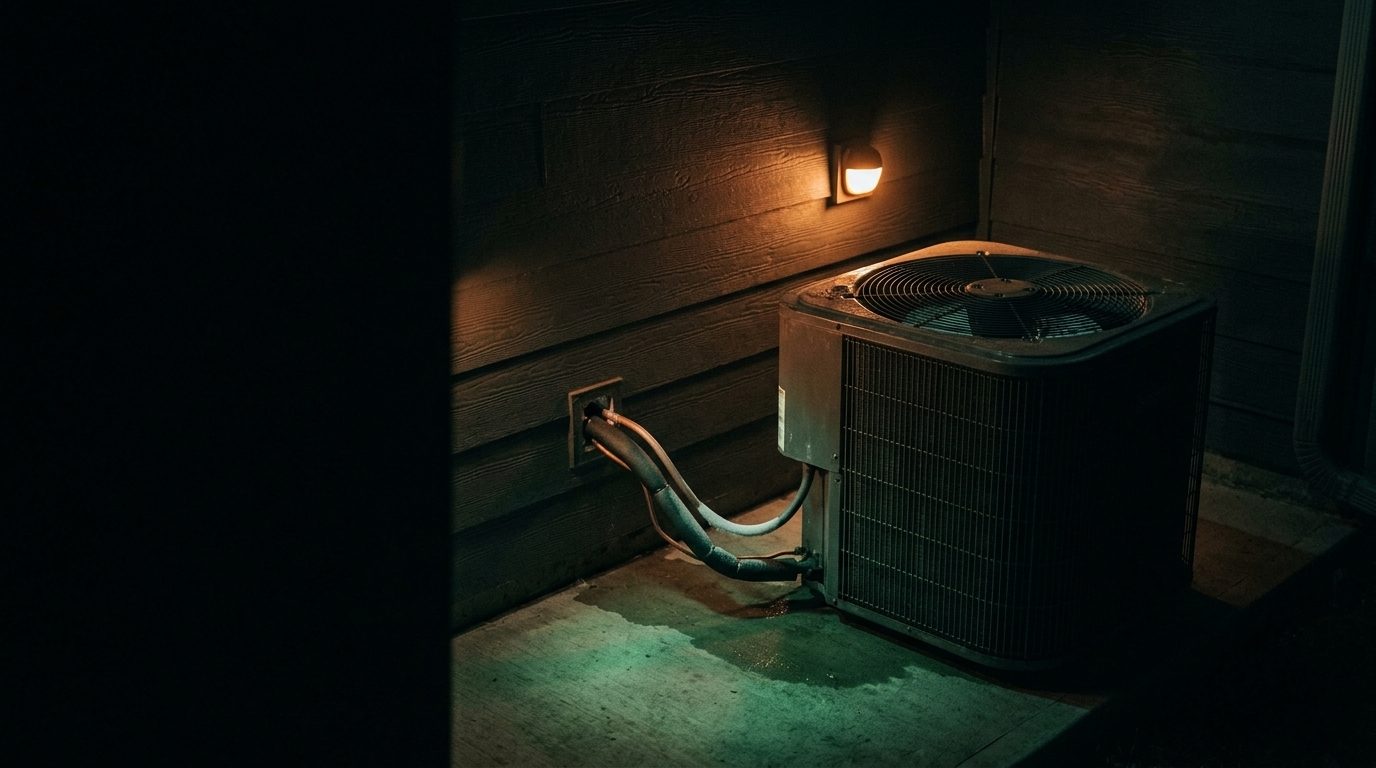
HVAC Not Cooling — Photo Triage Guide for Homeowners
Show us the AC unit.
Snap a photo — see what it is, how urgent, who to call. One photo of the problem. fixRAgent reads it and gives you a Triage Profile.
Or say it in a sentence
AR Logic LLC · Privacy · Managing this for someone else? There is a version of this for whole portfolios. Managers: set it up for your buildings →
What Causes HVAC Not Cooling?
Your air conditioner stopped blowing cold air, and you need answers fast. Whether it's a simple fix or something more serious, we'll help you understand what's happening before you call a technician.
The five most common reasons your AC stops blowing cold air are: a dirty or clogged air filter, low refrigerant levels, a frozen evaporator coil, a faulty compressor capacitor, or an issue with the thermostat settings or wiring. Most of these can be identified visually or with basic troubleshooting in under 10 minutes. The good news: several are DIY-fixable; others require professional service.
Dirty or Clogged Air Filter
A blocked air filter is the #1 cause of poor cooling. When the filter is dirty, it restricts airflow through your system, making the evaporator coil work harder and potentially freezing over. You can identify this visually—hold the filter up to light, and if you can't see through it, it's too clogged.
Low Refrigerant Charge
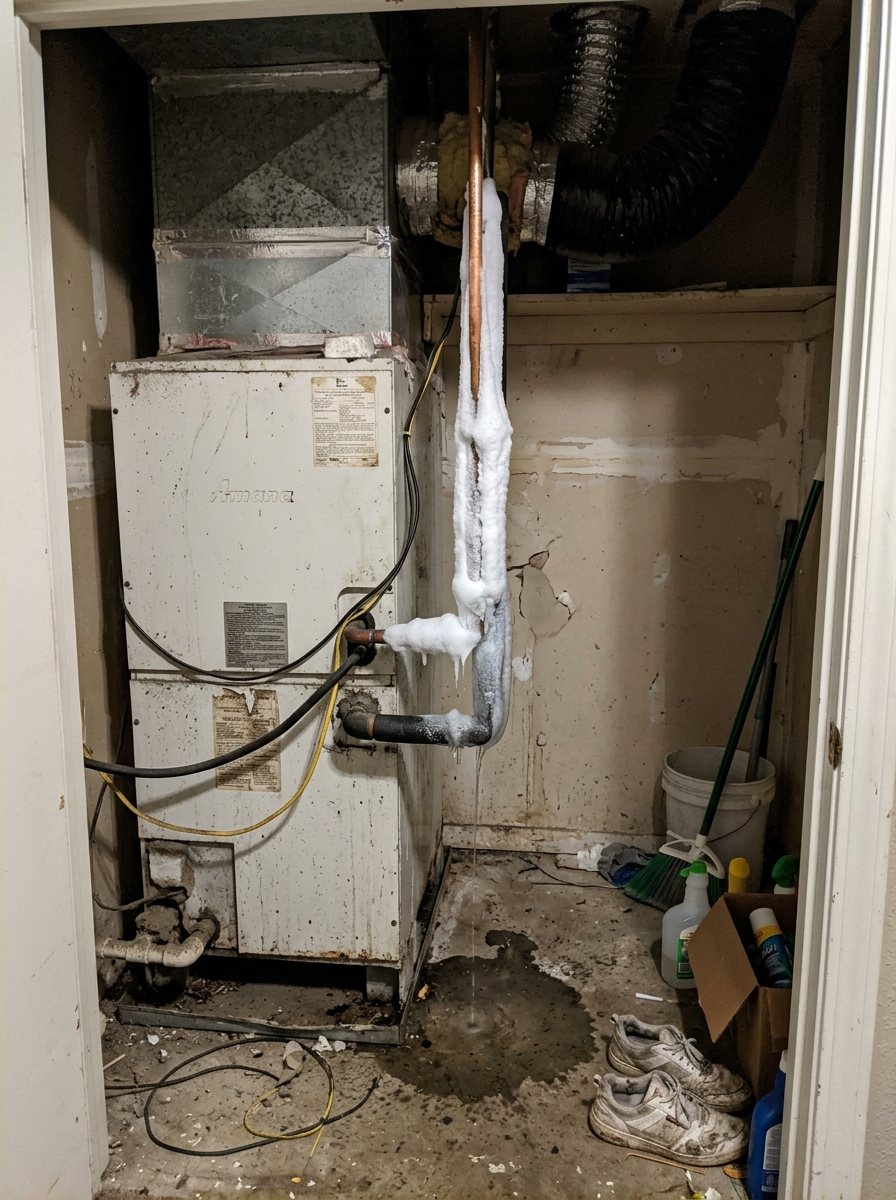
Refrigerant is the fluid that cools your air. If levels drop due to a leak, your AC won't cool properly—or at all. Signs include ice buildup on the outdoor unit's copper lines, hissing sounds, or warm air from vents.
Frozen Evaporator Coil
A frozen coil happens when moisture inside the indoor unit freezes, blocking cold air circulation. Common causes are restricted airflow (dirty filter) or low refrigerant. Visually, you may see ice on the indoor unit or refrigerant lines.
Faulty AC Capacitor
The capacitor is an electrical component that starts and runs your compressor. When it fails, the compressor won't turn on, and your system blows warm air. Signs include a humming sound from the outdoor unit but no compressor kick-in, or a burnt smell.
Thermostat Issues
Sometimes the problem is simpler than you think: the thermostat is set incorrectly, the batteries are dead, or the wiring is loose. Check that the setting is "Cool" (not "Heat" or "Off"), the temperature setpoint is lower than the current room temp, and the display is lit.
Everything else about an AC that won’t cool
How to Diagnose HVAC Not Cooling With AI
The fastest diagnosis method is uploading a photo to fixRAgent. The AI will analyze:
- Visible ice or frost buildup on indoor or outdoor coils and refrigerant lines
- The condition of your air filter (dust, blockage, color degradation)
- Thermostat display settings and wiring connections
- Physical damage, rust, or corrosion on the outdoor unit
- Visible leaks, hissing evidence, or burnt component marks
For best results, take clear photos in natural light showing the thermostat screen, the indoor filter/coil area, and the outdoor unit from multiple angles.
Upload your photos in the box at the top of this page. No sign-up.
DIY Repair: Step-by-Step
DIY is appropriate for filter replacement, thermostat troubleshooting, and thawing a frozen coil. Do NOT attempt repairs involving the compressor, capacitor, refrigerant, or electrical connections unless you're a licensed HVAC technician.
What you'll need
- Replacement air filter (matching your unit's size: 16x25x1, 20x25x1, etc.)
- Screwdriver (Phillips and flathead)
- Flashlight
- New thermostat batteries (if applicable)
- Soft brush or vacuum with soft attachment
Steps
- 1
Turn off your AC system
at the thermostat and circuit breaker. Wait 30 minutes if you suspect a frozen coil to allow partial thawing.
- 2
Locate and inspect the air filter
It's usually in a wall-mounted return duct or in the furnace blower cabinet (often in the basement, attic, or garage). Note the filter size printed on the frame.
- 3
Remove the old filter
and check airflow direction (arrow on frame). Replace with a new filter of the same size, oriented in the same direction. Ensure it seats snugly with no gaps around the frame.
- 4
Check your thermostat
Confirm the mode is set to "Cool," the temperature setpoint is at least 3°F below the current room temperature, and batteries are fresh (if wireless). Look at the display to confirm it's responding.
- 5
If you see ice on the indoor coil
, leave the system off and allow 4–8 hours to thaw. Run the fan-only setting (if available) to speed thawing. Do not pour water on the coil.
- 6
Turn the system back on
at the thermostat. Wait 5 minutes for the compressor to cycle. Check if cold air is now flowing from the vents.
Do not touch refrigerant lines, the compressor, or the capacitor. If you see or smell refrigerant leaks (oily residue or a sweet odor), turn off the system immediately and call a licensed HVAC technician. Never open sealed components or bypass safety switches.
When to Call a Professional
Call a licensed HVAC technician immediately if:
- You see ice buildup on refrigerant lines outside the normal thaw window, or it refreezes after you've replaced the filter and checked the thermostat.
- The outdoor unit is making a humming sound but the compressor isn't engaging, or the compressor cycles on and off every few minutes.
- You suspect a refrigerant leak (oily residue on coils, hissing sound, or low cooling output despite a clean filter).
- The thermostat won't respond to input, shows a blank screen, or the system won't turn on even after battery replacement.
- Your AC is more than 10–15 years old and has stopped cooling—repair costs may approach or exceed replacement costs.
Professional HVAC diagnostics typically cost $100–$200, with repairs ranging from $150 (capacitor replacement) to $1,500+ (compressor replacement or refrigerant recharge with leak repair).
Frequently Asked Questions
How long does it take to thaw a frozen AC coil?
A frozen evaporator coil typically thaws in 4–8 hours once the system is shut off. You can speed this up by running the fan-only setting (without cooling). Do not use heat guns or pour hot water on the coil—this risks damaging the aluminum fins and copper tubing.
Can I recharge my AC refrigerant myself?
No. Refrigerant handling requires EPA certification, proper recovery equipment, and diagnostic tools. Overcharging or undercharging reduces efficiency and can damage your compressor. Always hire a licensed technician. Additionally, if you're low on refrigerant, there's a leak—and that must be found and sealed first, or the new refrigerant will leak out again.
Why is my AC running but blowing warm air?
The most common causes are a dirty air filter (blocking airflow and freezing the coil), low refrigerant, a faulty thermostat, or the system accidentally set to "Heat" or "Fan Only." Start by checking your filter and thermostat settings. If those are fine and the outdoor unit is running, have a technician check refrigerant levels and the compressor.
How often should I replace my air filter?
Standard 1-inch filters should be replaced every 30–90 days, depending on pets, allergies, and dust levels in your home. Homes with pets or smokers may need monthly changes. Check visually every month; if light is blocked, replace it. A clogged filter is one of the top causes of AC cooling failures.
Related problems
Not sure what you’re looking at?
Snap a photo of it. The Triage Profile says what it is, how urgent it is, and who to call.