

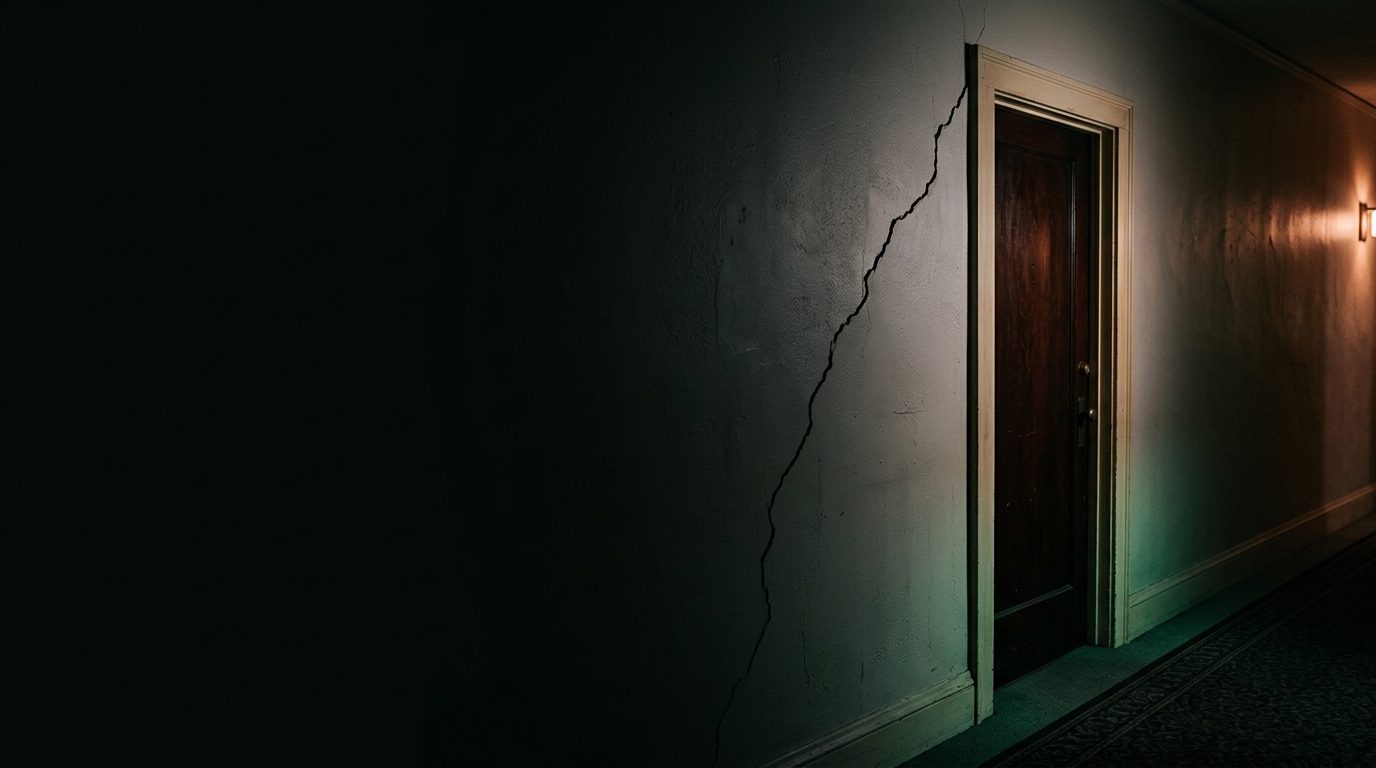
Drywall Crack Repair: How to Tell Cosmetic from Structural
Show us the crack.
Snap a photo — see what it is, how urgent, who to call. One photo of the problem. fixRAgent reads it and gives you a Triage Profile.
Or say it in a sentence
AR Logic LLC · Privacy · Managing this for someone else? There is a version of this for whole portfolios. Managers: set it up for your buildings →
What Causes Drywall Cracks?
A crack in your drywall might be just cosmetic, or it could signal a serious structural problem underneath. Learning to spot the difference could save you thousands in repairs.
Drywall cracks fall into two categories: cosmetic cracks that affect only the surface finish and structural cracks that indicate foundation, framing, or settlement issues. The five most common causes are normal house settling, temperature and humidity fluctuations, poor drywall installation, foundation movement, and structural damage from water or impact. Identifying which type you have determines whether this is a $50 DIY patch or a $500+ professional job.
Normal House Settling
New homes naturally settle as the foundation compacts and wood framing adjusts. These cracks typically appear in the first 1-2 years and are purely cosmetic—hairline-thin (less than 1/8 inch), usually running horizontally above windows or doors. You'll see them crack, then stop; they don't grow back after repair.
Temperature and Humidity Changes
Seasonal temperature swings cause drywall to expand and contract at different rates than joint compound, creating stress at seams. These cracks are narrow (under 1/4 inch), appear along taped joints, and may open and close with the seasons. Look for cracks that follow the grid pattern of drywall sheets rather than running diagonally.
Poor Drywall Installation
Improper taping, mudding, or spacing of drywall sheets creates weak points where cracks form. These appear within 6-12 months of installation, typically follow straight lines along seams, and are wider than hairline cracks (1/8 to 1/4 inch). Unlike settling cracks, these don't stabilize—they keep growing.
Foundation or Structural Movement
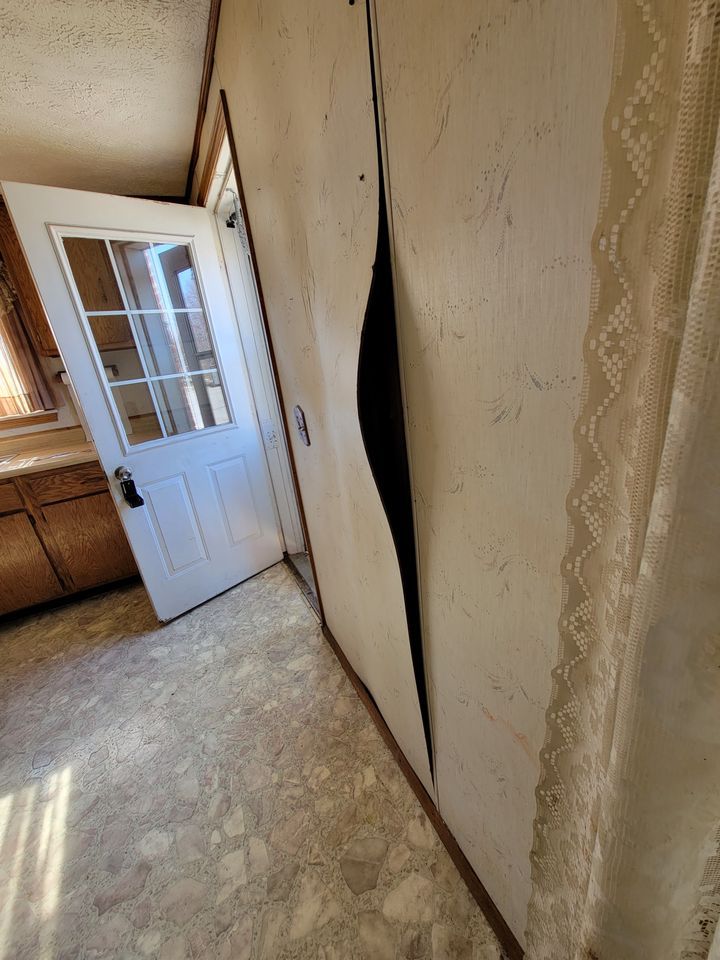
Settling of the foundation, soil expansion, or framing damage causes drywall to shift, creating diagonal cracks that often appear in clusters. These are wider than 1/4 inch, may be accompanied by sticking doors/windows or gaps between walls and trim, and grow noticeably over months. Foundation cracks often mirror the wall's structural stress.
Water Damage and Rot
Moisture from leaks weakens drywall and the wood framing behind it, causing both surface cracks and structural failure. Look for discoloration around the crack, soft drywall that yields to pressure, or cracks near plumbing, HVAC penetrations, or exterior walls. These may smell musty and show mold.
Everything else about drywall cracks
How to Diagnose Drywall Crack Repair — Cosmetic vs. Structural With AI
The fastest diagnosis method is uploading a photo to fixRAgent. The AI will analyze:
- Crack width, length, and pattern (hairline vs. wide, horizontal vs. diagonal vs. stair-step)
- Location relative to windows, doors, and structural elements
- Signs of moisture, discoloration, or surrounding damage
- Whether the crack appears isolated or part of a cluster indicating settlement
- Visual markers of recurrence or active movement
Photograph in natural daylight, angle the camera perpendicular to the wall, and include at least 12 inches of surrounding context on all sides for accurate assessment.
Take the photo in good lighting, include surrounding context, and upload in the box at the top of this page.
DIY Repair: Step-by-Step
DIY repair is appropriate only for cosmetic cracks under 1/4 inch wide that run along seams or show no signs of expansion. If the crack is widening, diagonal, or accompanied by other damage signs, skip this and hire a professional. Cosmetic cracks can be patched for $10–30 in materials and take 1–2 hours.
What you'll need
- Joint compound (drywall mud) or spackling paste
- Drywall mesh tape or paper tape (for cracks wider than hairline)
- 2-inch and 4-inch putty knives
- Sandpaper (120-grit and 220-grit)
- Paint primer and paint matching your wall color
Steps
- 1
Clean the crack
Use a putty knife to scrape away loose drywall, dust, or old compound. Wipe with a damp cloth and let dry completely (15–30 minutes).
- 2
Apply mesh tape (for cracks wider than 1/16 inch)
Center self-adhesive mesh tape over the crack. For wider cracks, use paper tape and apply a thin layer of compound first, then tape, then cover.
- 3
First coat of mud
Apply joint compound with a 2-inch knife, pressing it into the crack and feathering 2–3 inches on each side. Let dry per product instructions (typically 24 hours).
- 4
Sand and second coat
Sand lightly with 120-grit paper, then apply a second coat with a 4-inch knife, feathering wider. Dry again.
- 5
Final coat and sand
Apply a third thin coat for blending, dry, then sand smooth with 220-grit paper.
- 6
Prime and paint
Prime the patched area, then paint to match.
If the crack is accompanied by sticking doors, separation between trim and walls, or multiple cracks in different rooms, stop and call a structural engineer. These indicate foundation movement that DIY patching will not fix and may worsen if the underlying cause progresses.
When to Call a Professional
Call a licensed general contractor or structural engineer immediately if:
- The crack is wider than 1/4 inch, diagonal, or growing noticeably over weeks or months
- Multiple cracks appear in different rooms, especially in a stair-step or clustered pattern
- Doors or windows stick, or you notice gaps between trim and walls that weren't there before
- The crack is accompanied by soft or discolored drywall, musty odors, or visible mold (water damage)
- The crack follows the ceiling line or runs diagonally from a corner, suggesting foundation or framing movement
Professional evaluation typically costs $200–500; repairs for structural cracks range from $500 for minor foundation settling adjustments to $5,000+ if underlying issues like water damage, pest damage, or foundation repair are needed.
Frequently Asked Questions
Can I just paint over a drywall crack instead of patching it?
No. Paint alone won't adhere to the crack, and the underlying separation will continue to expand. Even cosmetic cracks need patching with compound and tape first—it's a quick $10 fix now versus an eyesore later.
How do I know if my drywall crack is from settling or a structural problem?
Settling cracks are hairline-thin, appear in the first 1–2 years, stabilize after repair, and don't recur. Structural cracks are wider than 1/4 inch, grow over time, may be diagonal, and are often accompanied by sticking doors or visible wall gaps. If you're unsure, upload a photo to fixRAgent for an AI diagnosis.
What's the difference between tapered and butt joints, and do they affect cracking?
Tapered joints (where the edges of two sheets are recessed) are easier to mud smoothly and less prone to cracking. Butt joints (where sheet ends meet with no recess) create a thicker edge that's harder to blend and more prone to cracking. Poor butt joint work is a common source of recurring cracks.
Should I worry about asbestos in older drywall joint compound?
Joint compound manufactured before the 1980s may contain asbestos. If you suspect it, do not sand or disturb it—hire a licensed abatement contractor for testing and safe removal. For safety, assume any compound from homes built before 1985 may contain asbestos.
Related problems

Not sure what you’re looking at?
Snap a photo of it. The Triage Profile says what it is, how urgent it is, and who to call.