

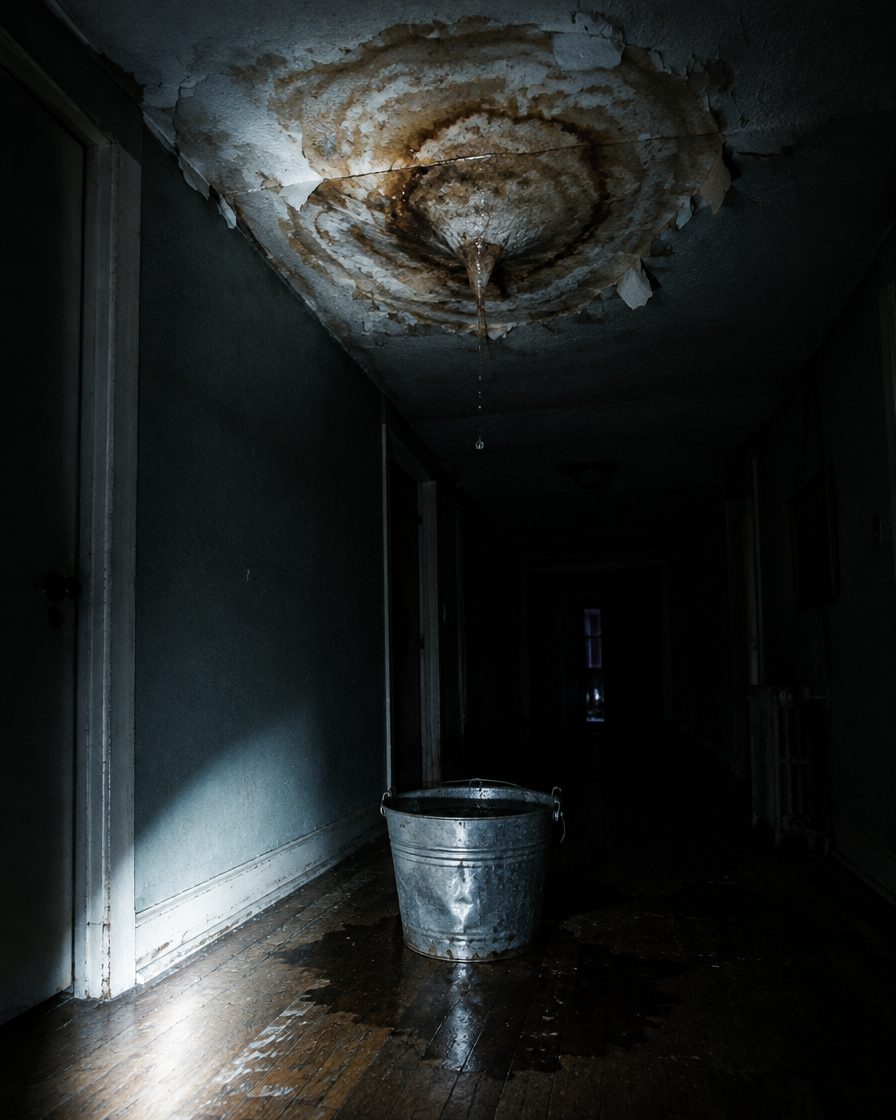
Ceiling Water Stain — Photo Triage Guide
Show us the stain.
Snap a photo — see what it is, how urgent, who to call. One photo of the problem. fixRAgent reads it and gives you a Triage Profile.
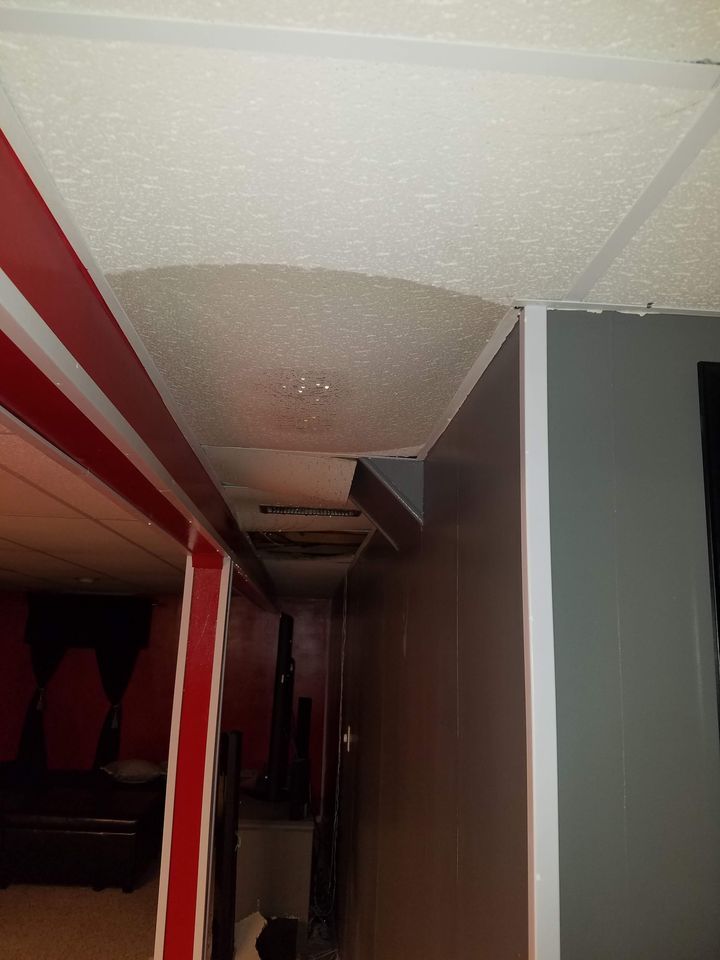
Or say it in a sentence
AR Logic LLC · Privacy · Managing this for someone else? There is a version of this for whole portfolios. Managers: set it up for your buildings →
What Causes Ceiling Water Stains?
A ceiling water stain is your first warning sign of a leak—but the source isn't always obvious. Left unchecked, water damage spreads fast and can compromise structural integrity, invite mold, and cost thousands in repairs.
Ceiling water stains are caused by moisture seeping through your roof, attic, or plumbing system above the stained area. The five most common causes are roof leaks, condensation buildup, active plumbing leaks, poor attic ventilation, and ice damming. Brown or yellow stains indicate older, slower leaks; dark rings or wet patches mean active water is currently dripping. Identifying the source quickly is critical—water damage can weaken drywall, promote mold growth, and damage insulation within 48 hours.
Roof Leaks
The most common cause of ceiling water stains. Roof leaks develop from missing shingles, cracked flashing, deteriorated sealant, or storm damage. You'll typically see a brown or yellowish stain directly below the breach, and the stain's location on your ceiling usually points straight to the leak's source in the roof. If the stain is expanding or the drywall feels soft, the leak is active.
Active Plumbing Leaks
Water supply lines or drain pipes in your walls or attic can rupture, creating stains near bathrooms or kitchens. These leaks often produce fresh, wet-looking stains and may have a musty odor. Water damage from plumbing is progressive—even small drips saturate insulation and drywall quickly, often leading to mold within 72 hours.
Condensation and Poor Attic Ventilation
Inadequate attic airflow traps warm, humid air against cold roof decking, causing condensation that drips onto ceilings. These stains are usually lighter, more widespread, and appear in winter or humid months. You may notice moisture on attic insulation or rafters. This is less urgent than active leaks but still requires ventilation repairs to prevent ongoing damage.
Ice Dams
In cold climates, ice buildup along roof edges blocks melting snow from draining properly, forcing water back under shingles and into your attic. Stains appear near eaves in late winter or early spring. Once an ice dam forms, water damage happens quickly—expect ceiling stains within days of heavy snow followed by freezing rain.
Flashing and Penetration Failures
Water seeps around roof penetrations like chimneys, vents, skylights, or ductwork where flashing has deteriorated or wasn't installed correctly. Stains typically radiate around these fixtures. These leaks are often slow but persistent and are common in homes older than 15 years.
Everything else about ceiling water stains
How to Diagnose Ceiling Water Stain — Photo Triage Guide With AI
The fastest diagnosis method is uploading a photo to fixRAgent. The AI will analyze:
- Stain color, size, and shape—brown/yellow stains indicate older water exposure; dark wet rings or expanding patterns mean active leaks
- Location relative to roof peaks, vents, chimneys, and bathrooms—this helps pinpoint the source
- Drywall texture and condition—soft, sagging, or bubbling areas indicate severe water saturation and urgency
- Surrounding moisture patterns and visible mold—key indicators of condensation vs. active leak vs. past damage
Take the photo in natural daylight from directly below the stain, include room context (wall corners, fixtures), and zoom in on the stain itself to show color and texture clearly.
Upload your photo in the box at the top of this page and see the most likely cause, how urgent it is, and which trade to call. No sign-up.
When to Call a Professional
Call a licensed roofer, plumber, or water damage specialist immediately if:
- The stain is wet, expanding, or drywall feels soft, spongy, or warm—active water is currently flowing and damage is in progress
- You see visible mold (black, green, or fuzzy growth), smell a musty odor, or notice bubbling/peeling paint—mold remediation requires licensed professionals and containment protocols
- The ceiling is sagging, bowing, or has cracked open—structural failure is imminent and requires emergency intervention
- Water is dripping or pooling—active leak must be stopped before interior damage spreads
- You cannot identify the leak source or it's located on a steep/high roof—professional inspection with proper safety equipment is necessary
- The stain is near electrical outlets, light fixtures, or HVAC components—water and electricity don't mix, and professional isolation is required
Frequently Asked Questions
Is a ceiling water stain always an emergency?
Not always, but treat it as one until proven otherwise. If the stain is dry, old, and the area is not soft or moldy, the leak may have been minor or already sealed. However, any wet stain, expanding pattern, or soft drywall requires immediate professional inspection because active leaks cause severe damage in 24–48 hours.
Can I just paint over a ceiling water stain?
No—paint will not stop the leak or prevent the stain from bleeding through. You must fix the source of the water first, allow the area to dry completely (2–4 weeks), and then use stain-blocking primer before painting. Painting over an active leak traps moisture inside and accelerates mold and structural damage.
How do I find the source of a roof leak if the stain is not directly below it?
Water runs along rafters and roof decking before dripping, so the stain location can be 10–20 feet away from the actual leak. Start by inspecting your attic directly above and around the stain, looking for moisture trails, wet insulation, or mold on rafters. A professional roofer can use moisture mapping and thermal imaging to pinpoint the source accurately.
What is the difference between a brown ceiling stain and a wet water stain?
Brown or yellow stains indicate old water damage that has dried—the leak may be past or slow. Wet stains appear dark, fresh, have clean edges, and the drywall feels damp or soft; these mean water is currently dripping. Wet stains require urgent professional attention, while brown stains still need diagnosis but may allow a day or two for scheduling.
Related problems

Not sure what you’re looking at?
Snap a photo of it. The Triage Profile says what it is, how urgent it is, and who to call.