

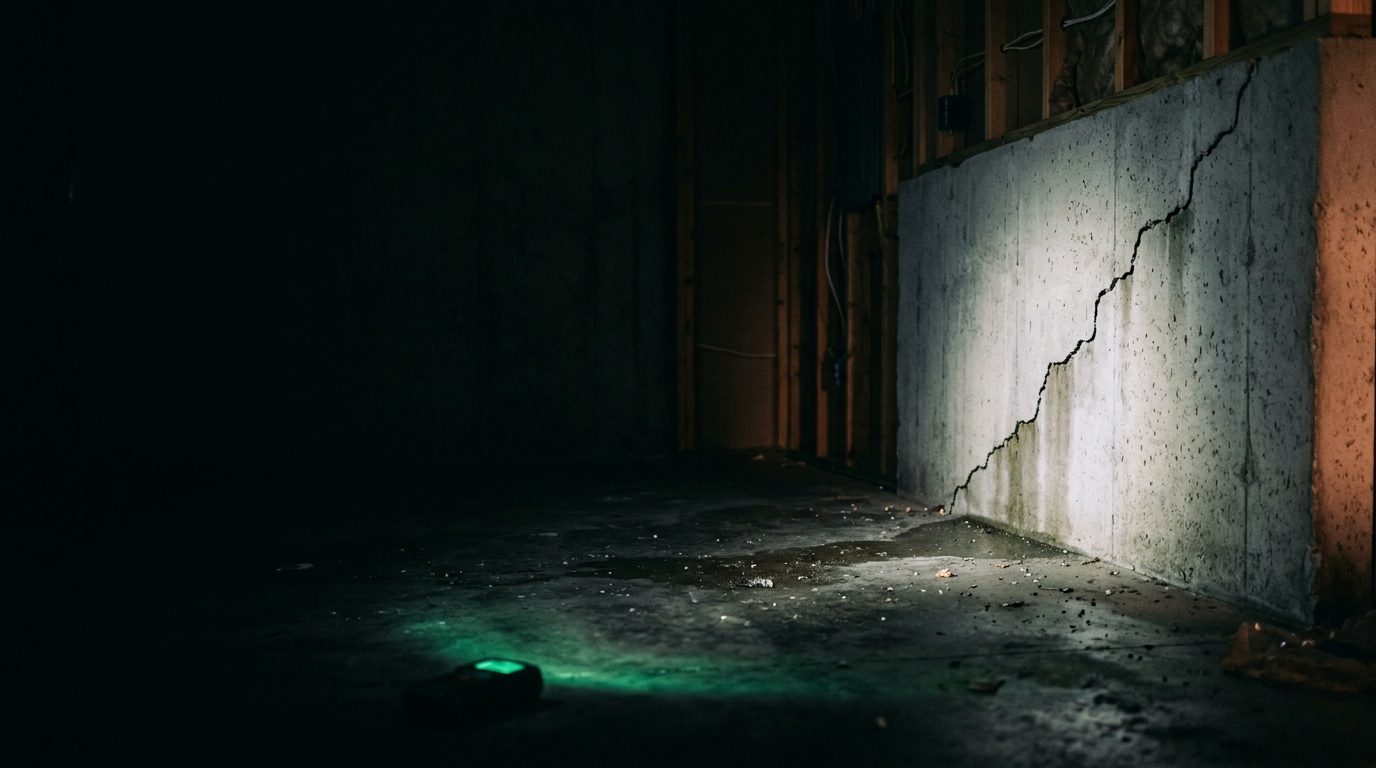
Foundation Crack Analysis — When to Worry and When It's Normal
Show us the crack.
Snap a photo — see what it is, how urgent, who to call. One photo of the problem. fixRAgent reads it and gives you a Triage Profile.
Or say it in a sentence
AR Logic LLC · Privacy · Managing this for someone else? There is a version of this for whole portfolios. Managers: set it up for your buildings →
What Causes Foundation Cracks?
Foundation cracks are one of the most common concerns homeowners face, but not all cracks signal danger. Learning to distinguish between harmless settling cracks and serious structural issues can save you thousands in unnecessary repairs.
Foundation cracks result from five main causes: normal concrete settling (most common and harmless), soil expansion from moisture changes, poor drainage around the foundation, structural load shifts, and concrete shrinkage during the curing process. Most cracks that appear in the first 5 years are settlement-related and stabilize naturally. However, horizontal cracks, stair-step patterns, or cracks wider than 1/4 inch with active seepage warrant professional evaluation.
Normal Settling Cracks
Vertical cracks less than 1/8 inch wide running straight down the foundation are typically caused by normal concrete settling and shrinkage. These cracks are most common in new homes (within 5 years) and older homes (20+ years post-construction). You'll recognize them by their vertical orientation, stable width, and lack of water intrusion. These are generally cosmetic and don't indicate structural failure—no urgent repair needed.
Horizontal Foundation Cracks
Horizontal cracks or those at 45-degree angles (stair-step patterns) indicate lateral soil pressure or structural stress and require immediate attention. These cracks are wider at the center, may show signs of bowing, and often occur with water seepage. Horizontal cracks wider than 1/8 inch or those actively leaking are red flags for foundation failure and demand professional assessment within days, not weeks.
Stair-Step Cracks in Basement Walls
Diagonal stair-step cracks that follow mortar joints in block or brick foundations indicate uneven settling or external pressure from expanding soil. You'll notice them climbing diagonally across the wall face, sometimes with horizontal cracks at the foundation band. These patterns are serious indicators of foundation movement and warrant a structural engineer's evaluation to determine if stabilization is needed.
Water-Seeping Cracks
Any crack with visible water seepage, mold growth, or efflorescence (white mineral deposits) indicates both structural and moisture problems. These are actively compromising your basement's integrity and creating conditions for mold, rot, and further deterioration. Cracks with water intrusion require professional remediation, typically involving epoxy injection, exterior waterproofing, or foundation underpinning—not DIY territory.
Expanding Cracks
Cracks that visibly widen over weeks or months indicate active foundation movement. You can monitor this by marking the crack ends with tape and dating it, then checking monthly for movement. Expanding cracks suggest ongoing soil instability, foundation failure, or structural shifting—these demand immediate professional structural assessment before the problem compounds.
Everything else about foundation cracks
How to Diagnose Foundation Crack Analysis With AI
The fastest diagnosis method is uploading a photo to fixRAgent. The AI will analyze:
- Crack orientation (vertical, horizontal, diagonal) and direction of severity
- Width measurement relative to standard objects and presence of active water seepage or mineral deposits
- Pattern type (linear settling crack vs. stair-step structural pattern) and surrounding foundation condition
Take your photo in natural daylight from 12-18 inches away, include a ruler or coin for scale reference, and capture at least 12 inches of foundation on either side of the crack.
Upload in the box at the top of this page and get results with specific next-step recommendations based on severity level.
DIY Repair: Step-by-Step
DIY repair is appropriate only for stable, non-structural cracks under 1/8 inch wide with no water seepage and no evidence of active movement. If your crack shows horizontal orientation, seepage, expansion, or bowing walls, skip this section and call a professional immediately.
What you'll need
- Concrete crack filler or caulk (polyurethane or silicone-based for flexibility)
- Caulking gun and application nozzle
- Wire brush or cold chisel for cleaning out debris
- Concrete cleaner or white vinegar and cloth for surface preparation
- Painter's tape to mask surrounding areas
- Concrete sealant primer (if required by filler product)
Steps
- 1
Clean the crack thoroughly using a wire brush to remove loose concrete, dust, and debris. For wider cracks (up to 1/4 inch), use a cold chisel to slightly widen the opening into a V-shape for better filler adhesion.
- 2
Wipe the crack with a damp cloth and white vinegar solution, then allow to dry completely (minimum 2 hours). Remove any standing water—moisture prevents proper adhesion.
- 3
Apply painter's tape on both sides of the crack to create clean edges and contain the filler material.
- 4
If your filler requires primer, apply a thin coat into the crack per manufacturer instructions and allow to cure (typically 1-2 hours).
- 5
Load the caulking gun and apply filler in a steady, continuous motion along the entire crack length. Fill slightly overfull so material sits flush after curing.
- 6
Smooth the filler with a wet putty knife or caulk tool, then remove tape while the material is still wet. Allow to cure per product instructions (typically 24-48 hours) before painting or sealing.
Do not attempt DIY repair if the crack shows any signs of active water seepage, horizontal orientation, wall bowing, or expansion over time. These indicate structural failure that requires professional underpinning, injection, or reinforcement—improper repair can accelerate foundation collapse. Wear dust protection when chiseling concrete, and ensure adequate ventilation when working with chemical fillers or primers.
When to Call a Professional
Call a licensed structural engineer or foundation contractor immediately if:
- The crack is horizontal, diagonal, or follows a stair-step pattern, especially if wider than 1/8 inch or showing active movement
- Water is actively seeping from the crack, or you see mold, efflorescence, or damp staining around the area
- The foundation wall shows visible bowing, bulging, or bowing inward toward the basement interior
- The crack has widened measurably over weeks or months, indicating ongoing foundation settlement or soil movement
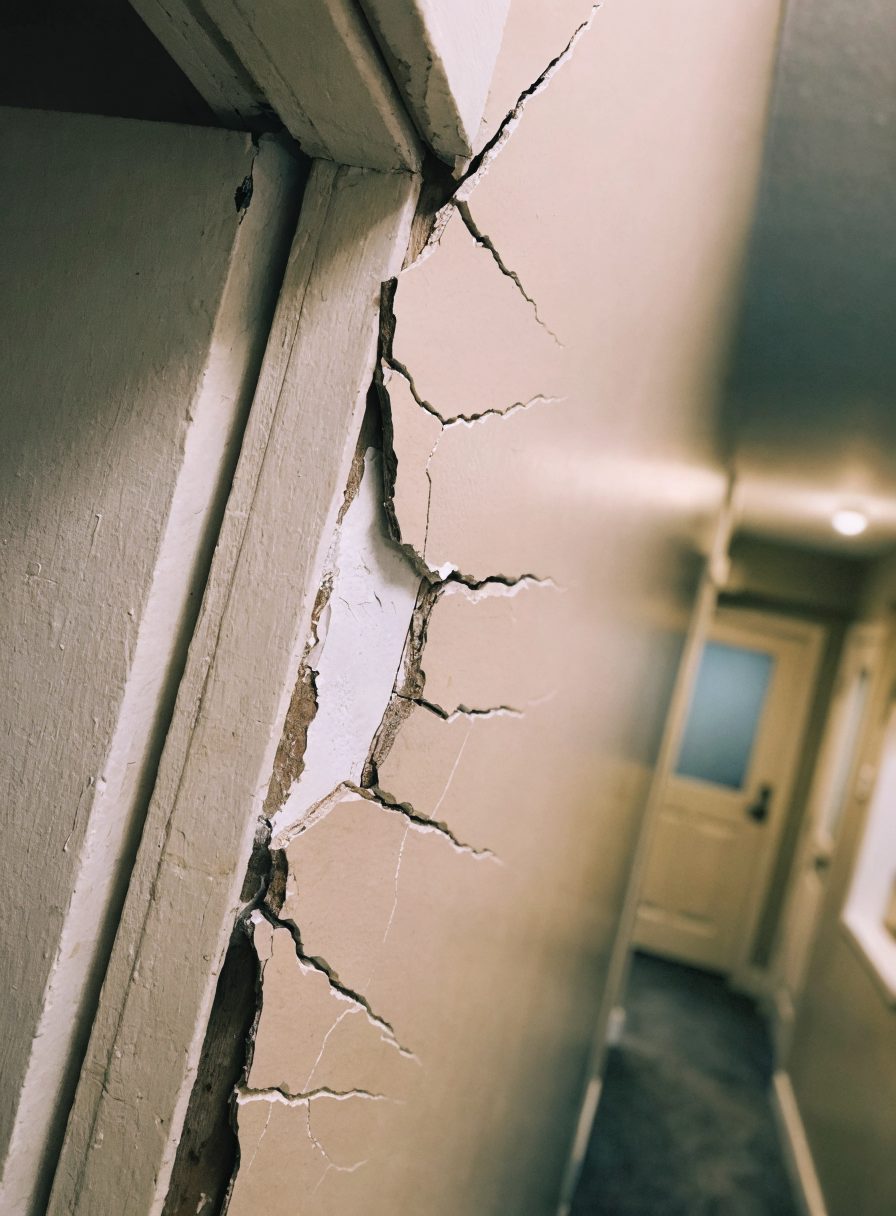
- Doors or windows in the home are sticking, gaps are opening between walls and trim, or you notice new cracks appearing elsewhere in the home
Professional foundation repair costs range from $500-$3,000 for crack injection or epoxy sealing, to $8,000-$25,000+ for underpinning, helical piers, or major structural stabilization—early intervention prevents exponentially higher costs.
Frequently Asked Questions
How much do foundation cracks cost to repair?
Cosmetic crack filling (under 1/8 inch, stable) costs $200-$500 DIY or $400-$800 professionally. Structural repairs via epoxy injection run $1,500-$3,500 per crack. Major underpinning or pier installation can exceed $15,000-$30,000. Early diagnosis prevents exponential cost increases—a $500 injection today prevents a $20,000 underpinning job tomorrow.
Is a 1/4 inch foundation crack serious?
It depends on orientation and activity. A vertical 1/4-inch crack is likely normal settling and low-risk. A horizontal or diagonal 1/4-inch crack, especially with seepage or wall bowing, signals structural stress requiring immediate professional evaluation. Monitor the crack monthly for expansion—if it grows beyond 1/4 inch or shows active water movement, call a structural engineer.
Can I just caulk over a foundation crack and ignore it?
Caulking cosmetic cracks (stable, under 1/8 inch, vertical, no seepage) is fine as a preventive measure against water and pest intrusion. However, caulking over structural cracks (horizontal, expanding, seeping) masks the problem and allows damage to worsen invisibly—water, mold, and structural failure continue behind the cosmetic fix. Always diagnose the root cause before deciding on repair approach.
How do I know if a foundation crack is getting worse?
Mark the crack ends with a permanent marker and date it, or use painter's tape across the crack. Check monthly for growth beyond your marks. If the crack expands measurably or new cracks appear nearby, the foundation is actively moving and requires professional assessment immediately. Don't wait—active movement signals that stabilization may be needed before collapse risk increases.
Related problems

Not sure what you’re looking at?
Snap a photo of it. The Triage Profile says what it is, how urgent it is, and who to call.