

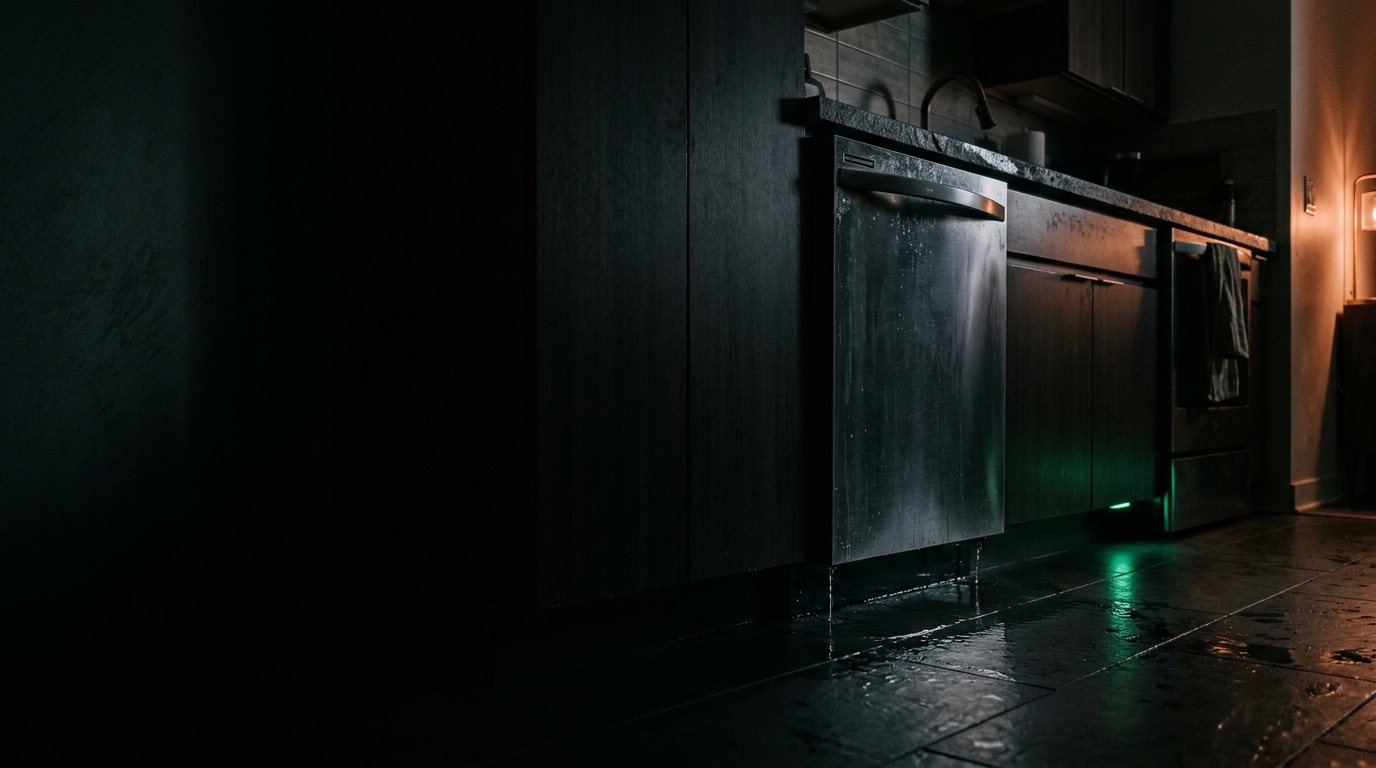
KitchenAid Dishwasher: Not Working at All
Usually a blown thermal fuse, a faulty door-latch switch, or a failed control board. Add a photo of your KitchenAid Dishwasher in the box below: the Triage Profile says what it is, how urgent it is, and who to call.
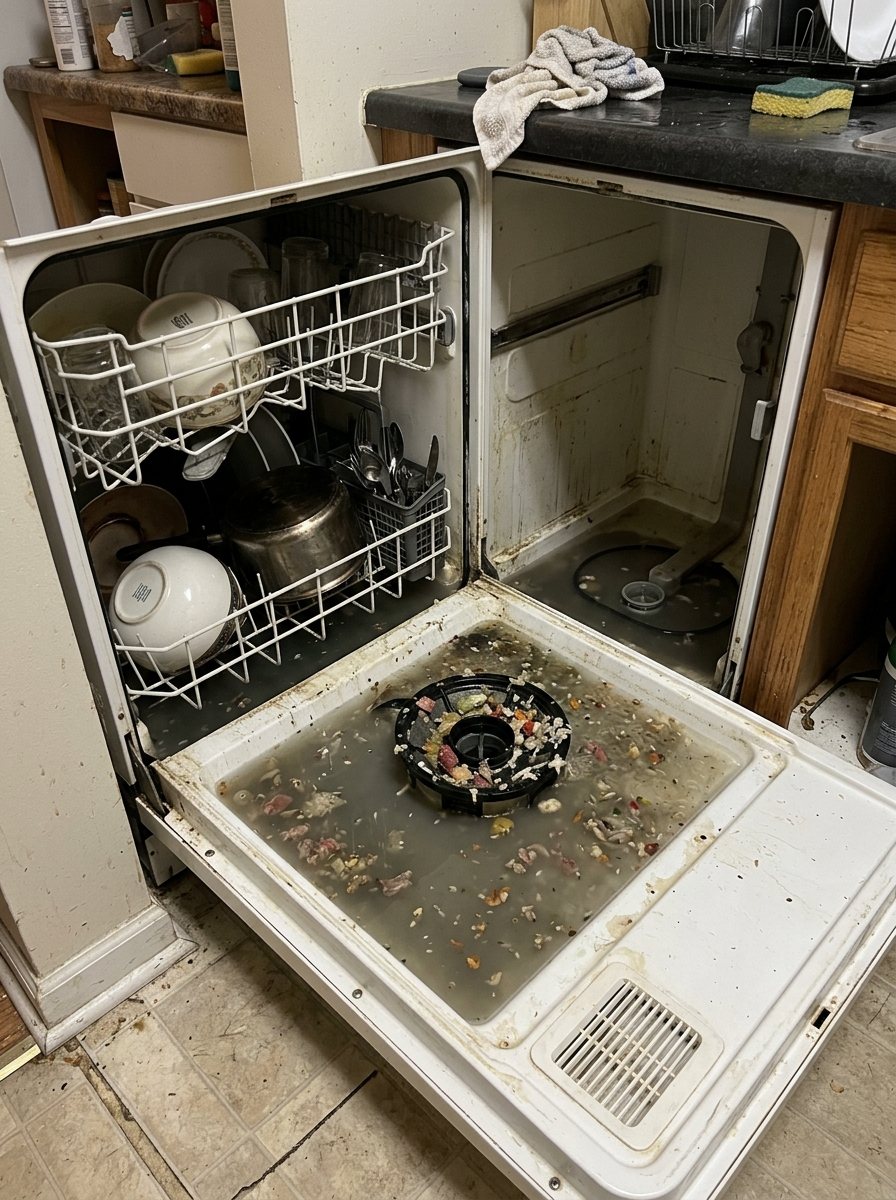
Show us the dishwasher.
Snap a photo — see what it is, how urgent, who to call. One photo of the problem. fixRAgent reads it and gives you a Triage Profile.
Or start with a sentence
AR Logic LLC · Privacy · Managing this for someone else? There is a version of this for whole portfolios. Managers: set it up for your buildings →
In the next five minutes
Safe first steps, before the call. Nothing here needs a tool.
Turn the dishwasher off and switch off its breaker.
Take a photo of the dishwasher and any code on the display, without opening anything.
If you can read its label without moving it, note the brand and model number for the call.
Everything else about this problem
Is it an emergency?
Is a KitchenAid dishwasher that isn't working an emergency?
Rarely an emergency. Check power first: the plug, the breaker and any GFCI outlet. Stop and call a pro if it smells like burning or trips the breaker again.
Symptoms & causes
A KitchenAid dishwasher that is completely unresponsive, with no lights, sounds, or power, often indicates a fundamental electrical supply issue. This could stem from a tripped circuit breaker, a faulty wall outlet, or a disconnected power cord. Internally, a common root cause for a completely dead KitchenAid unit is a blown thermal fuse, designed as a safety cutoff, or a malfunctioning door latch switch that prevents any operation.
Tools & parts
A basic multimeter is essential for checking electrical continuity and voltage. You will also need a set of screwdrivers, including Phillips and Torx bits common in KitchenAid appliances, which can be purchased. Replacement parts like a thermal fuse or a door latch switch might be necessary if internal components are found to be faulty.
Safety first
Always disconnect power to the KitchenAid dishwasher by flipping the dedicated circuit breaker before performing any inspection or repair to prevent electrical shock. Additionally, turn off the water supply valve to the dishwasher to avoid potential leaks or flooding during internal component access. Be mindful of sharp edges inside the appliance and wear appropriate gloves to protect your hands from cuts and scrapes.
When to call a pro
If initial checks confirm power to the dishwasher but the main control board remains unresponsive after resetting, it often indicates a complex internal board failure requiring specialized testing tools. Extensive wiring harness damage or a short circuit within the appliance that repeatedly trips the circuit breaker suggests a deeper electrical issue best handled by a certified technician. Furthermore, if the issue persists after replacing common components like the thermal fuse and door latch, a professional can accurately track down less obvious problems such as a faulty wash motor or heating element short.
Questions people ask
What's the first thing to check if my KitchenAid dishwasher is completely dead?
First, verify the circuit breaker for the dishwasher hasn't tripped; reset it if necessary. Also, ensure the dishwasher is properly plugged into a working outlet, as sometimes the cord can become loose.
Can a faulty door latch prevent my KitchenAid dishwasher from turning on at all?
Yes, a malfunctioning door latch switch is a common culprit. KitchenAid dishwashers have safety mechanisms that prevent operation if the door isn't securely closed and the latch switch engaged.
Where is the thermal fuse located on a KitchenAid dishwasher?
The thermal fuse on most KitchenAid dishwashers is typically located near the main control board, often behind the kick plate or control panel, or sometimes near the heating element. It's a safety device designed to cut power if the dishwasher overheats.
Related problems
More KitchenAid dishwasher problems
Check another symptom for your KitchenAid Dishwasher.
Not working: other brands
Guides and hubs
A resident sent you this?
fixRAgent reads resident photos for whole portfolios: what it is, how urgent, who to send, what to tell them.
Set it up for your buildings →Ask AI about this problem

What it is, how urgent, who to call
Add a photo of your KitchenAid Dishwasher in the box at the top. The Triage Profile says what it is, how urgent it is, and who to call.