

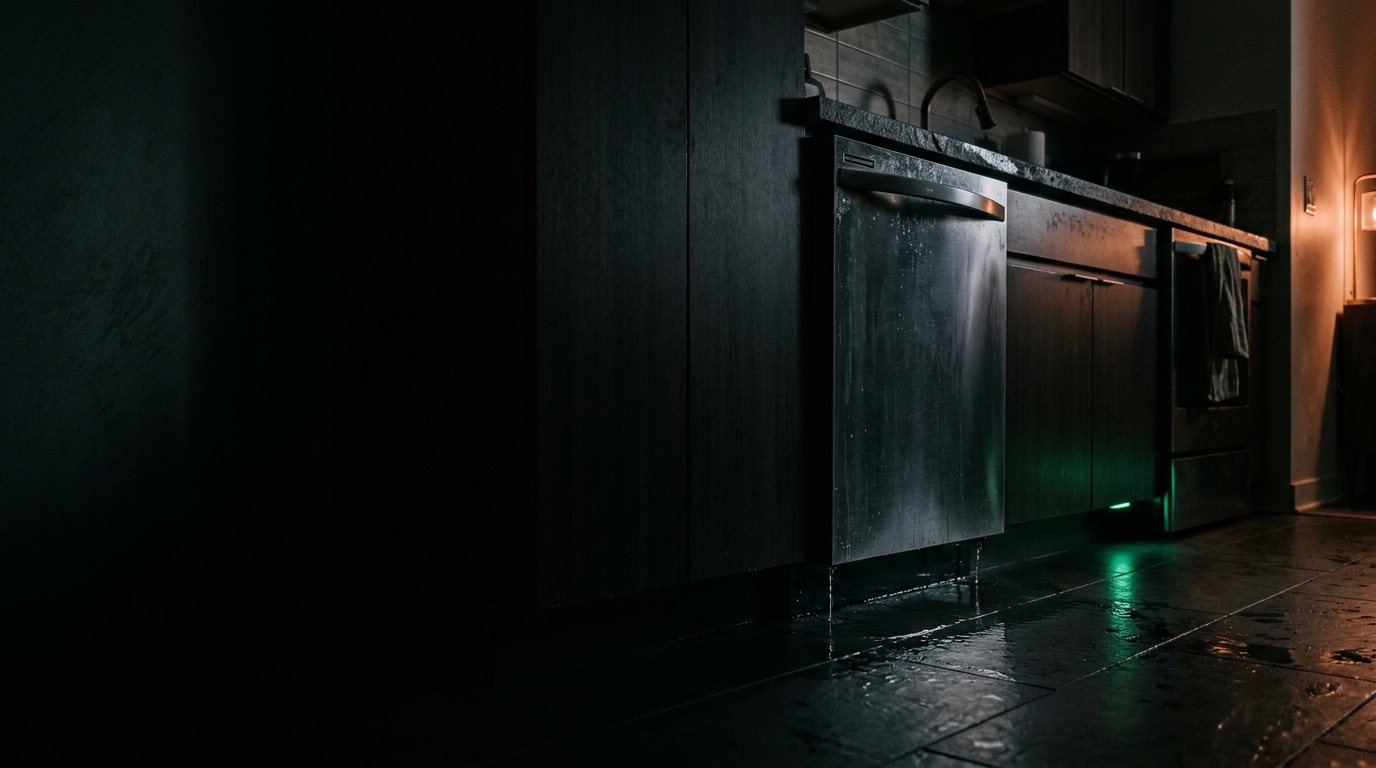
KitchenAid Dishwasher: Flashing Error Code on Display
Error codes here usually point to a drain fault, a heating-circuit fault, or a leak-sensor trip. Add a photo of your KitchenAid Dishwasher in the box below: the Triage Profile says what it is, how urgent it is, and who to call.
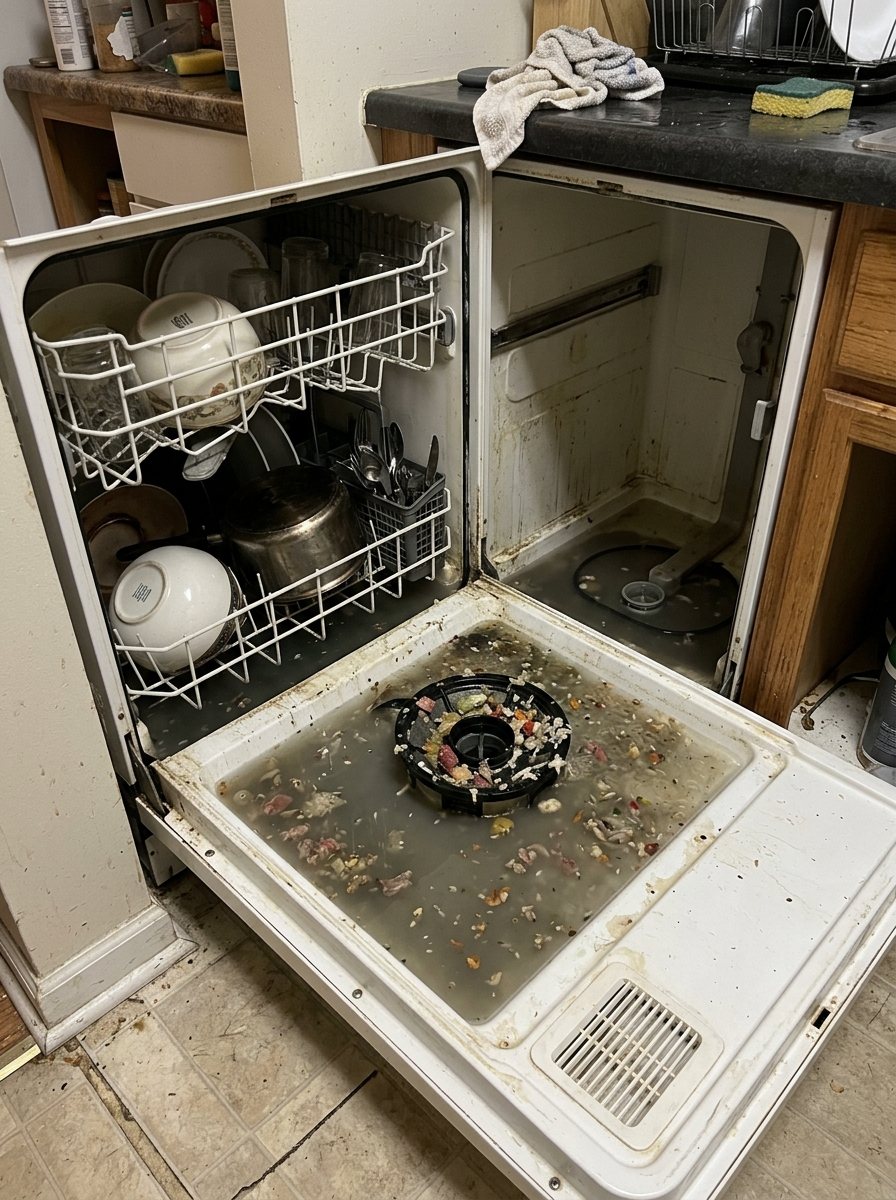
Show us the dishwasher.
Snap a photo — see what it is, how urgent, who to call. One photo of the problem. fixRAgent reads it and gives you a Triage Profile.
Or start with a sentence
AR Logic LLC · Privacy · Managing this for someone else? There is a version of this for whole portfolios. Managers: set it up for your buildings →
In the next five minutes
Safe first steps, before the call. Nothing here needs a tool.
Take a photo of the code on the display, then turn the dishwasher off and switch off its breaker.
If you can read its label without moving it, note the brand and model number for the call.
Note what it was doing when the code came up.
Everything else about this problem
Is it an emergency?
Is a KitchenAid dishwasher error code an emergency?
Usually not an emergency — the code is the appliance reporting a fault it detected. Note the code, then turn it off at the breaker for a minute and back on. If the code returns with a burning smell, smoke or a leak, leave it off and call a pro.
Symptoms & causes
Flashing error codes on a KitchenAid dishwasher display typically indicate a problem with a specific component or system, such as a water leak, heating element failure, or control board malfunction. Common codes like F1E1 (control board error), F3E1 (heating circuit error), or F6E4 (water fill error) point to issues ranging from a faulty sensor to a blocked inlet valve. The dishwasher might stop mid-cycle, fail to start, or not drain properly, all stemming from the underlying issue the code represents.
Tools & parts
You will likely need a multimeter to test electrical continuity and voltage and a screwdriver set for accessing internal components. Specific replacement parts might include a new heating element, a water inlet valve, or a drain pump, depending on the error code. Additionally, a pair of pliers and a small bucket or towels for water spills will be useful during the repair process.
Safety first
Always disconnect the dishwasher from its power supply by unplugging it or shutting off the dedicated circuit breaker before attempting any repairs to prevent electrical shock. Turn off the water supply valve to the dishwasher to prevent leaks or flooding when working with water lines or internal components. Be cautious of sharp edges inside the dishwasher and wear gloves if necessary, especially when handling components like the heating element or pump.
When to call a pro
If the error code persists after basic troubleshooting and power cycling, or if it points to a complex control board failure (e.g., F1E1, F9E1), a professional technician is recommended. Issues involving refrigerant leaks in models with built-in water softeners or persistent water leaks from unknown sources often require specialized testing tools and expertise. When multiple components test faulty or if you are uncomfortable working with high-voltage electrical systems, calling a certified KitchenAid repair specialist is the safest and most effective course of action.
Questions people ask
What does a flashing F3E1 code on my KitchenAid dishwasher mean?
An F3E1 code typically indicates a problem with the heating circuit, often a faulty heating element or its associated thermistor. This means the dishwasher is having trouble heating the water to the correct temperature for washing or drying.
Can I fix a flashing F6E4 code myself?
An F6E4 code points to a water fill error, which could be a clogged inlet screen, a faulty water inlet valve, or low water pressure. You can often check and clean the inlet screen or test the valve with a multimeter.
How do I reset my KitchenAid dishwasher after an error code?
To reset, try unplugging the dishwasher for 5-10 minutes or flipping its dedicated circuit breaker off and then back on. This hard reset can sometimes clear temporary glitches and resolve the error code.
Related problems
More KitchenAid dishwasher problems
Check another symptom for your KitchenAid Dishwasher.
Flashing an error code: other brands
Error codes
Guides and hubs
A resident sent you this?
fixRAgent reads resident photos for whole portfolios: what it is, how urgent, who to send, what to tell them.
Set it up for your buildings →Ask AI about this problem

What it is, how urgent, who to call
Add a photo of your KitchenAid Dishwasher in the box at the top. The Triage Profile says what it is, how urgent it is, and who to call.