

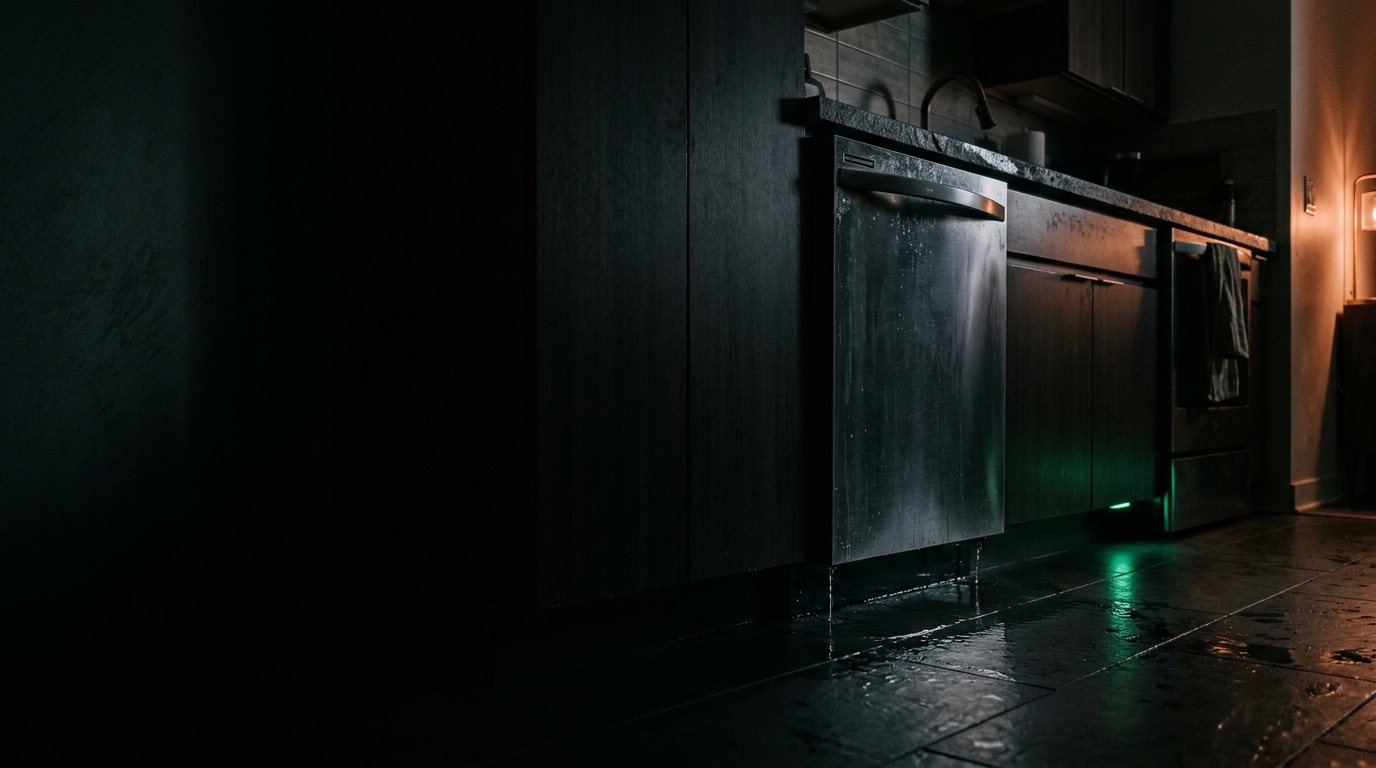
KitchenAid Dishwasher: Leaking Water
Most often a worn door gasket, a cracked drain hose, or a failing water inlet valve. Add a photo of your KitchenAid Dishwasher in the box below: the Triage Profile says what it is, how urgent it is, and who to call.
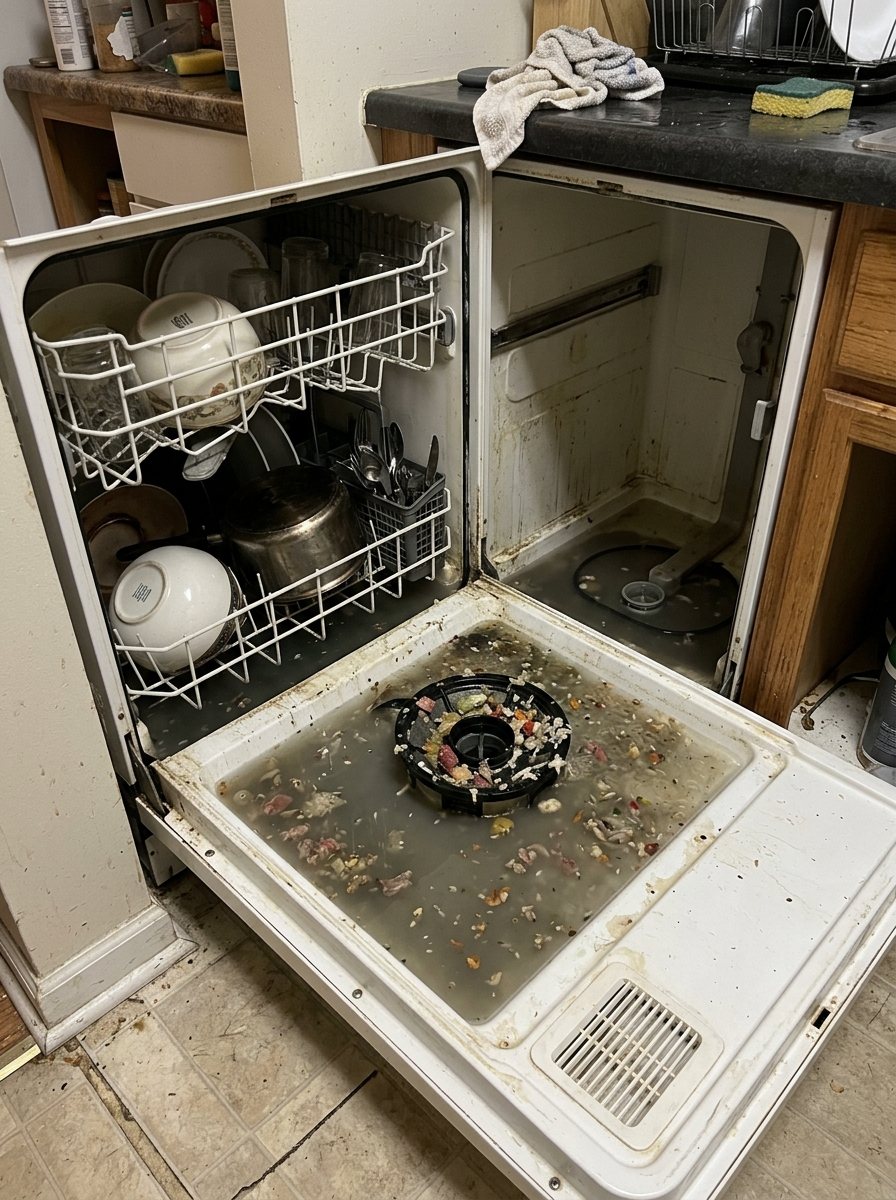
Show us the dishwasher.
Snap a photo — see what it is, how urgent, who to call. One photo of the problem. fixRAgent reads it and gives you a Triage Profile.
Or start with a sentence
AR Logic LLC · Privacy · Managing this for someone else? There is a version of this for whole portfolios. Managers: set it up for your buildings →
In the next five minutes
Safe first steps, before the call. Nothing here needs a tool.
If water is near the plug or outlet, don’t touch them. Switch off the dishwasher’s breaker first. Don’t stand in water to reach the breaker panel; if the panel is wet or you’d have to stand in water, leave it and call.
Then close the water valve under the kitchen sink that feeds the dishwasher.
Take a photo of the dishwasher, the water and any code on the display, without opening anything.
Everything else about this problem
Is it an emergency?
Is a KitchenAid dishwasher leaking water an emergency?
Usually urgent, not an emergency. Turn off the water to it and unplug it or switch off its breaker, then soak up standing water. If water is reaching outlets or cords, switch off the breaker before touching anything; water coming through a ceiling is an emergency.
Symptoms & causes
Water pooling at the front of the dishwasher, under the door, or around the motor area often indicates a leak. Common root causes include a damaged door gasket, a cracked wash arm, a loose hose connection, or a failing pump seal. You might also notice poor cleaning performance if the water pressure is compromised due to a leak.
Tools & parts
For basic leaks, you'll likely need a screwdriver set, pliers, and possibly a new KitchenAid door gasket or a replacement drain hose. A flashlight and a multi-meter can help track down electrical issues or locate the exact source of a hidden leak. For more complex repairs, a new pump seal kit or a wash arm assembly might be required.
Safety first
Always disconnect the KitchenAid dishwasher from its electrical power supply by unplugging it or flipping the circuit breaker before starting any inspection or repair. Turn off the water supply valve, typically located under the sink, to prevent further water damage or accidental flooding. Be cautious of sharp edges inside the dishwasher and potential hot water if the appliance has recently run a cycle.
When to call a pro
If the leak originates from a cracked sump or a faulty circulation pump housing, specialized tools and expertise are often required for a proper repair. Persistent leaks after replacing common parts, especially those involving the main tub seal or a complex manifold assembly, usually indicate a need for professional service. Issues with the flood switch or control board causing overfilling and subsequent leaking are best identified and repaired by a certified KitchenAid technician.
Questions people ask
Why is my KitchenAid dishwasher leaking from the bottom?
Leaks from the bottom often point to a failing pump seal, a cracked wash arm, or a loose hose connection to the pump or drain. Inspect these components carefully for signs of wear or damage.
Can a clogged filter cause a KitchenAid dishwasher to leak?
While not a direct cause of leaks, a severely clogged filter can lead to improper draining and water backing up, potentially overflowing the tub if the door seal is compromised. Regularly clean your filter to prevent such issues.
How do I check the door gasket on my KitchenAid dishwasher?
Open the dishwasher door and visually inspect the rubber gasket running along the perimeter for cracks, tears, or hardening. Run your hand along it to feel for any gaps or deformities that could prevent a tight seal.
Related problems
More KitchenAid dishwasher problems
Check another symptom for your KitchenAid Dishwasher.
Leaking water: other brands
Guides and hubs
A resident sent you this?
Water under an appliance: how a property manager sorts it into emergency, urgent or routine, and what moves it up.
The manager’s guide →Ask AI about this problem

What it is, how urgent, who to call
Add a photo of your KitchenAid Dishwasher in the box at the top. The Triage Profile says what it is, how urgent it is, and who to call.