


KitchenAid Dishwasher: Making Loud Noise
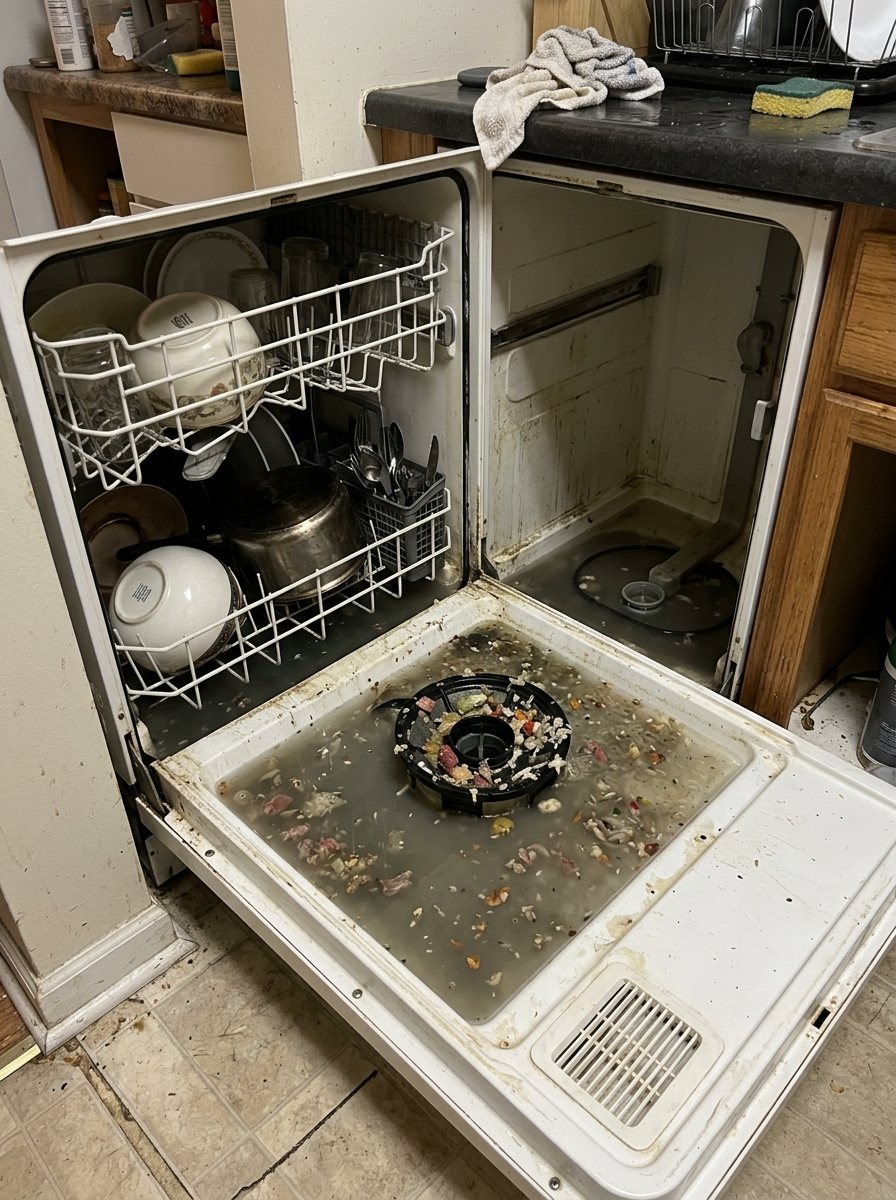
Commonly a worn wash-pump bearing, a cracked spray arm, or debris in the chopper area. Add a photo of your KitchenAid Dishwasher in the box below: the Triage Profile says what it is, how urgent it is, and who to call.
Show us the dishwasher.
Snap a photo — see what it is, how urgent, who to call. One photo of the problem. fixRAgent reads it and gives you a Triage Profile.
Or start with a sentence
AR Logic LLC · Privacy · Managing this for someone else? There is a version of this for whole portfolios. Managers: set it up for your buildings →
In the next five minutes
Safe first steps, before the call. Nothing here needs a tool.
Note what the noise sounds like and when it happens, then turn the dishwasher off and switch off its breaker.
Take a photo of the dishwasher and any code on the display, without opening anything.
If you can read its label without moving it, note the brand and model number for the call.
Everything else about this problem
Is it an emergency?
Is a loud noise from a KitchenAid dishwasher an emergency?
Usually not an emergency. A grinding, rattling or humming that has just started most often comes from a fan, motor, belt or loose panel. Stop using it and cut the power if the noise comes with a burning smell, smoke or sparks.
Symptoms & causes
A KitchenAid dishwasher making loud noises often indicates a problem with the wash motor, drain pump, or spray arm assembly. Grinding or humming sounds typically point to a failing motor or pump, possibly due to debris or worn bearings. Clunking or rattling noises might suggest a loose spray arm hitting dishes or foreign objects caught within the system.
Tools & parts
You will need basic hand tools like a screwdriver set (Phillips and flathead), pliers, and possibly a multimeter for electrical checks. Specific KitchenAid replacement parts such as a new wash motor, drain pump, or spray arm assembly may be required. Always ensure you have the correct part number for your specific KitchenAid model before purchasing.
Safety first
Before beginning any repair on your KitchenAid dishwasher, always disconnect power at the circuit breaker to prevent electrical shock. Turn off the water supply valve to the dishwasher to avoid leaks or flooding. Be cautious of sharp edges inside the dishwasher and potential hot water if the unit was recently run.
When to call a pro
If the main wash motor is seized or making severe grinding noises, it often requires specialized tools and expertise for replacement, especially if it's a sealed unit. Issues with the main control board, which governs all dishwasher functions, are complex and best identified by a certified technician. Furthermore, persistent leaks originating from the motor seal or tub assembly indicate a more involved repair that typically warrants professional intervention to ensure proper sealing and prevent water damage.
Questions people ask
What if the noise only occurs during the draining cycle?
If the noise is specific to draining, the issue likely lies with the drain pump or a clogged air gap. Inspect the drain pump for any foreign objects like food particles or broken glass that might be causing the obstruction or damage.
I hear a grinding noise; what could be the cause?
A grinding noise often points to the food chopper assembly or the main wash motor. Debris can get caught in the chopper, or the motor bearings might be failing, requiring inspection and potential replacement.
Can I ignore a minor noise from my KitchenAid dishwasher?
Ignoring even a minor noise is not recommended as it can quickly escalate into a more significant and costly problem. Addressing the issue promptly can prevent further damage to components and extend the life of your appliance.
Related problems
More KitchenAid dishwasher problems
Check another symptom for your KitchenAid Dishwasher.
Making a loud noise: other brands
Guides and hubs
A resident sent you this?
fixRAgent reads resident photos for whole portfolios: what it is, how urgent, who to send, what to tell them.
Set it up for your buildings →Ask AI about this problem

What it is, how urgent, who to call
Add a photo of your KitchenAid Dishwasher in the box at the top. The Triage Profile says what it is, how urgent it is, and who to call.