

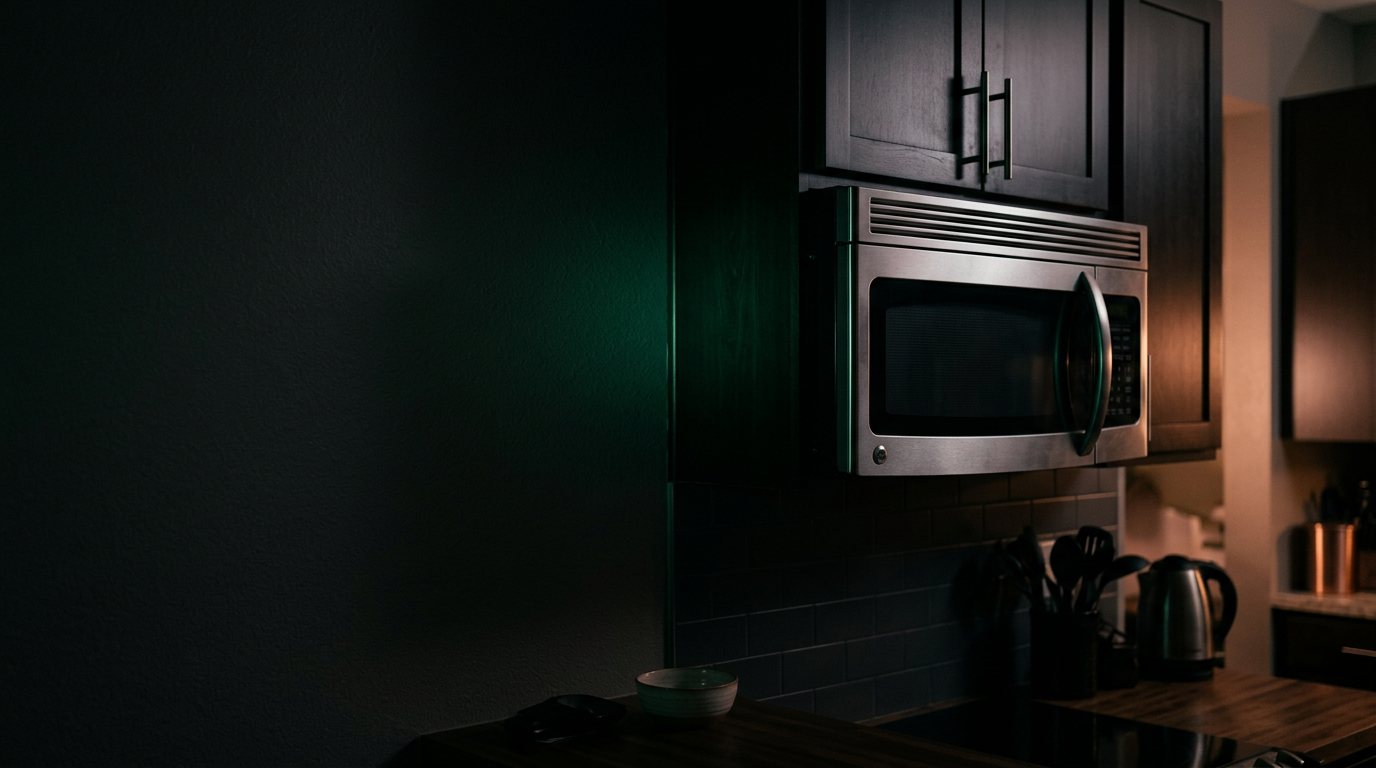
KitchenAid Microwave: Won't Start or Turn On
Commonly a door-switch fault, a blown fuse, or a control-board issue. Add a photo of your KitchenAid Microwave in the box below: the Triage Profile says what it is, how urgent it is, and who to call.
Show us the microwave.
Snap a photo — see what it is, how urgent, who to call. One photo of the problem. fixRAgent reads it and gives you a Triage Profile.
Or start with a sentence
AR Logic LLC · Privacy · Managing this for someone else? There is a version of this for whole portfolios. Managers: set it up for your buildings →
In the next five minutes
Safe first steps, before the call. Nothing here needs a tool.
Stop the microwave and switch off its breaker, or unplug it if the plug is dry and easy to reach.
Take a photo of the microwave and any code on the display, without opening anything.
Don’t use it again until it’s checked, and keep people away from it.
Everything else about this problem
Is it an emergency?
Is a KitchenAid microwave that won't start an emergency?
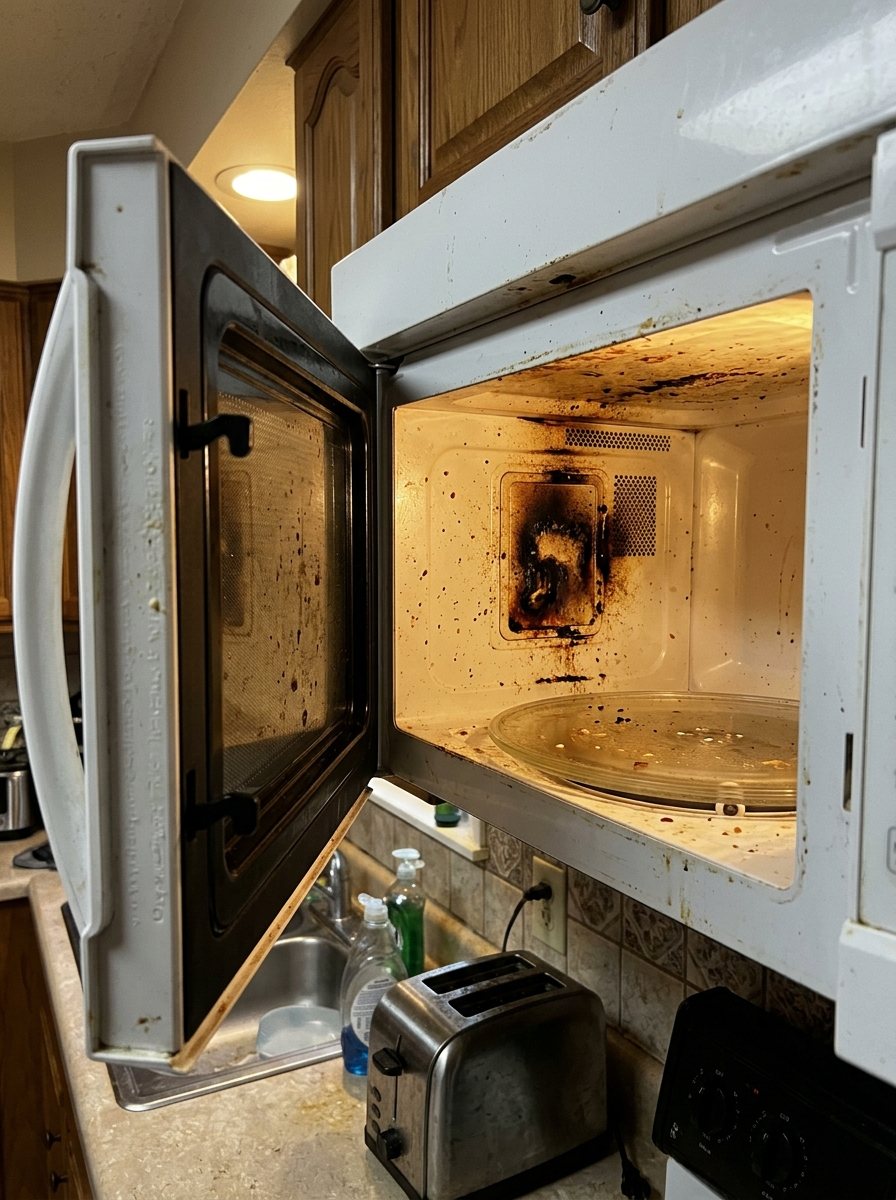
Usually not, but it can be. Because this can be an emergency, leave it off and get it checked; don't reset it or turn it back on. Stop and call a pro if it keeps tripping the breaker or smells like burning.
Symptoms & causes
When a KitchenAid microwave won't start or turn on, common symptoms include a completely blank display, no internal light, and no response to any button presses. This indicates a total loss of power to the unit, often stemming from an electrical supply issue or an internal safety component failure. Root causes can range from a tripped circuit breaker or a faulty wall outlet to a blown thermal fuse or a malfunctioning door interlock switch.
Tools & parts
A multimeter (e.g., Fluke 115) is essential for checking voltage, continuity, and resistance in various components. A basic screwdriver set (Phillips and flathead) will be needed to access the microwave's internal components and casing. For potential replacements, a new thermal fuse or a door interlock switch might be required.
Safety first
Always unplug the KitchenAid microwave from the wall outlet before attempting any inspection or repair to prevent severe electrical shock. Be aware that microwaves contain a high-voltage capacitor that can store a lethal electrical charge even after the unit is unplugged; this component must be safely discharged by a professional or with extreme caution using a ceramic-tipped screwdriver. Wear insulated gloves and safety glasses to protect against electrical hazards and sharp edges inside the appliance.
When to call a pro
A professional technician is required if the high-voltage capacitor needs discharging or replacement, as this component stores lethal energy and improper handling is extremely dangerous. Complex control board failures, such as a completely unresponsive touch panel despite confirmed power, often necessitate specialized testing tools and genuine KitchenAid replacement parts that are best installed by an expert. Issues involving the magnetron or transformer, which are critical for microwave generation, should also be handled by a certified repair person due to high voltage risks and specific calibration needs.
Questions people ask
Why is my KitchenAid microwave completely dead?
Your KitchenAid microwave might be completely dead due to a tripped circuit breaker, a faulty wall outlet, or a blown thermal fuse. Check your home's electrical panel first, then ensure the outlet has power by plugging in another appliance.
Can a faulty door switch prevent my KitchenAid microwave from turning on?
Yes, a faulty door interlock switch is a common reason a KitchenAid microwave won't start, as it's a critical safety mechanism. If the microwave doesn't detect the door is securely closed, it will prevent operation to avoid radiation leakage.
How do I check if the thermal fuse is the problem?
To check the thermal fuse, you'll need to access it (usually behind the control panel or inside the cabinet) and use a multimeter to test for continuity. If there's no continuity, the fuse is blown and needs replacement to restore power.
Related problems
More KitchenAid microwave problems
Check another symptom for your KitchenAid Microwave.
Won’t start: other brands
Guides and hubs
A resident sent you this?
fixRAgent reads resident photos for whole portfolios: what it is, how urgent, who to send, what to tell them.
Set it up for your buildings →Ask AI about this problem

What it is, how urgent, who to call
Add a photo of your KitchenAid Microwave in the box at the top. The Triage Profile says what it is, how urgent it is, and who to call.