

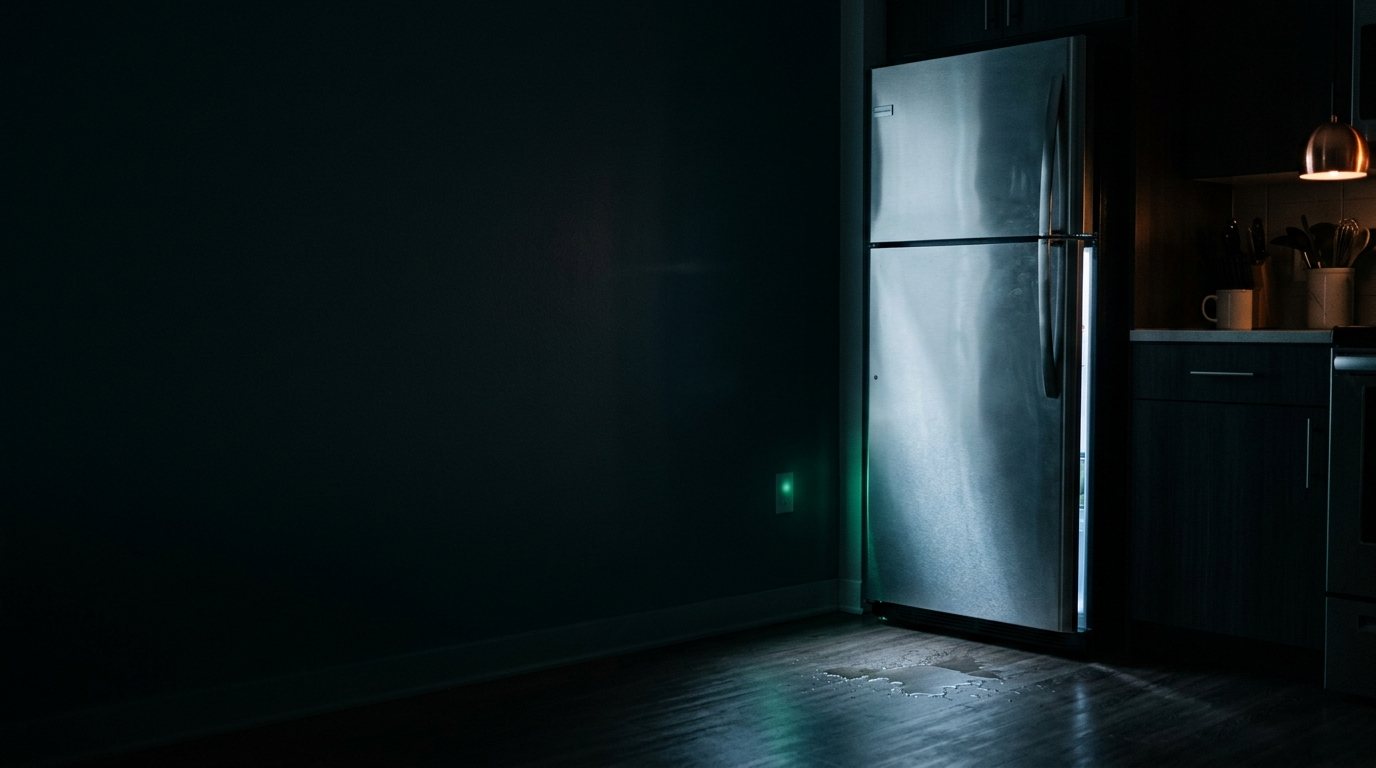
Sub-Zero Refrigerator: Making Loud Noise
Often a failing evaporator or condenser fan motor, or a worn compressor mount. Add a photo of your Sub-Zero Refrigerator in the box below: the Triage Profile says what it is, how urgent it is, and who to call.
Show us the fridge.
Snap a photo — see what it is, how urgent, who to call. One photo of the problem. fixRAgent reads it and gives you a Triage Profile.
Or start with a sentence
AR Logic LLC · Privacy · Managing this for someone else? There is a version of this for whole portfolios. Managers: set it up for your buildings →
In the next five minutes
Safe first steps, before the call. Nothing here needs a tool.
Note what the noise sounds like and when it happens, then switch off the fridge’s breaker, and don’t touch the plug or cord.
Take a photo of the fridge and any code on the display, without opening anything.
Don’t use it again until it’s checked; keep the doors shut to hold the cold.
Everything else about this problem
Is it an emergency?
Is a loud noise from a Sub-Zero refrigerator an emergency?
Usually not, but it can be. A grinding, rattling or humming that has just started most often comes from a fan, motor, belt or loose panel. Stop using it and cut the power if the noise comes with a burning smell, smoke or sparks.
Symptoms & causes
Loud noises emanating from your Sub-Zero refrigerator often signal issues with the condenser fan, evaporator fan, or compressor. A persistent buzzing or rattling sound typically indicates a problem with the condenser fan motor or its blades, possibly due to debris obstruction or a failing motor bearing. Grinding, squealing, or chirping noises originating from inside the freezer or fresh food compartment usually point to a failing evaporator fan motor, which is responsible for circulating cold air.
Tools & parts
You will need a basic screwdriver set (Phillips and flathead) to remove access panels, a multimeter to test electrical continuity of fan motors, and potentially a nut driver for securing fan assemblies. Replacement parts like a Sub-Zero condenser fan motor or an evaporator fan motor may be needed. A powerful vacuum cleaner with a brush attachment is essential for thoroughly cleaning the condenser coils, which is a common first step in resolving noise issues.
Safety first
Always ensure the Sub-Zero refrigerator is completely disconnected from its power source by unplugging it from the wall outlet before attempting any inspection or repair to prevent severe electrical shock. Wear sturdy work gloves to protect your hands from sharp metal edges inside the appliance and to avoid contact with potentially hot components like the compressor. Be mindful of the weight and stability of the unit if you need to move it, and avoid touching refrigerant lines as they contain pressurized gas that can cause frostbite if released.
When to call a pro
If the loud noise persists after thorough cleaning and fan inspection, or if the compressor itself is emitting a loud grinding, knocking, or clunking sound, it strongly indicates a sealed system issue requiring a certified Sub-Zero technician. Refrigerant leaks, often accompanied by a hissing sound and poor cooling performance, are complex and necessitate specialized tools and EPA certification for proper repair and recharging. A failing compressor, a critical and expensive component, requires professional testing and replacement due to the intricate nature of the refrigeration cycle and the need for precise vacuuming and refrigerant handling.
Questions people ask
Why is my Sub-Zero making a loud buzzing sound?
A loud buzzing sound often points to the condenser fan motor or its blades. Check if the fan blades are obstructed by debris or if the motor bearings are failing, causing excessive vibration.
Can a dirty condenser cause loud noises?
Yes, a dirty condenser coil can significantly restrict airflow, forcing the condenser fan and compressor to work harder and louder. Regular cleaning of these coils can often resolve noise issues and improve efficiency.
What if the noise is coming from inside the freezer compartment?
Noise from inside the freezer compartment typically indicates an issue with the evaporator fan motor. Ice buildup around the fan blades or a failing motor bearing can cause grinding, squealing, or chirping sounds.
Related problems
More Sub-Zero refrigerator problems
Check another symptom for your Sub-Zero Refrigerator.
Making a loud noise: other brands
Guides and hubs
A resident sent you this?
fixRAgent reads resident photos for whole portfolios: what it is, how urgent, who to send, what to tell them.
Set it up for your buildings →Ask AI about this problem

What it is, how urgent, who to call
Add a photo of your Sub-Zero Refrigerator in the box at the top. The Triage Profile says what it is, how urgent it is, and who to call.