

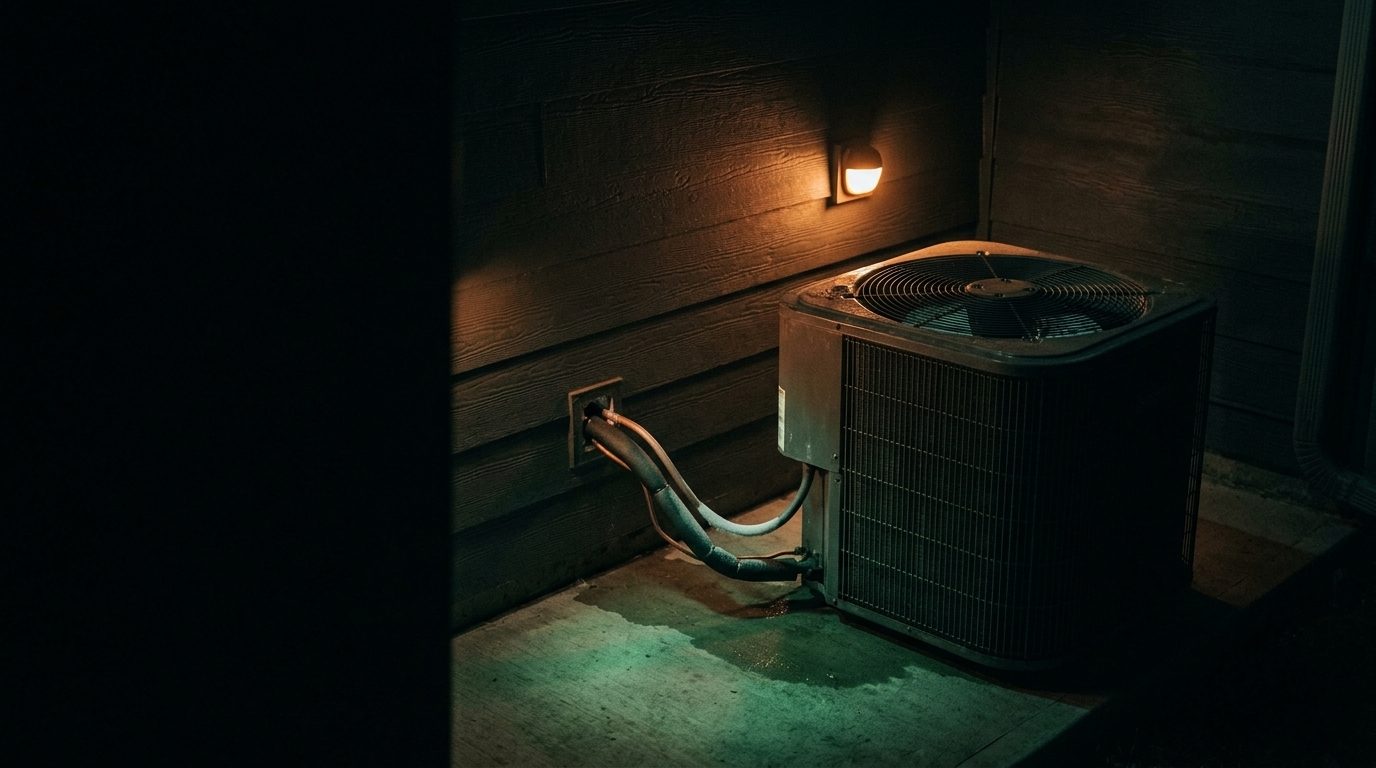
GE HVAC: Won't Start or Turn On
Commonly a blown capacitor, a faulty contactor, or a thermostat or control fault. Add a photo of your GE HVAC in the box below: the Triage Profile says what it is, how urgent it is, and who to call.
Show us the system.
Snap a photo — see what it is, how urgent, who to call. One photo of the problem. fixRAgent reads it and gives you a Triage Profile.
Or start with a sentence
AR Logic LLC · Privacy · Managing this for someone else? There is a version of this for whole portfolios. Managers: set it up for your buildings →
In the next five minutes
Safe first steps, before the call. Nothing here needs a tool.
Switch the system off at the thermostat and at its breaker.
Take a photo of the unit and the thermostat, without opening anything.
Don’t use it again until it’s checked, and keep people away from it.
Everything else about this problem
Is it an emergency?
Is a GE HVAC system that won't start an emergency?
Usually not, but it can be. Because this can be an emergency, leave it off and get it checked; don't reset it or turn it back on. Stop and call a pro if it keeps tripping the breaker, smells like burning, or you smell gas.
Symptoms & causes
Your GE HVAC system failing to start often manifests as no fan movement, no compressor engagement, or a complete lack of response from the thermostat. Common root causes include electrical supply issues like tripped breakers, a malfunctioning thermostat, or safety lockouts triggered by dirty filters or frozen coils. These problems prevent the unit from receiving power or the necessary commands to initiate operation.
Tools & parts
A reliable multimeter is essential for testing voltage and continuity in GE HVAC components like the contactor and capacitor. A replacement run capacitor is a common fix for units that hum but don't start. For more advanced electrical issues, a new contactor might be needed to restore power to the compressor and fan.
Safety first
Always ensure the main circuit breaker for your GE HVAC system is switched off at the electrical panel before performing any inspections or repairs to prevent severe electrical shock. Additionally, turn off the outdoor disconnect switch located near the condenser unit to completely de-energize the system. Be cautious of sharp metal edges inside the unit and avoid contact with refrigerant lines, as high-pressure refrigerant can cause frostbite.
When to call a pro
A professional technician is required if your GE HVAC system's compressor has failed, indicated by a loud grinding noise or complete silence despite power, as this is a complex and costly repair. Refrigerant leaks, identifiable by ice on the lines or poor cooling performance, demand specialized tools and EPA certification for proper handling and recharging. Furthermore, issues with the main control board or integrated furnace control board, which regulate the entire system, typically necessitate expert testing and replacement due to their intricate wiring and programming.
Questions people ask
What's the most common electrical issue preventing a GE HVAC from starting?
The most frequent electrical problem is a tripped circuit breaker at your home's main electrical panel, or a blown fuse in the outdoor disconnect box. Always check these first, ensuring they are firmly in the 'on' position or replaced if blown.
How can I troubleshoot my GE thermostat if the HVAC won't start?
First, replace the batteries in your GE thermostat, as low power can prevent it from sending commands to the HVAC unit. Next, ensure the thermostat is set to 'cool' or 'heat' and the fan is set to 'auto' or 'on', with the temperature set significantly below or above the current room temperature.
My GE outdoor unit hums but doesn't start the fan or compressor. What could it be?
This symptom strongly suggests a faulty run capacitor in your GE outdoor unit, which provides the initial electrical boost for the fan and compressor motors. A bulging or leaking capacitor is a clear sign it needs replacement, but always discharge it safely before handling.
Related problems
More GE HVAC system problems
Check another symptom for your GE HVAC.
Won’t start: other brands
Guides and hubs
A resident sent you this?
What a property manager should do when a resident reports AC not cooling: the first message, how urgent, who to send.
The manager’s checklist →Ask AI about this problem
What it is, how urgent, who to call
Add a photo of your GE HVAC in the box at the top. The Triage Profile says what it is, how urgent it is, and who to call.