

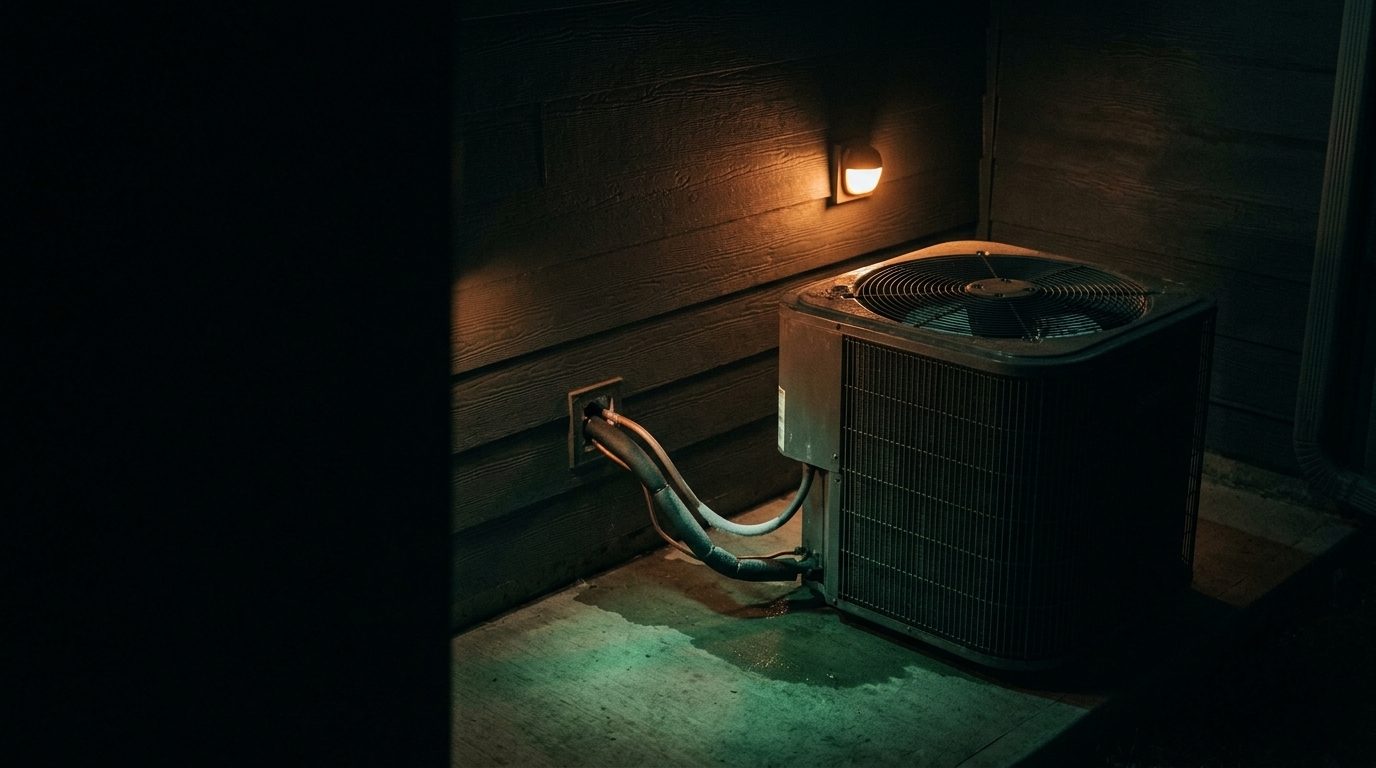
GE HVAC: Leaking Water
Most often a clogged condensate drain line, a cracked drain pan, or a frozen evaporator coil. Upload a photo of your GE HVAC and fixRAgent's AI pinpoints the exact failed part.
Show us the system.
Snap a photo — see what it is, how urgent, who to call. One photo of the problem. fixRAgent reads it and gives you a Triage Profile.
Or start with a sentence
AR Logic LLC · Privacy · Managing this for someone else? There is a version of this for whole portfolios. Managers: set it up for your buildings →
In the next five minutes
Safe first steps, before the call. Nothing here needs a tool.
If water is near an outlet or cord, don’t touch them. Switch the system off at the thermostat, then at its breaker. Don’t stand in water to reach the breaker panel; if the panel is wet or you’d have to stand in water, leave it and call.
Keep people off the wet floor and away from the unit.
Take a photo of the unit and the water, without opening anything.
Everything else about this problem
Is it an emergency?
Is a GE HVAC system leaking water an emergency?
Usually urgent, and it can be an emergency. Turn the system off at the thermostat, soak up standing water and keep it away from outlets and the unit's wiring. If water is coming through a ceiling or reaching electrics, switch off the breaker and treat it as an emergency.
Symptoms & causes
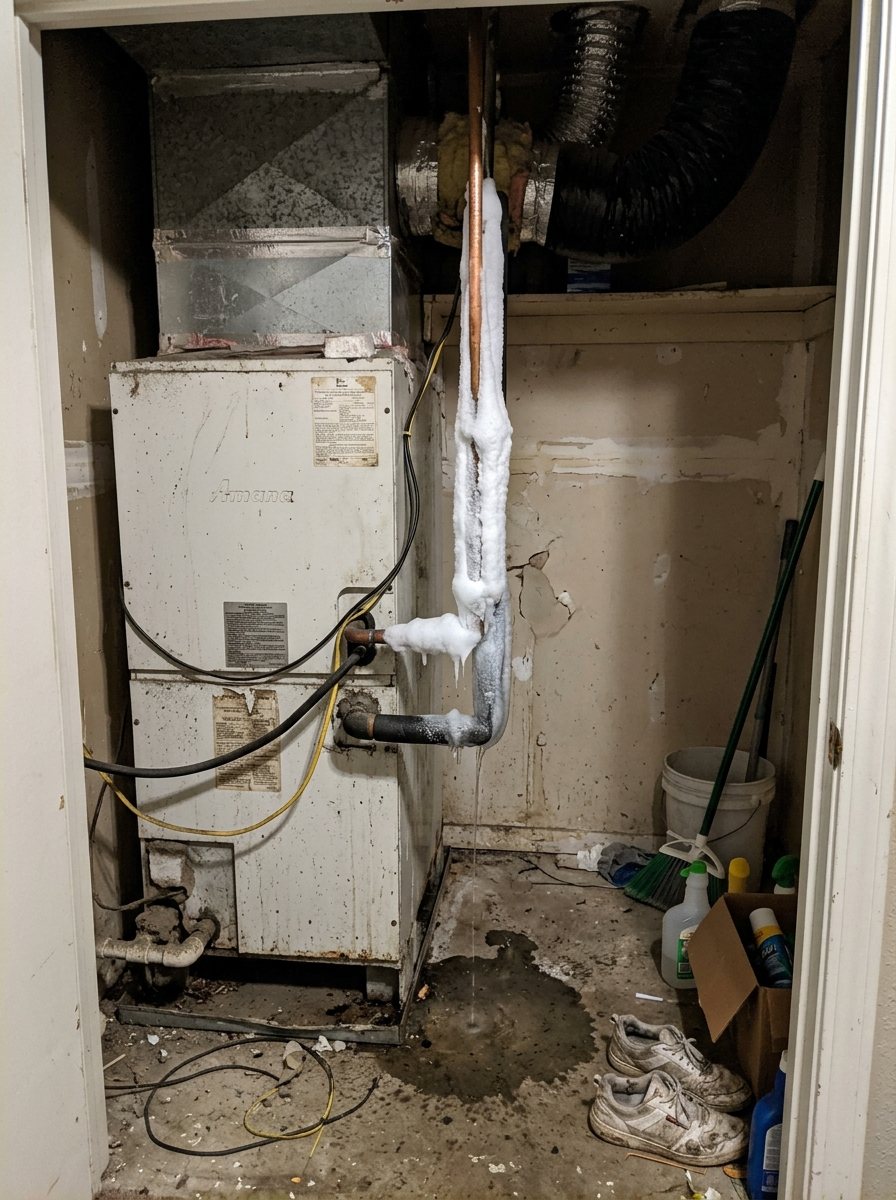
Your GE HVAC unit may be leaking water if you observe puddles around the indoor unit, water dripping from the ceiling near the air handler, or a musty odor emanating from your vents. The primary root causes often include a clogged condensate drain line, a frozen evaporator coil due to low refrigerant or airflow issues, or a cracked or overflowing condensate drain pan. Reduced cooling performance, higher humidity indoors, and visible mold growth can also indicate a persistent water leak problem.
Tools & parts
To track down and fix a GE HVAC water leak, you will typically need basic tools such as a screwdriver set, a flashlight, and a wet/dry vacuum for clearing clogs. Specific repair materials might include condensate drain line cleaner tablets or liquid, PVC cement and fittings for drain line repairs, or a replacement GE-compatible condensate drain pan. A stiff brush or snake tool can also be useful for physically clearing stubborn blockages in the drain line.
Safety first
Before attempting any inspection or repair on your GE HVAC unit, always ensure the power is completely shut off at both the thermostat and the main electrical breaker for the unit. Water and electricity are a dangerous combination, so never work on a live system, especially when dealing with leaks. Wear appropriate personal protective equipment, including gloves and eye protection, to prevent contact with potential mold, mildew, or cleaning chemicals.
When to call a pro
You should call a professional HVAC technician if your GE unit's water leak is caused by a refrigerant leak, which requires specialized tools and EPA certification to address. Complex issues like a cracked evaporator coil or a failing compressor leading to coil freezing are beyond DIY repair and necessitate professional testing and replacement. Additionally, if the leak is accompanied by electrical control board malfunctions or persistent issues after basic troubleshooting, a certified technician can safely identify and repair these intricate failure modes.
Questions people ask
Why is my GE HVAC leaking water inside?
A common reason for a GE HVAC unit to leak water indoors is a clogged condensate drain line, which prevents the collected moisture from draining away. Another frequent cause is a frozen evaporator coil, often due to low refrigerant levels or restricted airflow, leading to ice melt and overflow.
Can I fix a GE HVAC water leak myself?
Many minor leaks, such as those caused by a simple clog in the condensate drain line, can often be resolved by a homeowner with basic tools and instructions. However, if the leak stems from a refrigerant issue, a cracked evaporator coil, or complex electrical problems, professional assistance is required for safe and effective repair.
How often should I check my GE HVAC for leaks?
It's advisable to visually inspect your GE HVAC unit's condensate drain pan and line monthly during peak cooling season for any signs of standing water or blockages. Performing annual professional maintenance can also help prevent leaks by ensuring the system is clean and operating efficiently.
Related problems
More GE HVAC system problems
Check another symptom for your GE HVAC.
Leaking water: other brands
Guides and hubs
A resident sent you this?
What a property manager should do when a resident reports AC not cooling: the first message, how urgent, who to send.
The manager’s checklist →Ask AI about this problem

Find The Broken Part
Upload a photo of your GE HVAC or its model number tag. The Triage Profile says what it is, how urgent it is, and who to call.