

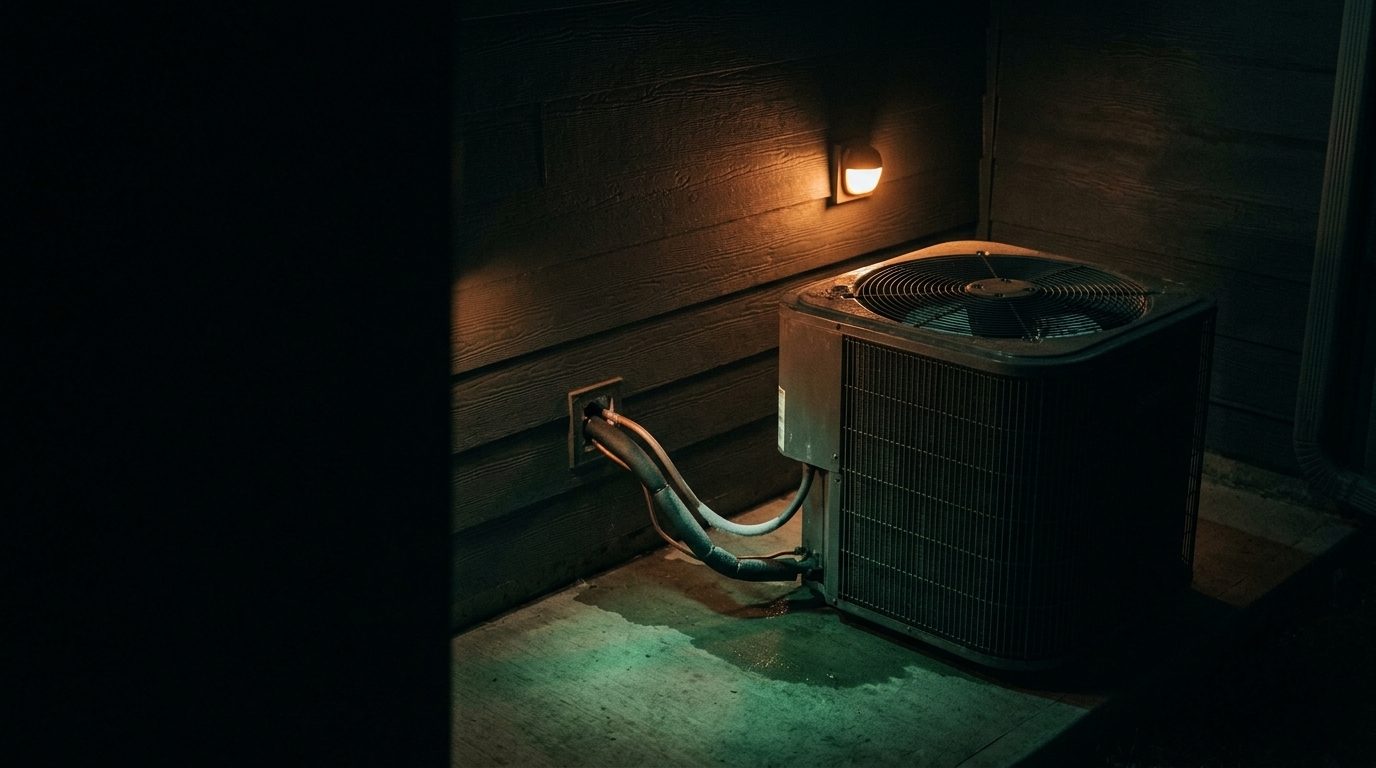
Hotpoint HVAC: Smells Like Burning
A burning smell can mean an overheating motor, an electrical fault, or dust burn-off — shut it down if it persists. Add a photo of your Hotpoint HVAC in the box below: the Triage Profile says what it is, how urgent it is, and who to call.
Show us the system.
Snap a photo — see what it is, how urgent, who to call. One photo of the problem. fixRAgent reads it and gives you a Triage Profile.
Or start with a sentence
AR Logic LLC · Privacy · Managing this for someone else? There is a version of this for whole portfolios. Managers: set it up for your buildings →
In the next five minutes
Safe first steps, before the call. Nothing here needs a tool.
If you smell gas: don’t touch any switch or plug, leave, then call the gas company or 911 from outside.
Smoke or flames: get everyone out and call 911.
No gas smell, smoke or flames? Switch the system off at the thermostat and at its breaker.
Everything else about this problem
Is it an emergency?
Is a burning smell from a Hotpoint HVAC system an emergency?
Treat it as urgent. Turn it off and switch off its breaker, and do not use it again until the cause is found. If you see smoke or flames, or smell gas, get everyone out and call 911.
Symptoms & causes
A burning smell emanating from your Hotpoint HVAC unit often indicates an overheating component, which can range from dust burning off heating elements to more serious electrical or mechanical failures. This odor might be accompanied by a reduction in airflow, unusual noises like grinding or squealing, or the unit struggling to maintain temperature. Root causes typically include a failing blower motor, a shorted capacitor, worn-out belts, or excessive dust accumulation on critical parts.
Tools & parts
A digital multimeter, such as a Klein Tools CL800, is essential for checking electrical continuity and voltage to track down component failures. A basic screwdriver set, like a Stanley 6-piece, will be needed to access the unit's internal panels and components. For cleaning, a shop vacuum, such as a Craftsman 5-gallon, is highly effective for removing dust and debris from the blower assembly and heating elements.
Safety first
Immediately shut off all power to your Hotpoint HVAC system at both the thermostat and the main electrical breaker to prevent further damage or fire hazards. Never attempt to operate the unit if a burning smell persists, as this indicates a serious underlying issue that could lead to electrical fires or carbon monoxide leaks. Always wear insulated gloves and safety glasses when inspecting or working near electrical components to protect against shock and potential debris.
When to call a pro
A persistent burning smell after initial cleaning and filter replacement often signals a failing blower motor or a shorted electrical component like a capacitor or relay, which requires professional testing. If you observe visible smoke, sparks, or if the circuit breaker repeatedly trips, these are critical electrical failures demanding immediate attention from a certified HVAC technician. Additionally, any suspicion of a cracked heat exchanger or carbon monoxide presence necessitates a professional inspection due to severe safety risks.
Questions people ask
Is a burning smell from my Hotpoint HVAC always serious?
Not always, but it's a serious warning. Sometimes it's just dust burning off heating elements after a long period of inactivity, but it can also signal dangerous electrical or mechanical failures.
Can I continue to use my Hotpoint HVAC if it smells like burning?
No, you should immediately turn off the unit. Continuing to operate it risks further damage, potential fire, or carbon monoxide poisoning depending on the source of the smell.
What's the most common cause of a burning smell in a Hotpoint HVAC?
Often, it's accumulated dust and debris burning off the heating elements or a dirty filter restricting airflow, causing components to overheat. However, failing electrical components like motors or capacitors are also frequent culprits.
Related problems
More Hotpoint HVAC system problems
Check another symptom for your Hotpoint HVAC.
Smells like burning: other brands
Guides and hubs
A resident sent you this?
What a property manager should do when a resident reports AC not cooling: the first message, how urgent, who to send.
The manager’s checklist →Ask AI about this problem
What it is, how urgent, who to call
Add a photo of your Hotpoint HVAC in the box at the top. The Triage Profile says what it is, how urgent it is, and who to call.