

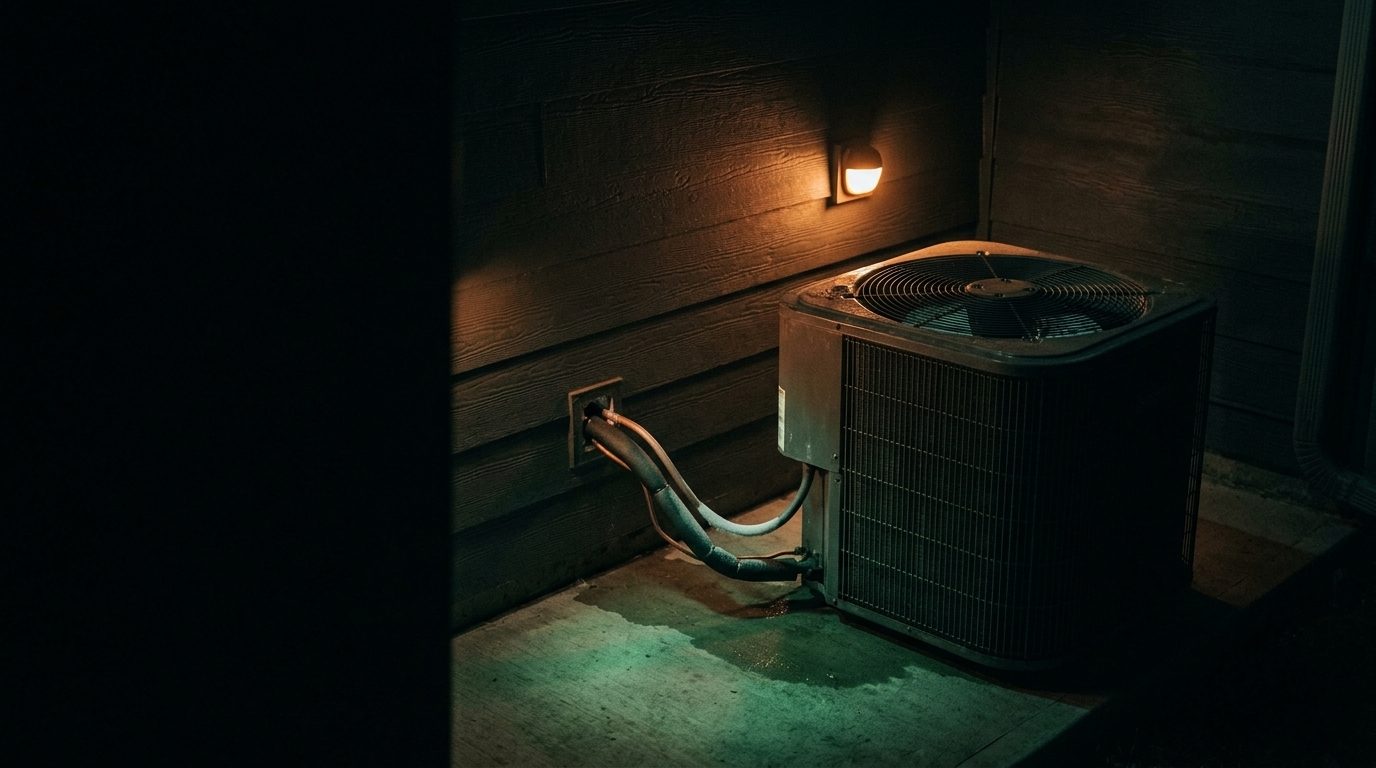
Thermador HVAC: Leaking Water
Most often a clogged condensate drain line, a cracked drain pan, or a frozen evaporator coil. Add a photo of your Thermador HVAC in the box below: the Triage Profile says what it is, how urgent it is, and who to call.
Show us the system.
Snap a photo — see what it is, how urgent, who to call. One photo of the problem. fixRAgent reads it and gives you a Triage Profile.
Or start with a sentence
AR Logic LLC · Privacy · Managing this for someone else? There is a version of this for whole portfolios. Managers: set it up for your buildings →
In the next five minutes
Safe first steps, before the call. Nothing here needs a tool.
If water is near an outlet or cord, don’t touch them. Switch the system off at the thermostat, then at its breaker. Don’t stand in water to reach the breaker panel; if the panel is wet or you’d have to stand in water, leave it and call.
Keep people off the wet floor and away from the unit.
Take a photo of the unit and the water, without opening anything.
Everything else about this problem
Is it an emergency?
Is a Thermador HVAC system leaking water an emergency?
Usually urgent, and it can be an emergency. Turn the system off at the thermostat, soak up standing water and keep it away from outlets and the unit's wiring. If water is coming through a ceiling or reaching electrics, switch off the breaker and treat it as an emergency.
Symptoms & causes
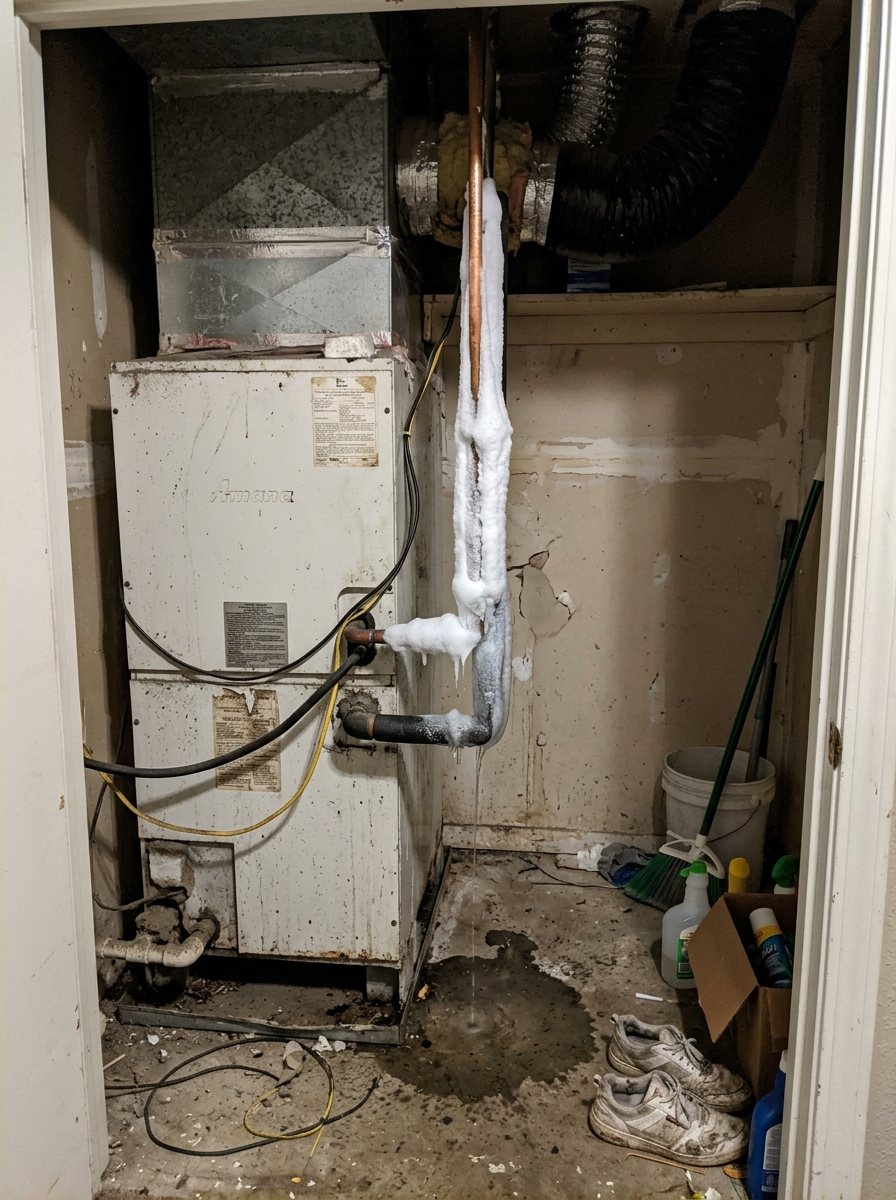
Water pooling around the indoor unit, dripping from the ceiling, or overflowing from the condensate drain pan are primary indicators of a leak. This often points to a blockage in the condensate drain line, preventing proper water removal. A frozen evaporator coil, often caused by low refrigerant or restricted airflow, will also melt and overflow the pan once the unit cycles off.
Tools & parts
A wet/dry vacuum is essential for clearing stubborn clogs in the condensate drain line. You'll also need a stiff brush or pipe cleaner for manual debris removal and possibly condensate drain pan tablets to prevent future algae growth.
Safety first
Always shut off power to your Thermador HVAC unit at the circuit breaker before attempting any inspection or repair to prevent electrical shock. Be cautious of standing water, as it can create an electrical hazard and may contain mold spores. Wear gloves and eye protection when dealing with potentially contaminated water or cleaning solutions.
When to call a pro
If your Thermador HVAC is leaking due to a refrigerant leak, indicated by a frozen coil and poor cooling, a certified technician is required to track down and repair it. Complex electrical issues, such as a faulty condensate pump or sensor, also necessitate professional intervention due to specialized testing tools and safety concerns. Persistent leaks after basic cleaning, or if the leak originates from the sealed refrigerant lines, indicate a need for a Thermador-certified HVAC expert.
Questions people ask
Why is my Thermador HVAC leaking water inside?
Your Thermador HVAC is likely leaking due to a clogged condensate drain line, which prevents the water collected during the cooling process from draining away. Another common cause is a frozen evaporator coil, often resulting from low refrigerant levels or restricted airflow, which then melts and overflows the drain pan.
Can I fix a Thermador HVAC water leak myself?
For simple clogs in the condensate drain line, you can often clear them yourself using a wet/dry vacuum or a brush. However, if the leak is caused by a refrigerant issue, a faulty condensate pump, or other complex mechanical failures, it's best to call a professional.
What are the long-term risks of a leaking Thermador HVAC?
Long-term leaks can lead to significant mold and mildew growth within your home, posing health risks and damaging indoor air quality. Persistent moisture can also cause structural damage to ceilings, walls, and flooring, leading to costly repairs and potential electrical hazards if wiring is exposed to water.
Related problems
More Thermador HVAC system problems
Check another symptom for your Thermador HVAC.
Leaking water: other brands
Guides and hubs
A resident sent you this?
What a property manager should do when a resident reports AC not cooling: the first message, how urgent, who to send.
The manager’s checklist →Ask AI about this problem
What it is, how urgent, who to call
Add a photo of your Thermador HVAC in the box at the top. The Triage Profile says what it is, how urgent it is, and who to call.