

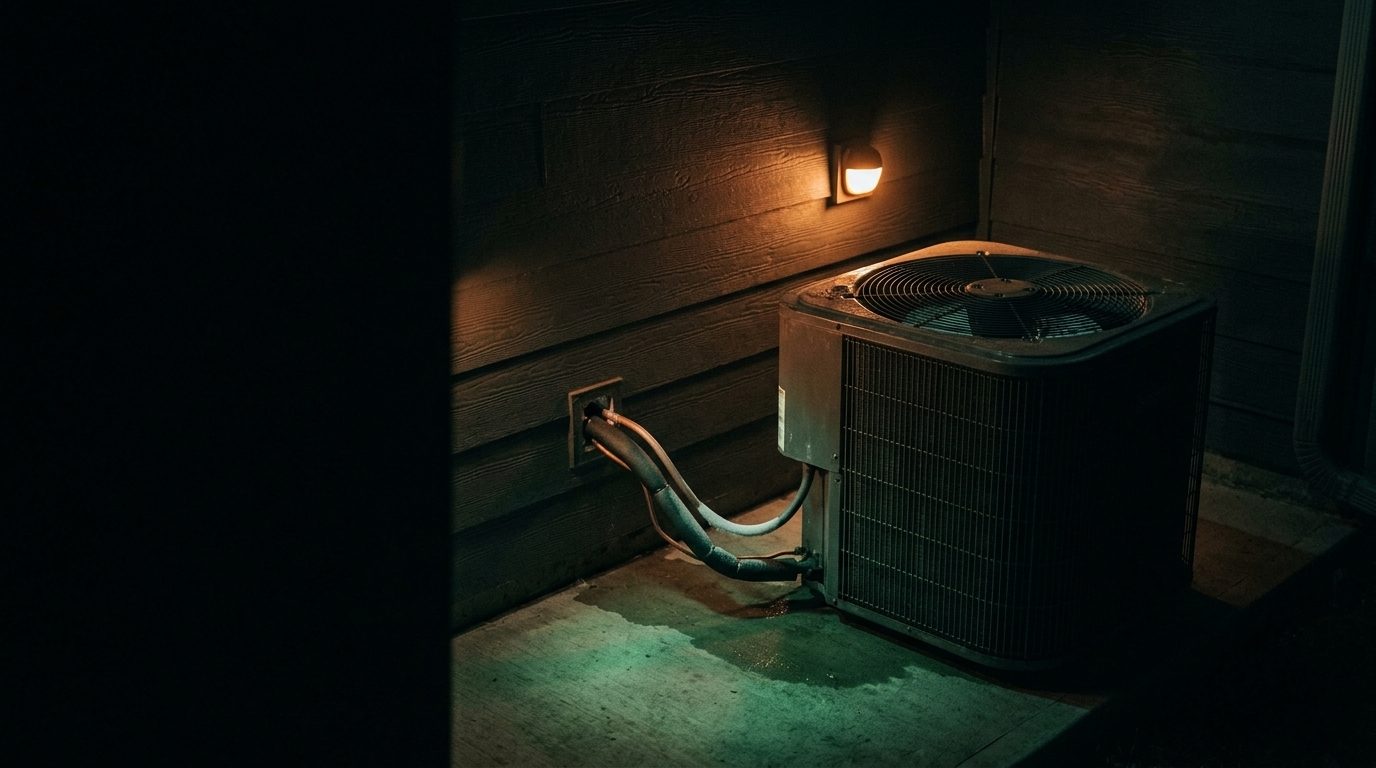
Sub-Zero HVAC: Won't Start or Turn On
Commonly a blown capacitor, a faulty contactor, or a thermostat or control fault. Add a photo of your Sub-Zero HVAC in the box below: the Triage Profile says what it is, how urgent it is, and who to call.
Show us the system.
Snap a photo — see what it is, how urgent, who to call. One photo of the problem. fixRAgent reads it and gives you a Triage Profile.
Or start with a sentence
AR Logic LLC · Privacy · Managing this for someone else? There is a version of this for whole portfolios. Managers: set it up for your buildings →
In the next five minutes
Safe first steps, before the call. Nothing here needs a tool.
Switch the system off at the thermostat and at its breaker.
Take a photo of the unit and the thermostat, without opening anything.
Don’t use it again until it’s checked, and keep people away from it.
Everything else about this problem
Is it an emergency?
Is a Sub-Zero HVAC system that won't start an emergency?
Usually not, but it can be. Because this can be an emergency, leave it off and get it checked; don't reset it or turn it back on. Stop and call a pro if it keeps tripping the breaker, smells like burning, or you smell gas.
Symptoms & causes
When your Sub-Zero HVAC system fails to start or turn on, common symptoms include a completely dark thermostat display, no fan operation from the indoor unit, and no sound or vibration from the outdoor compressor. The root causes often stem from a lack of power supply due to a tripped circuit breaker, a faulty thermostat not sending the call for heating or cooling, or a safety lockout initiated by the control board to prevent damage. Less common but possible issues include a failed capacitor in the outdoor unit or a more complex control board malfunction preventing system initiation.
Tools & parts
A reliable multimeter is essential for checking electrical continuity and voltage issues within your Sub-Zero HVAC system. A basic screwdriver set will be needed for accessing control panels and terminal blocks, while wire strippers might be necessary for minor wiring repairs. Specific parts that might need replacement include a new Sub-Zero compatible thermostat, a replacement run capacitor for the outdoor unit, or potentially a main control board if tests point to a system-wide electronic failure.
Safety first
Always begin by completely shutting off power to your Sub-Zero HVAC system at both the main electrical panel's circuit breaker and the outdoor disconnect switch to prevent severe electrical shock. Be aware of potential hazards such as high voltage wiring, sharp metal edges within the unit, and the possibility of stored energy in capacitors even after power is off. Never attempt to work on the sealed refrigerant system, as this contains pressurized chemicals that require specialized training and tools for safe handling.
When to call a pro
If initial troubleshooting steps do not resolve the issue, a professional technician is required for checking complex failures such as a seized compressor or a refrigerant leak within the sealed system. Sub-Zero HVAC systems often utilize proprietary control boards and testing tools, making advanced electrical troubleshooting beyond basic voltage checks best left to certified experts. Furthermore, any issues involving motor replacement for the blower or condenser fan, or a complete control board failure that requires reprogramming, typically necessitate professional intervention to ensure proper calibration and system integrity.
Questions people ask
Why is my Sub-Zero HVAC not turning on after a power outage?
A power outage can often trip the circuit breaker protecting your HVAC system or cause the system's control board to enter a safety lockout mode. Resetting the breaker and waiting 30 minutes for the system's internal timers to reset often resolves this, allowing the system to clear any error codes and attempt to restart.
Can I replace the thermostat myself on a Sub-Zero HVAC?
Yes, if it's a standard low-voltage thermostat, you can typically replace it yourself by carefully following the wiring instructions for the new unit. Always disconnect power to the HVAC system at the breaker before attempting any wiring changes to prevent damage to the control board or personal injury.
What if the outdoor unit isn't running but the indoor unit is?
This often indicates an issue with the outdoor unit's power supply, a faulty capacitor, a stuck contactor, or a problem with the compressor itself. Check the outdoor disconnect switch for power and listen for any humming sounds from the compressor, which might suggest a capacitor issue.
Related problems
More Sub-Zero HVAC system problems
Check another symptom for your Sub-Zero HVAC.
Won’t start: other brands
Guides and hubs
A resident sent you this?
What a property manager should do when a resident reports AC not cooling: the first message, how urgent, who to send.
The manager’s checklist →Ask AI about this problem
What it is, how urgent, who to call
Add a photo of your Sub-Zero HVAC in the box at the top. The Triage Profile says what it is, how urgent it is, and who to call.