

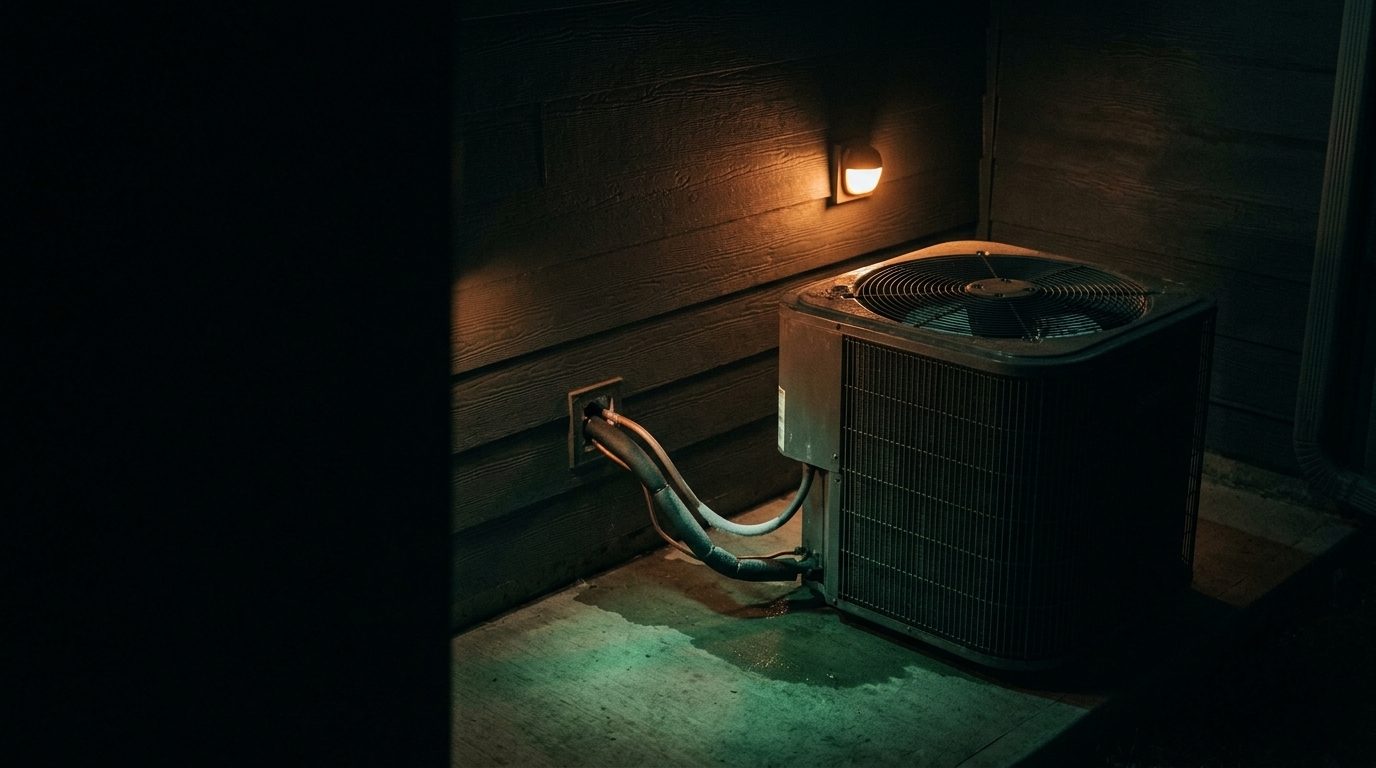
Samsung HVAC: Leaking Water
Most often a clogged condensate drain line, a cracked drain pan, or a frozen evaporator coil. Add a photo of your Samsung HVAC in the box below: the Triage Profile says what it is, how urgent it is, and who to call.
Show us the system.
Snap a photo — see what it is, how urgent, who to call. One photo of the problem. fixRAgent reads it and gives you a Triage Profile.
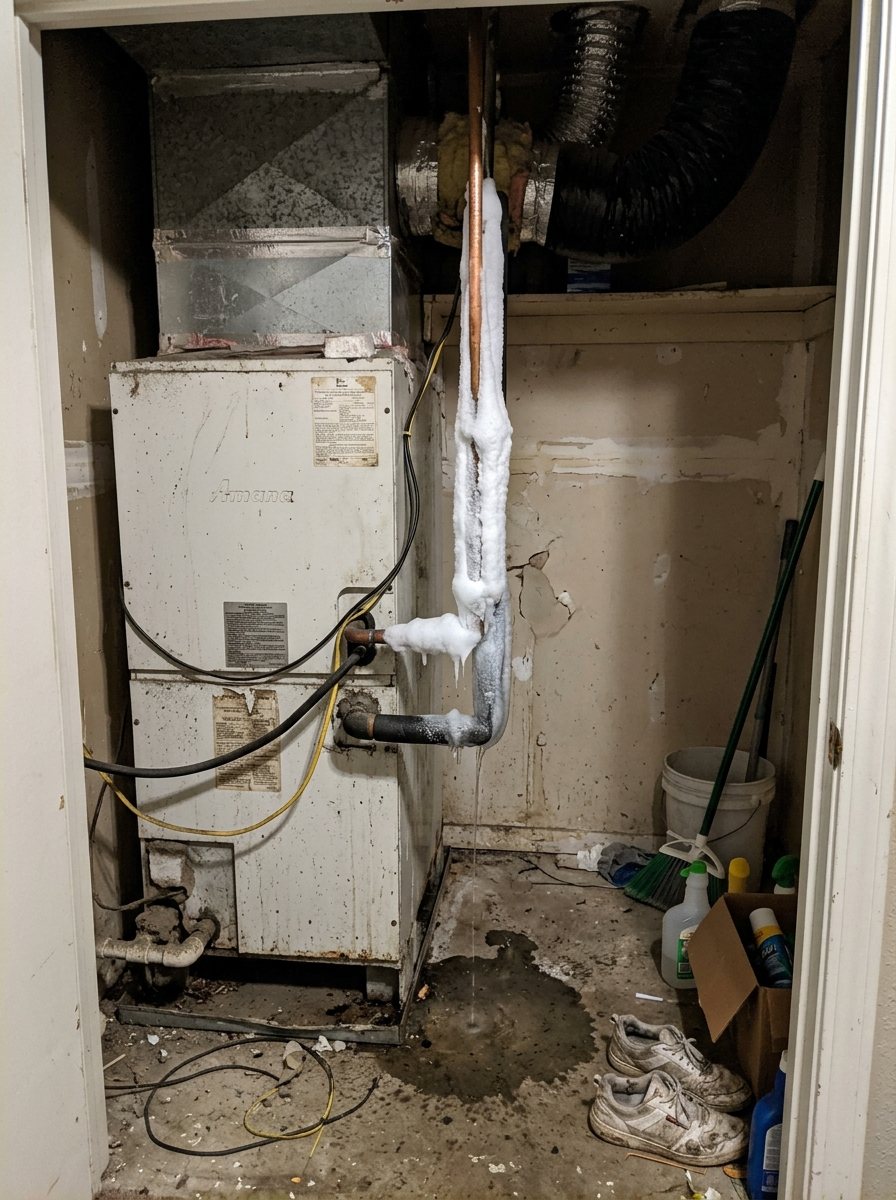
Or start with a sentence
AR Logic LLC · Privacy · Managing this for someone else? There is a version of this for whole portfolios. Managers: set it up for your buildings →
In the next five minutes
Safe first steps, before the call. Nothing here needs a tool.
If water is near an outlet or cord, don’t touch them. Switch the system off at the thermostat, then at its breaker. Don’t stand in water to reach the breaker panel; if the panel is wet or you’d have to stand in water, leave it and call.
Keep people off the wet floor and away from the unit.
Take a photo of the unit and the water, without opening anything.
Everything else about this problem
Is it an emergency?
Is a Samsung HVAC system leaking water an emergency?
Usually urgent, and it can be an emergency. Turn the system off at the thermostat, soak up standing water and keep it away from outlets and the unit's wiring. If water is coming through a ceiling or reaching electrics, switch off the breaker and treat it as an emergency.
Symptoms & causes
Your Samsung HVAC unit is leaking water, often observed as puddles around the indoor unit or water dripping from the ceiling if it's an attic installation. The primary root causes include a clogged condensate drain line, a frozen evaporator coil due to low refrigerant or poor airflow, or a cracked or overflowing drain pan. You might also notice a musty odor, reduced cooling efficiency, or the unit cycling on and off frequently.
Tools & parts
For basic troubleshooting, you'll need a wet/dry vacuum, a stiff brush, a screwdriver set, and potentially a flashlight. To address a clogged drain line, specific items like condensate drain pan tablets, a specialized drain line cleaner, or a small PVC snake are useful. If a condensate pump is failing, a replacement pump may be needed.
Safety first
Always begin by shutting off all power to your Samsung HVAC unit at both the thermostat and the main electrical breaker or outdoor disconnect switch to prevent electrocution. Water and electricity are a dangerous combination, so ensure the area is dry before touching any electrical components. Wear appropriate personal protective equipment like gloves and eye protection, and avoid direct contact with refrigerant lines as they can be extremely cold or hot.
When to call a pro
A professional technician is required if the leak is due to a refrigerant leak, indicated by ice formation on the evaporator coil even after cleaning the filter and drain line, as this involves specialized tools and EPA certification. Major component failures such as a faulty compressor or a severely damaged evaporator coil, which are complex and costly repairs, also necessitate expert intervention. Furthermore, if the issue stems from a malfunctioning control board or intricate sensor failures within the Samsung unit, a qualified HVAC technician with testing equipment is essential.
Questions people ask
Why is my Samsung HVAC freezing up and leaking water?
A frozen evaporator coil often results from low refrigerant levels or restricted airflow caused by a dirty air filter or blocked return vents. When the ice melts, it overloads the drain pan, causing water to leak.
How often should I clean my Samsung HVAC drain line?
It's recommended to clean your Samsung HVAC condensate drain line at least once a year, preferably semi-annually, to prevent clogs. Regular maintenance helps ensure proper drainage and prevents water damage.
Can I use bleach to clean the drain line?
While a diluted solution of bleach (1 part bleach to 16 parts water) can be used, it's generally safer and more effective to use specialized HVAC drain pan tablets or vinegar. Bleach can be corrosive to some components over time and its fumes are strong.
Related problems
More Samsung HVAC system problems
Check another symptom for your Samsung HVAC.
Leaking water: other brands
Guides and hubs
A resident sent you this?
What a property manager should do when a resident reports AC not cooling: the first message, how urgent, who to send.
The manager’s checklist →Ask AI about this problem

What it is, how urgent, who to call
Add a photo of your Samsung HVAC in the box at the top. The Triage Profile says what it is, how urgent it is, and who to call.