

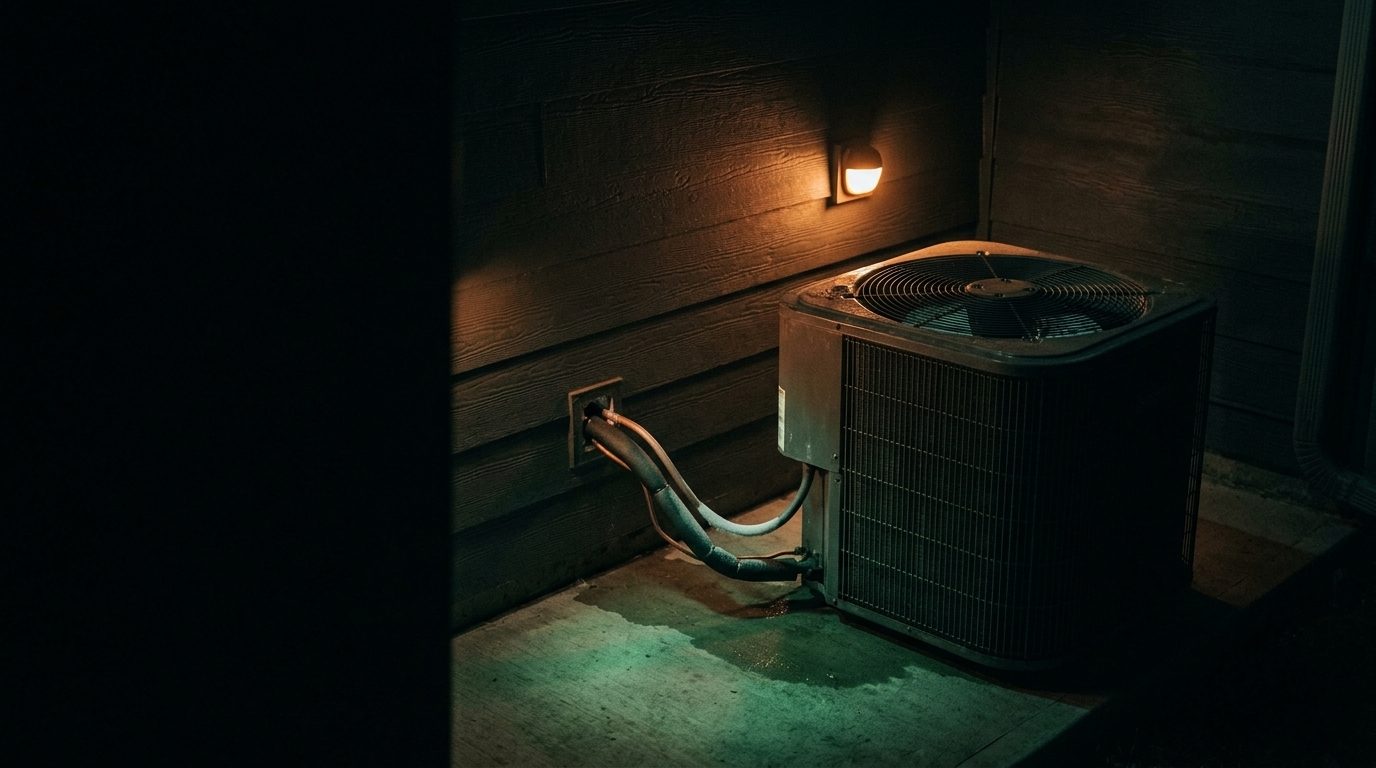
Electrolux HVAC: Making Loud Noise
Often a failing blower or condenser-fan motor, a worn belt, or a struggling compressor. Add a photo of your Electrolux HVAC in the box below: the Triage Profile says what it is, how urgent it is, and who to call.
Show us the system.
Snap a photo — see what it is, how urgent, who to call. One photo of the problem. fixRAgent reads it and gives you a Triage Profile.
Or start with a sentence
AR Logic LLC · Privacy · Managing this for someone else? There is a version of this for whole portfolios. Managers: set it up for your buildings →
In the next five minutes
Safe first steps, before the call. Nothing here needs a tool.
Note what the noise sounds like and when it happens, then switch the system off at the thermostat and at its breaker.
Take a photo of the unit and the thermostat, without opening anything.
Don’t use it again until it’s checked, and keep people away from it.
Everything else about this problem
Is it an emergency?
Is a loud noise from an Electrolux HVAC system an emergency?
Usually not, but it can be. A grinding, rattling or humming that has just started most often comes from a fan, motor, belt or loose panel. Stop using it and cut the power if the noise comes with a burning smell, smoke or sparks; if it runs on gas and you smell gas, leave and call the gas company or 911 from outside.
Symptoms & causes
Loud noises from your Electrolux HVAC system can manifest as grinding, banging, squealing, or rattling sounds, indicating various underlying issues. Grinding often points to failing motor bearings or a foreign object in the blower, while squealing suggests a worn belt or dry bearings. Rattling could be caused by loose panels, debris, or an unbalanced fan blade, all of which put stress on the Electrolux unit's components.
Tools & parts
For initial testing, you will need a basic screwdriver set, an adjustable wrench, and a multimeter to check electrical components. Specific Electrolux replacement parts might include a new blower motor, a blower wheel, or a run capacitor. These tools and parts are essential for tightening loose components, testing electrical continuity, and replacing faulty mechanical parts within your Electrolux HVAC system.
Safety first
Always begin by completely shutting off power to your Electrolux HVAC unit at both the thermostat and the main electrical breaker panel to prevent accidental startup. Be extremely cautious of electrical hazards and moving parts, even when the unit is off, as capacitors can store a charge and fan blades can have sharp edges. Wear appropriate personal protective equipment, including work gloves and safety glasses, and never attempt to work on refrigerant lines unless you are a certified professional.
When to call a pro
You should call a professional technician if the loud noise is accompanied by a burning smell, indicating a serious electrical fault or motor burnout within your Electrolux unit. Complex issues like a failing Electrolux compressor, refrigerant leaks, or major electrical control board malfunctions require specialized testing tools and certified expertise. These specific failure modes often involve sealed system repairs or high-voltage component replacements that are dangerous and illegal for untrained individuals to attempt.
Questions people ask
Why is my Electrolux HVAC making a grinding noise?
A grinding noise often indicates a failing motor bearing or a foreign object in the blower assembly. This requires immediate attention to prevent further damage to the unit.
What causes a squealing sound in my Electrolux unit?
A squealing noise typically points to a worn or loose blower belt, or dry motor bearings. Lubricating or replacing these components can often resolve the issue.
Can a dirty filter cause loud noises in my Electrolux HVAC?
Yes, a severely clogged filter can restrict airflow, causing the blower motor to work harder and potentially vibrate excessively. Replacing the Electrolux air filter regularly can prevent this strain and noise.
Related problems
More Electrolux HVAC system problems
Check another symptom for your Electrolux HVAC.
Making a loud noise: other brands
Guides and hubs
A resident sent you this?
What a property manager should do when a resident reports AC not cooling: the first message, how urgent, who to send.
The manager’s checklist →Ask AI about this problem

What it is, how urgent, who to call
Add a photo of your Electrolux HVAC in the box at the top. The Triage Profile says what it is, how urgent it is, and who to call.