

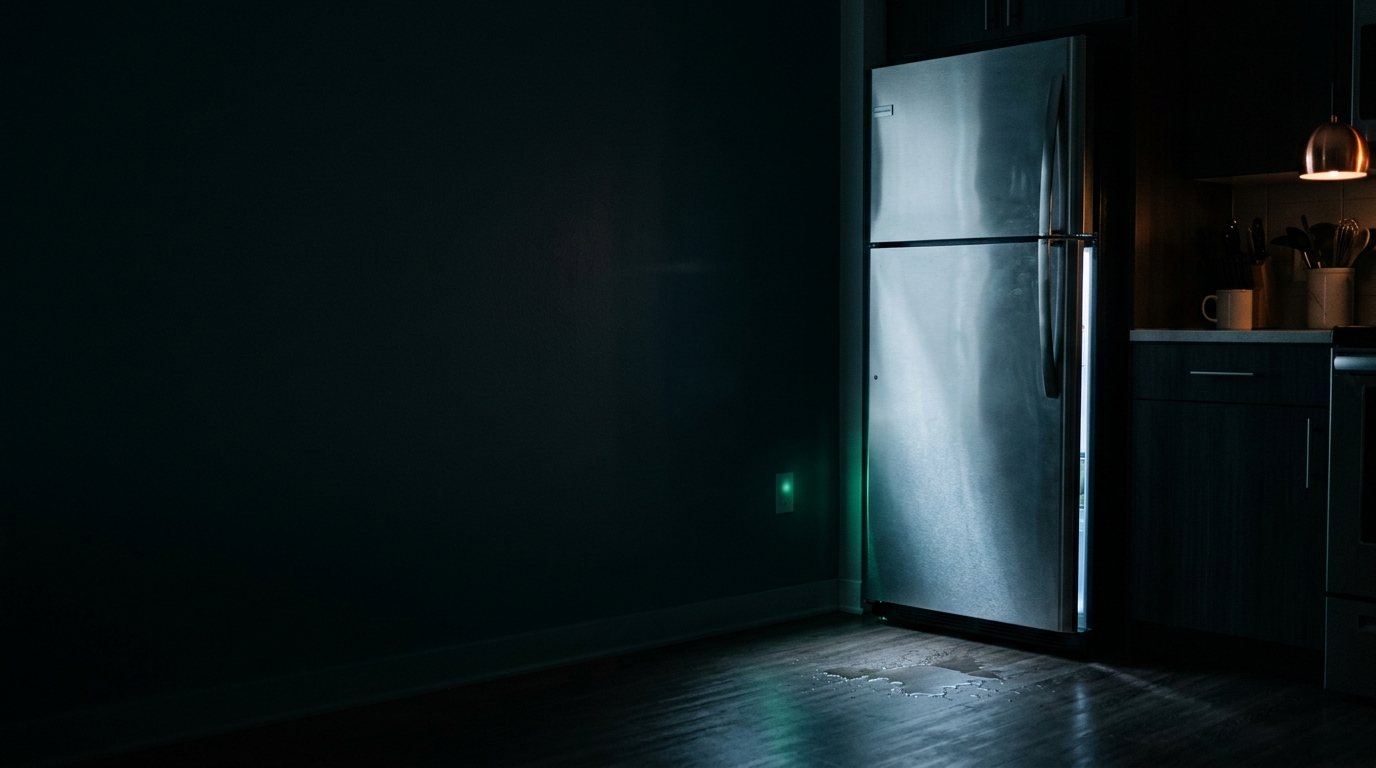
KitchenAid refrigerator smells like burning — is it urgent?
A burning smell can mean an overheating compressor relay or a failing fan motor. Right now, switch the refrigerator off at the breaker and keep the doors shut, open a window, and leave it off until the technician has seen it. Smoke, a scorch mark, melted plastic, or a smell that carries on with the power off moves this up: a photo that shows wiring a person could touch makes the Triage Profile say EMERGENCY, and the word holds.
Show us the fridge.
Snap a photo — see what it is, how urgent, who to call. One photo of the problem. fixRAgent reads it and gives you a Triage Profile.
Or start with a sentence
AR Logic LLC · Privacy · Managing this for someone else? There is a version of this for whole portfolios. Managers: set it up for your buildings →
In the next five minutes
Safe first steps, before the call. Nothing here needs a tool.
Smoke or flames: get everyone out and call 911.
No smoke or flames? Switch off the fridge’s breaker, and don’t touch the plug or cord.
Don’t use it again until it’s checked, and keep people away from it.
Everything else about this problem
Is it an emergency?
Is a burning smell from a KitchenAid refrigerator an emergency?
Treat it as urgent. Turn it off and unplug it or switch off its breaker, and do not use it again until the cause is found. If you see smoke or flames, or smell gas, get everyone out and call 911.
If you manage this unit
Ask the resident
- Does the smell stop when the refrigerator is off?
- Is there smoke, a scorch mark, or melted plastic anywhere on it?
Say this to your resident
Thanks for telling me about the burning smell from the refrigerator. Please switch the refrigerator off at the breaker and keep the doors shut right now, open a window, and leave it off tonight. If you see smoke or a flame, get everyone out and call 911, then call me. Send me a photo of the refrigerator with the plug and the panel in shot, and I'll get an appliance technician out.
Who to call
An appliance technician A smell from the plug, the socket or the wall goes to an electrician.
Symptoms & causes
A burning smell can mean an overheating compressor relay or a failing fan motor.
A burning smell emanating from your KitchenAid refrigerator often indicates an electrical component overheating, such as a fan motor, compressor start relay, or control board. This odor can range from a faint electrical scent to a strong burning plastic smell, sometimes accompanied by a lack of cooling or unusual buzzing or grinding noises. The root cause is typically friction from a failing motor, an electrical short, or excessive dust accumulation causing components to overheat.
Questions people ask
Who do I call for a refrigerator that smells like burning?
An appliance technician. A burning smell can mean an overheating compressor relay or a failing fan motor. A smell from the plug, the socket or the wall goes to an electrician. The Triage Profile names who to call for your photo.
What do I tell the resident right now?
Thanks for telling me about the burning smell from the refrigerator. Please switch the refrigerator off at the breaker and keep the doors shut right now, open a window, and leave it off tonight. If you see smoke or a flame, get everyone out and call 911, then call me. Send me a photo of the refrigerator with the plug and the panel in shot, and I'll get an appliance technician out.
What's the most common cause of a burning smell in a KitchenAid refrigerator?
The most common cause is a failing fan motor, either the evaporator fan in the freezer or the condenser fan at the back. These motors can overheat, causing the plastic housing or wiring insulation to melt and emit a burning odor.
Related problems
More KitchenAid refrigerator problems
Another symptom on the same refrigerator.
Smells like burning: other brands
Guides and hubs
A resident sent you this?
fixRAgent reads resident photos for whole portfolios: what it is, how urgent, who to send, what to tell them.
Set it up for your buildings →Ask AI about this problem

Have the photo now?
Drop it in the box at the top. The Triage Profile says what it is, how urgent, who to call and what to say. Email the Triage Profile to yourself or share its link with the resident.