


KitchenAid Refrigerator: Leaking Water
Most often a clogged defrost drain, a cracked water inlet valve, or a frozen supply line. Add a photo of your KitchenAid Refrigerator in the box below: the Triage Profile says what it is, how urgent it is, and who to call.
Show us the fridge.
Snap a photo — see what it is, how urgent, who to call. One photo of the problem. fixRAgent reads it and gives you a Triage Profile.
Or start with a sentence
AR Logic LLC · Privacy · Managing this for someone else? There is a version of this for whole portfolios. Managers: set it up for your buildings →
In the next five minutes
Safe first steps, before the call. Nothing here needs a tool.
If water is near the plug or outlet, don’t touch them. Switch off the fridge’s breaker first. Don’t stand in water to reach the breaker panel; if the panel is wet or you’d have to stand in water, leave it and call.
Then close the water valve that feeds the ice maker or dispenser, if it has one and you can reach it without moving the fridge.
Keep people off the wet floor, and keep the fridge doors shut to hold the cold.
Everything else about this problem
Is it an emergency?
Is a KitchenAid refrigerator leaking water an emergency?
Usually urgent, and it can be an emergency. Turn off the water to it and unplug it or switch off its breaker, then soak up standing water. If water is reaching outlets or cords, switch off the breaker before touching anything; water coming through a ceiling is an emergency.
Symptoms & causes
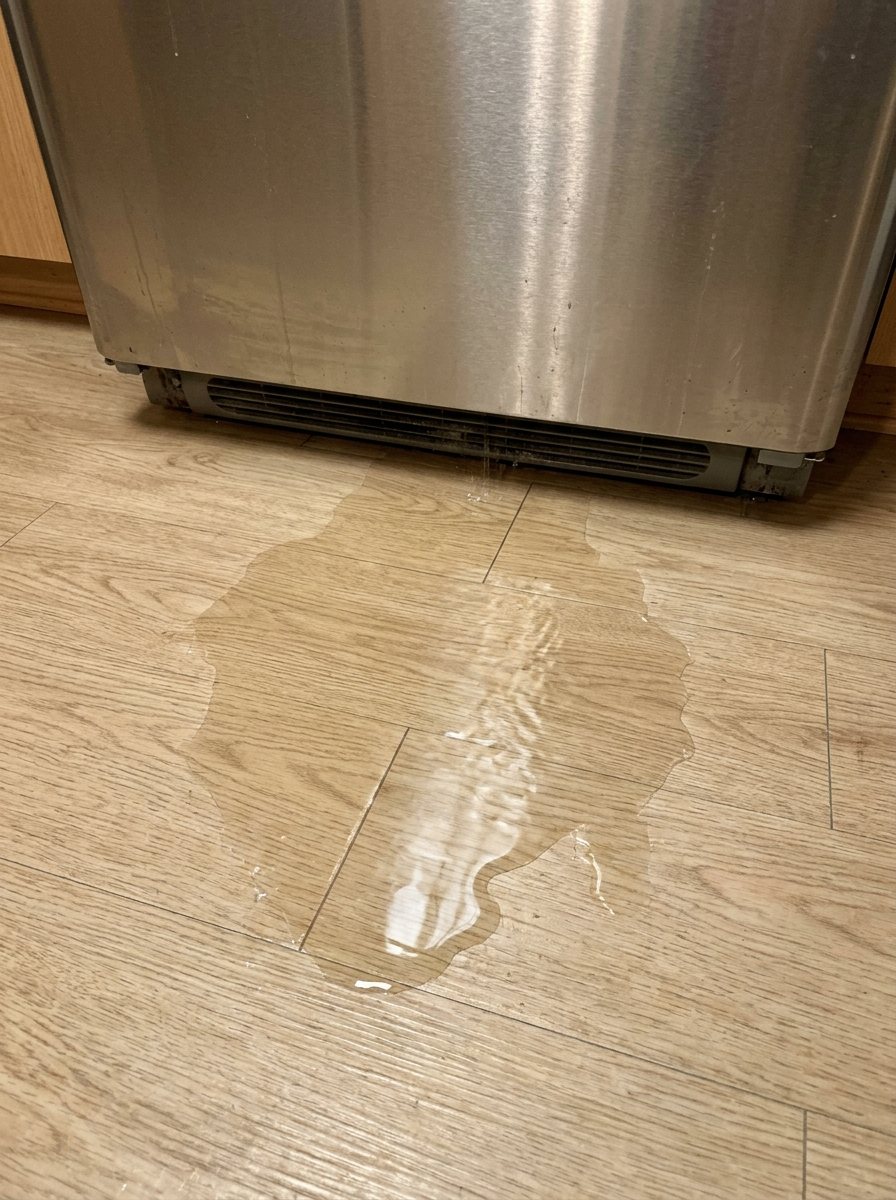
Water pooling under your KitchenAid refrigerator or inside the fresh food compartment often indicates a problem with the defrost system or water supply. A common culprit is a clogged defrost drain tube, which causes water from the defrost cycle to overflow the drain pan and leak onto the floor. Alternatively, a loose or cracked water supply line, a faulty water inlet valve, or an overflowing drip pan can also lead to significant leaks.
Tools & parts
You'll need basic hand tools like a screwdriver set, nut drivers, and a flashlight to access internal components of your KitchenAid refrigerator. For specific repairs, a defrost drain tube heater kit can prevent future clogs, or a new water inlet valve might be necessary if the original is faulty. A replacement water line is essential if the existing one is cracked, and a wet/dry vacuum will be useful for cleaning up any standing water.
Safety first
Always unplug your KitchenAid refrigerator from the wall outlet before performing any inspection or repair to prevent electrical shock. Additionally, locate and turn off the main water supply valve to the refrigerator, usually found behind the unit or under the sink, to stop the leak and prevent further water damage. Be cautious when moving the heavy appliance and avoid contact with sharp edges or hot components like the compressor.
When to call a pro
If your KitchenAid refrigerator's sealed system, which includes the compressor and evaporator, is leaking refrigerant, this requires specialized tools and EPA certification for repair. Persistent leaks after addressing common issues, especially if accompanied by unusual noises or cooling problems, might indicate a complex control board malfunction that is best identified by a professional. Furthermore, if the leak is originating from a damaged evaporator coil or a failed compressor, these are intricate repairs that typically necessitate a certified KitchenAid technician.
Questions people ask
Why is water leaking inside my KitchenAid refrigerator?
This is commonly caused by a clogged defrost drain tube. Food debris or ice can block the tube, causing defrost water to back up and overflow into the fresh food compartment.
Can I fix a KitchenAid refrigerator water leak myself?
Many common leaks, such as those from a clogged defrost drain or a loose water line connection, can be fixed by a DIY enthusiast. However, more complex issues like a faulty water inlet valve or a cracked evaporator coil may require professional assistance.
How do I find the source of the leak on my KitchenAid refrigerator?
Start by checking the water supply line connections at the back of the fridge and the water inlet valve. Then, inspect the defrost drain pan and the drain tube for clogs or cracks, often requiring you to pull the refrigerator away from the wall and remove the back access panel.
Related problems
More KitchenAid refrigerator problems
Check another symptom for your KitchenAid Refrigerator.
Leaking water: other brands
Guides and hubs
A resident sent you this?
Water under an appliance: how a property manager sorts it into emergency, urgent or routine, and what moves it up.
The manager’s guide →Ask AI about this problem

What it is, how urgent, who to call
Add a photo of your KitchenAid Refrigerator in the box at the top. The Triage Profile says what it is, how urgent it is, and who to call.