


Haier Water Heater: Leaking Water
Most often a failing pressure-relief valve, a loose drain valve, or tank corrosion. Add a photo of your Haier Water Heater in the box below: the Triage Profile says what it is, how urgent it is, and who to call.
Show us the water heater.
Snap a photo — see what it is, how urgent, who to call. One photo of the problem. fixRAgent reads it and gives you a Triage Profile.
Or start with a sentence
AR Logic LLC · Privacy · Managing this for someone else? There is a version of this for whole portfolios. Managers: set it up for your buildings →
In the next five minutes
Safe first steps, before the call. Nothing here needs a tool.
If you smell gas, a carbon monoxide alarm sounds, or anyone feels dizzy or sick: don’t touch any switch or plug, leave and get everyone out, then call 911 or the gas company from outside.
If water is near an outlet or cord, don’t touch them. Either way, turn the water heater’s gas control knob to OFF if it’s gas, or switch off its breaker if it’s electric. Don’t stand in water to reach the breaker panel; if the panel is wet or you’d have to stand in water, leave it and call.
Then close the cold water valve on the pipe into the top of the tank, and keep people away from hot water on the floor.
Everything else about this problem
Is it an emergency?
Is a Haier water heater leaking water an emergency?
Usually urgent, not an emergency. Turn off the water to it and switch off its breaker, then soak up standing water. If water is reaching outlets or cords, switch off the breaker before touching anything; water coming through a ceiling is an emergency.
Symptoms & causes
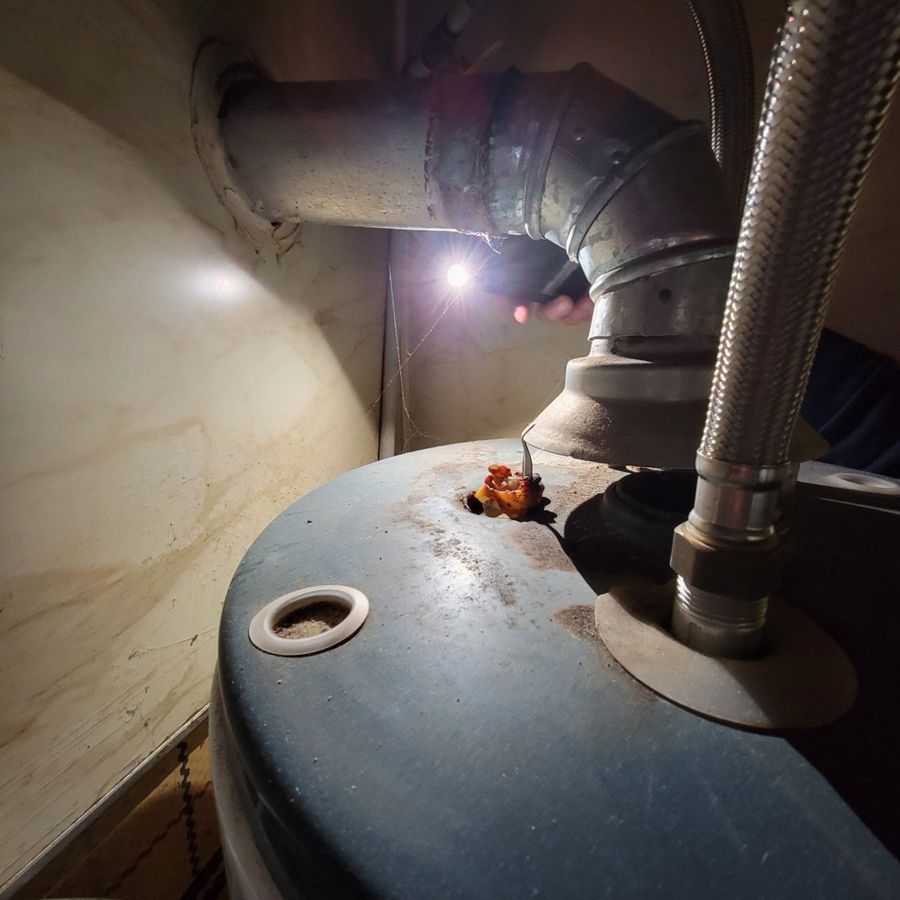
Water pooling around the base of your Haier water heater is a primary indicator of a leak, which can range from a slow drip to a steady stream. Leaks frequently originate from the pressure relief valve, the cold water inlet or hot water outlet connections, or a corroded drain valve. A persistent leak often suggests a compromised seal, a loose fitting, or, in more severe cases, internal tank corrosion leading to a breach.
Tools & parts
For minor leaks, essential tools include a pipe wrench for tightening connections, Teflon tape for sealing threads, and a bucket for catching drips. If the pressure relief valve is faulty, a new T&P valve and a screwdriver set will be necessary for replacement. For anode rod inspection or replacement, a 1-1/16 inch socket and a breaker bar are often required.
Safety first
Always prioritize safety by first shutting off the main cold water supply valve to the Haier water heater before attempting any repairs. Next, turn off the power supply to the unit at the circuit breaker for electric models or close the gas shut-off valve for gas models to prevent electrocution or gas leaks. Be extremely cautious of hot water, as it can cause severe burns; allow the water to cool or drain the tank partially before working on hot water lines or components.
When to call a pro
A professional technician is absolutely required if the leak originates directly from a crack in the main storage tank of your Haier water heater, as this signifies irreparable internal damage and necessitates a full unit replacement. If water is consistently leaking from the very bottom of the tank and not from any visible fittings or the drain valve, it almost certainly indicates internal tank corrosion, which is beyond DIY repair. Complex issues involving the gas valve, pilot light assembly, or the main electrical control board on Haier models, especially when combined with leaks, should always be handled by a licensed plumber or HVAC technician.
Questions people ask
Why is my Haier water heater leaking from the top?
Leaks from the top of a Haier water heater often point to issues with the cold water inlet or hot water outlet connections, or a faulty T&P (temperature and pressure) relief valve. Carefully inspect these connections for looseness, corrosion, or signs of dripping from the T&P valve's discharge pipe.
Can I fix a Haier water heater tank leak myself?
Minor leaks from fittings, the drain valve, or the T&P valve can often be tightened, sealed with Teflon tape, or replaced by a homeowner. However, if the leak is directly from the main tank body itself, it's usually a sign of internal corrosion and requires professional replacement, not a DIY patch.
How do I know if my Haier water heater's T&P valve is bad?
A T&P valve that constantly drips or streams water, even when the water heater is not overheating or over-pressurizing, is likely faulty and needs replacement. You might also observe mineral deposits or rust stains around the valve's discharge pipe, indicating a persistent leak.
Related problems
More Haier water heater problems
Check another symptom for your Haier Water Heater.
Leaking water: other brands
Guides and hubs
A resident sent you this?
What a property manager should do when a resident reports a leaking water heater: the first message, how urgent, who to send.
The manager’s checklist →Ask AI about this problem

What it is, how urgent, who to call
Add a photo of your Haier Water Heater in the box at the top. The Triage Profile says what it is, how urgent it is, and who to call.