

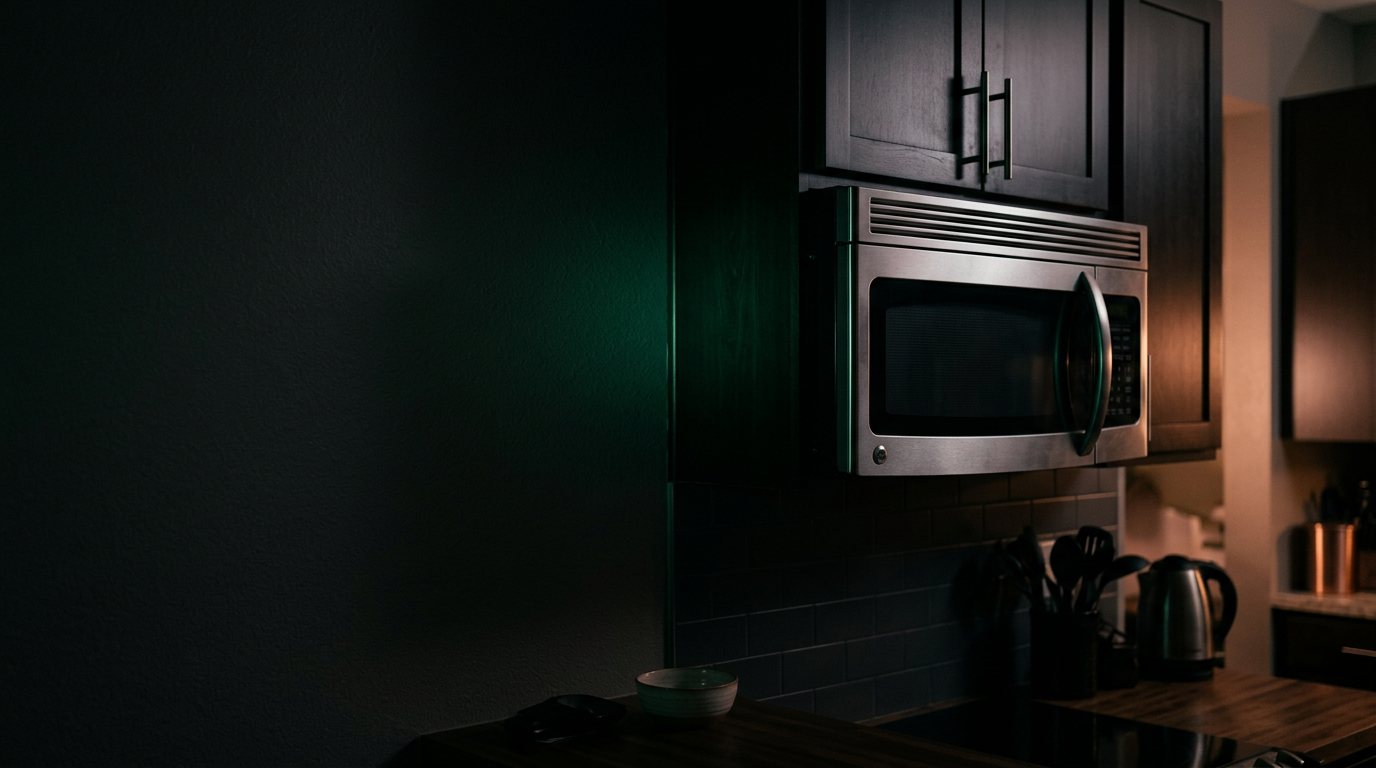
GE Microwave: Smells Like Burning
A burning smell often means a failing magnetron or a scorched waveguide cover — stop use. Add a photo of your GE Microwave in the box below: the Triage Profile says what it is, how urgent it is, and who to call.
Show us the microwave.
Snap a photo — see what it is, how urgent, who to call. One photo of the problem. fixRAgent reads it and gives you a Triage Profile.
Or start with a sentence
AR Logic LLC · Privacy · Managing this for someone else? There is a version of this for whole portfolios. Managers: set it up for your buildings →
In the next five minutes
Safe first steps, before the call. Nothing here needs a tool.
Smoke or flames: get everyone out and call 911.
No smoke or flames? Stop the microwave and switch off its breaker; don’t touch a hot or melted plug.
Keep the door shut, don’t use it again until it’s checked, and keep people away from it.
Everything else about this problem
Is it an emergency?
Is a burning smell from a GE microwave an emergency?
Treat it as urgent. Turn it off and unplug it or switch off its breaker, and do not use it again until the cause is found. If you see smoke or flames, or smell gas, get everyone out and call 911.
Symptoms & causes
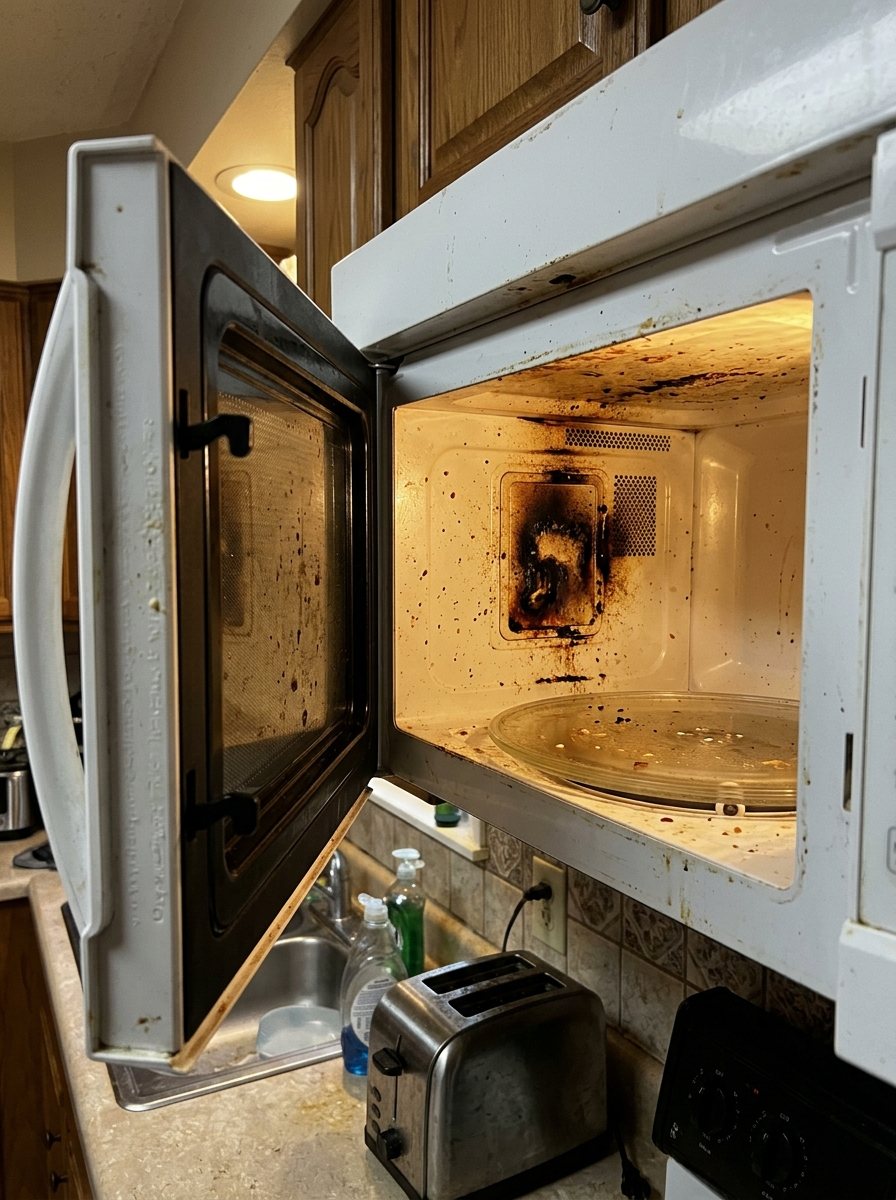
A GE microwave emitting a burning smell often indicates either food residue burning on the cavity walls or a more serious internal electrical issue. Common smells range from burnt popcorn to acrid electrical odors, which can stem from arcing inside the cavity, a failing magnetron, or a short in the high-voltage circuit. Persistent burning smells, especially accompanied by smoke or sparks, point to critical component failure like a damaged waveguide cover or a failing high-voltage diode.
Tools & parts
For tests, you'll need a multimeter for continuity and voltage checks, a screwdriver set (Phillips and Torx) for panel removal, and insulated pliers for discharging the capacitor. Common replacement parts include a GE-specific waveguide cover (mica sheet) or a high-voltage diode. If the magnetron is faulty, a new GE magnetron or a high-voltage capacitor may be needed.
Safety first
Immediately unplug the GE microwave from the wall outlet to eliminate power and prevent further damage or fire hazards. Be aware that the high-voltage capacitor inside can store a lethal electrical charge even after the unit is unplugged, requiring careful discharge with an insulated tool. Never operate a microwave with a damaged door seal or visible arcing, as this can expose you to harmful microwave radiation and increase fire risk.
When to call a pro
If your GE microwave's magnetron is failing, indicated by a loud hum, reduced heating, and a burning smell, professional replacement is highly recommended due to high voltage risks. A faulty high-voltage transformer or a shorted primary winding on the transformer often requires specialized testing tools and expertise to safely replace. Any issues with the main control board or complex internal wiring shorts that are not easily identifiable should be handled by a certified technician to ensure proper repair and safety.
Questions people ask
Can I still use my GE microwave if it smells like burning?
No, absolutely not. A burning smell indicates a potential electrical fault or fire hazard, and continued use could lead to serious damage or injury.
What causes a burning smell without visible smoke?
Often, this is due to food residue burning on the waveguide cover or inside the cavity, but it can also be the initial stage of an electrical component overheating before smoke becomes visible.
How do I clean the inside to prevent burning smells?
Regularly wipe down the interior with a damp cloth and mild detergent, paying close attention to the waveguide cover and any food splatters, to prevent residue buildup that can burn.
Related problems
More GE microwave problems
Check another symptom for your GE Microwave.
Smells like burning: other brands
A resident sent you this?
fixRAgent reads resident photos for whole portfolios: what it is, how urgent, who to send, what to tell them.
Set it up for your buildings →Ask AI about this problem
What it is, how urgent, who to call
Add a photo of your GE Microwave in the box at the top. The Triage Profile says what it is, how urgent it is, and who to call.