

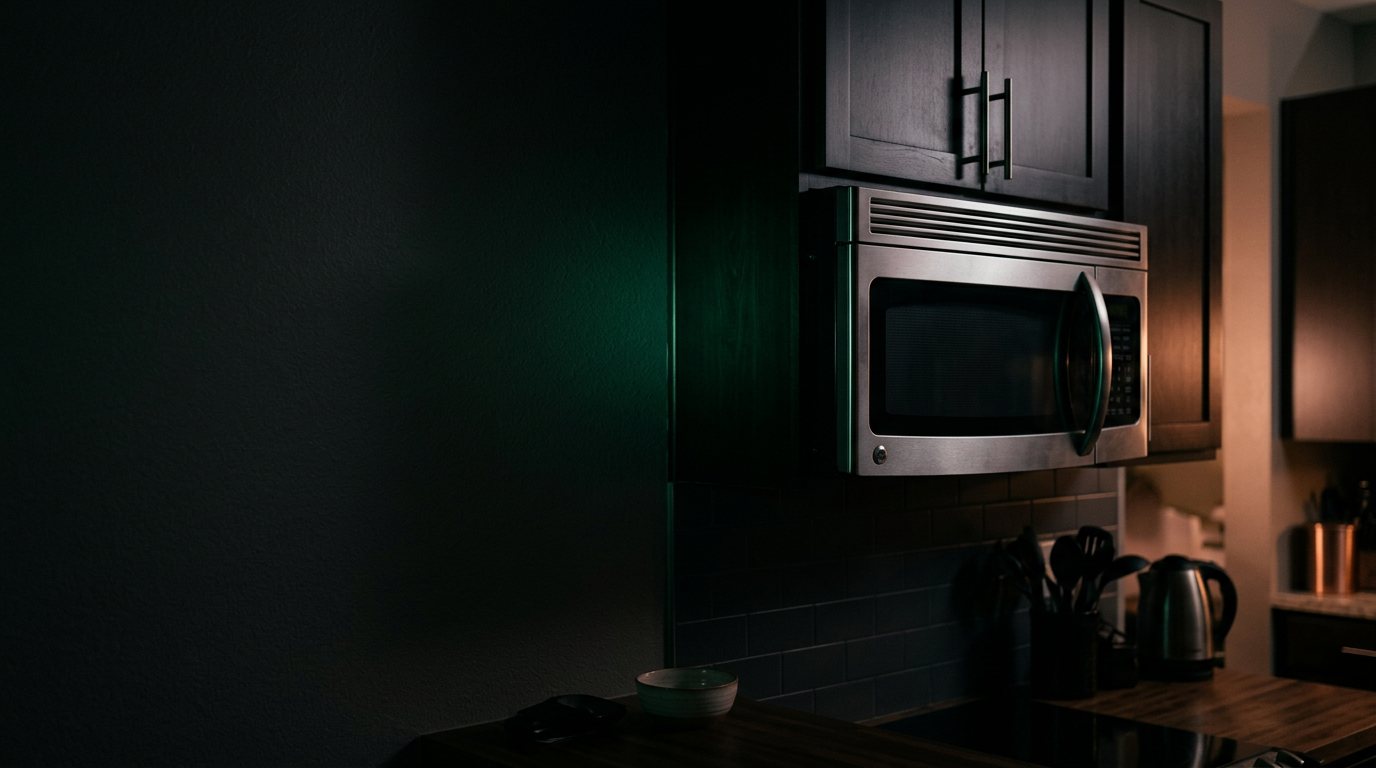
GE Microwave: Not Working at All
Usually a blown line fuse, a failed door-interlock switch, or a faulty magnetron. Add a photo of your GE Microwave in the box below: the Triage Profile says what it is, how urgent it is, and who to call.
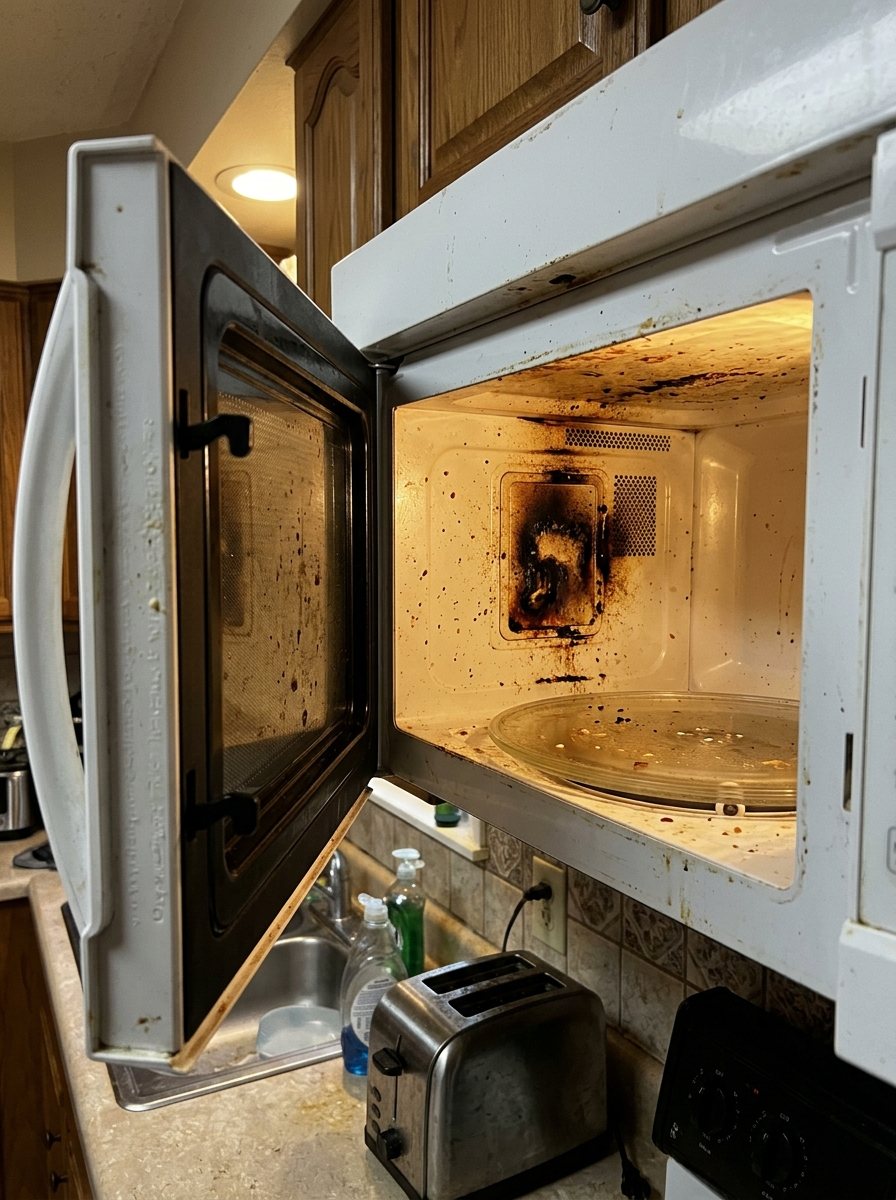
Show us the microwave.
Snap a photo — see what it is, how urgent, who to call. One photo of the problem. fixRAgent reads it and gives you a Triage Profile.
Or start with a sentence
AR Logic LLC · Privacy · Managing this for someone else? There is a version of this for whole portfolios. Managers: set it up for your buildings →
In the next five minutes
Safe first steps, before the call. Nothing here needs a tool.
Stop the microwave and switch off its breaker, or unplug it if the plug is dry and easy to reach.
Take a photo of the microwave and any code on the display, without opening anything.
Don’t use it again until it’s checked, and keep people away from it.
Everything else about this problem
Is it an emergency?
Is a GE microwave that isn't working an emergency?
Usually not, but it can be. Because this can be an emergency, leave it off and get it checked; don't reset it or turn it back on. Stop and call a pro if it smells like burning or trips the breaker again.
Symptoms & causes
Your GE microwave showing no signs of life, no display, no lights, and no heating, often points to a complete power interruption. This could be due to a tripped circuit breaker, a faulty power cord, or an internal safety device like a thermal fuse. Less commonly, a primary door interlock switch or the main control board could be preventing any operation.
Tools & parts
You will need a Phillips head screwdriver for accessing internal components and a multimeter to test for continuity and voltage. Replacement parts like a GE thermal fuse or a GE door interlock switch may be needed. A new power cord may be needed.
Safety first
Always unplug your GE microwave from the wall outlet before performing any inspection or repair to prevent electrical shock. Be extremely cautious of the high-voltage capacitor inside, which can store a lethal charge even after the unit is unplugged; it must be safely discharged before touching any internal components. Never operate the microwave with the outer casing removed or with faulty door interlock switches, as this exposes you to dangerous microwave radiation.
When to call a pro
If initial checks of the power supply, thermal fuse, and door switches yield no solution, a professional technician is required for further testing. Issues with the high-voltage transformer, magnetron, or the main control board are complex and dangerous to repair without specialized training and tools. These components deal with extremely high voltages and radiation, making DIY repair highly risky and potentially ineffective.
Questions people ask
Why does my GE microwave trip the circuit breaker immediately?
A tripped breaker often indicates a short circuit within the microwave or an overloaded circuit. Check if other high-power appliances are on the same circuit, and inspect the microwave's power cord for visible damage.
How do I test the thermal fuse on my GE microwave?
To test the thermal fuse, first unplug the microwave and locate the fuse, usually near the magnetron or on the cabinet. Use a multimeter set to continuity mode; a good fuse will show continuity, while an open circuit indicates a blown fuse.
Can I replace a faulty door interlock switch myself?
Yes, replacing a door interlock switch is a common DIY repair, but ensure the microwave is unplugged and the capacitor discharged. Carefully remove the outer casing, locate the faulty switch, and replace it, ensuring proper reassembly.
Related problems
More GE microwave problems
Check another symptom for your GE Microwave.
Not working: other brands
Guides and hubs
A resident sent you this?
fixRAgent reads resident photos for whole portfolios: what it is, how urgent, who to send, what to tell them.
Set it up for your buildings →Ask AI about this problem
What it is, how urgent, who to call
Add a photo of your GE Microwave in the box at the top. The Triage Profile says what it is, how urgent it is, and who to call.