

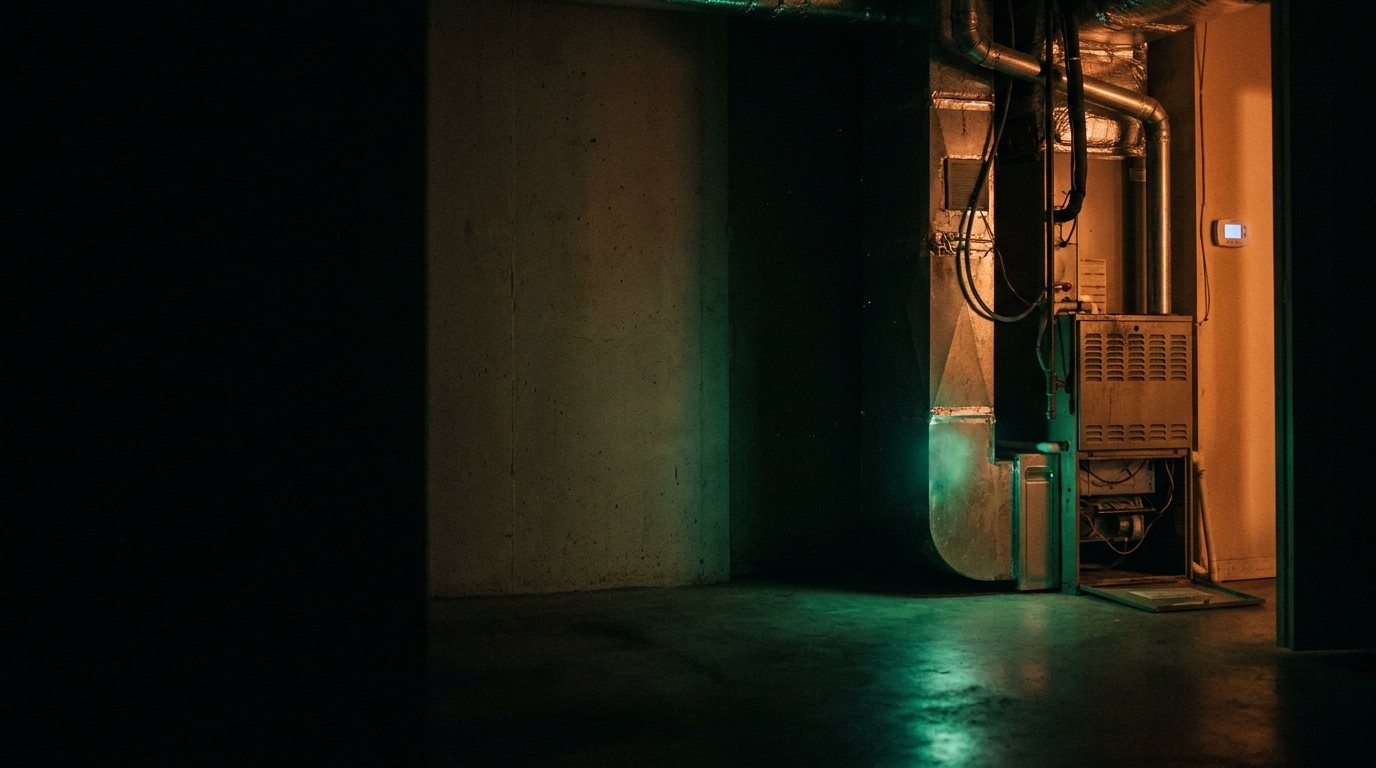
Bosch Furnace: Leaking Water
On high-efficiency furnaces, usually a clogged condensate drain or trap; otherwise a humidifier line. Add a photo of your Bosch Furnace in the box below: the Triage Profile says what it is, how urgent it is, and who to call.
Show us the furnace.
Snap a photo — see what it is, how urgent, who to call. One photo of the problem. fixRAgent reads it and gives you a Triage Profile.
Or start with a sentence
AR Logic LLC · Privacy · Managing this for someone else? There is a version of this for whole portfolios. Managers: set it up for your buildings →
In the next five minutes
Safe first steps, before the call. Nothing here needs a tool.
If you smell gas, a carbon monoxide alarm sounds, or anyone feels dizzy or sick: don’t touch any switch or plug, leave and get everyone out, then call 911 or the gas company from outside.
If water is near an outlet or cord, don’t touch them. Switch the furnace off at the thermostat, then at its breaker. Don’t stand in water to reach the breaker panel; if the panel is wet or you’d have to stand in water, leave it and call.
Take a photo of the furnace, the water and any flashing light, without opening anything.
Everything else about this problem
Is it an emergency?
Is a Bosch furnace leaking water an emergency?
Usually urgent, and it can be an emergency. Turn off the water to it and switch off its breaker, then soak up standing water. If water is reaching outlets or cords, switch off the breaker before touching anything; water coming through a ceiling is an emergency.
Symptoms & causes
Your Bosch furnace may exhibit water pooling around its base, dripping from the exhaust vent, or a full condensate pan. The primary cause is often a clogged condensate drain line, preventing the water produced during normal operation from exiting the system. Less common but more serious issues include a cracked heat exchanger or a leaking humidifier connected to the furnace.
Tools & parts
You will need basic tools like a screwdriver, pliers, and a wet/dry vacuum for initial inspection and clearing. For condensate line issues, specific parts might include PVC fittings, a condensate pump (if applicable, ~), or a specialized drain cleaner (enzyme-based, ~). If a humidifier is the culprit, a replacement humidifier pad or water panel (Bosch compatible, ~) may be necessary.
Safety first
Always begin by shutting off both the electrical power to the furnace at the breaker and the gas supply at the main valve to prevent accidental startup or gas leaks. Be aware of potential electrical shock hazards from water near wiring and the risk of carbon monoxide if a heat exchanger is compromised. Ensure adequate ventilation and have a working carbon monoxide detector nearby before attempting any repairs.
When to call a pro
A professional technician is required if you suspect a cracked heat exchanger, as this poses a serious carbon monoxide risk and demands specialized testing tools and replacement. Similarly, if the leak originates from the air conditioning evaporator coil (often located above the furnace), it could indicate a refrigerant leak requiring EPA-certified technicians. Persistent electrical issues or control board failures that cause the leak or prevent proper operation also warrant expert intervention.
Questions people ask
Why is my Bosch furnace leaking water only when the AC runs?
If water leaks only during AC operation, the condensate drain for the evaporator coil (part of your AC system, often located above the furnace) is likely clogged or overflowing. The AC removes humidity from the air, producing a significant amount of condensation that needs to drain properly.
Can a clogged condensate line cause serious damage to my Bosch furnace?
Yes, a severely clogged condensate line can cause water to back up and potentially damage electrical components, the furnace's internal parts, or even your home's structure. Many Bosch furnaces are equipped with a safety switch that will automatically shut down the unit if the condensate pan overflows, preventing major damage.
Is it normal for a Bosch high-efficiency furnace to produce water?
Yes, high-efficiency furnaces, including many Bosch models, are designed to produce condensate as a normal part of their operation. They extract more heat from the exhaust gases, causing water vapor to condense, which then needs to be safely drained away through the condensate system.
Related problems
More Bosch furnace problems
Check another symptom for your Bosch Furnace.
Leaking water: other brands
Guides and hubs
A resident sent you this?
What a property manager should do when a resident reports no heat: the first message, how urgent, who to send.
The manager’s checklist →Ask AI about this problem
What it is, how urgent, who to call
Add a photo of your Bosch Furnace in the box at the top. The Triage Profile says what it is, how urgent it is, and who to call.