

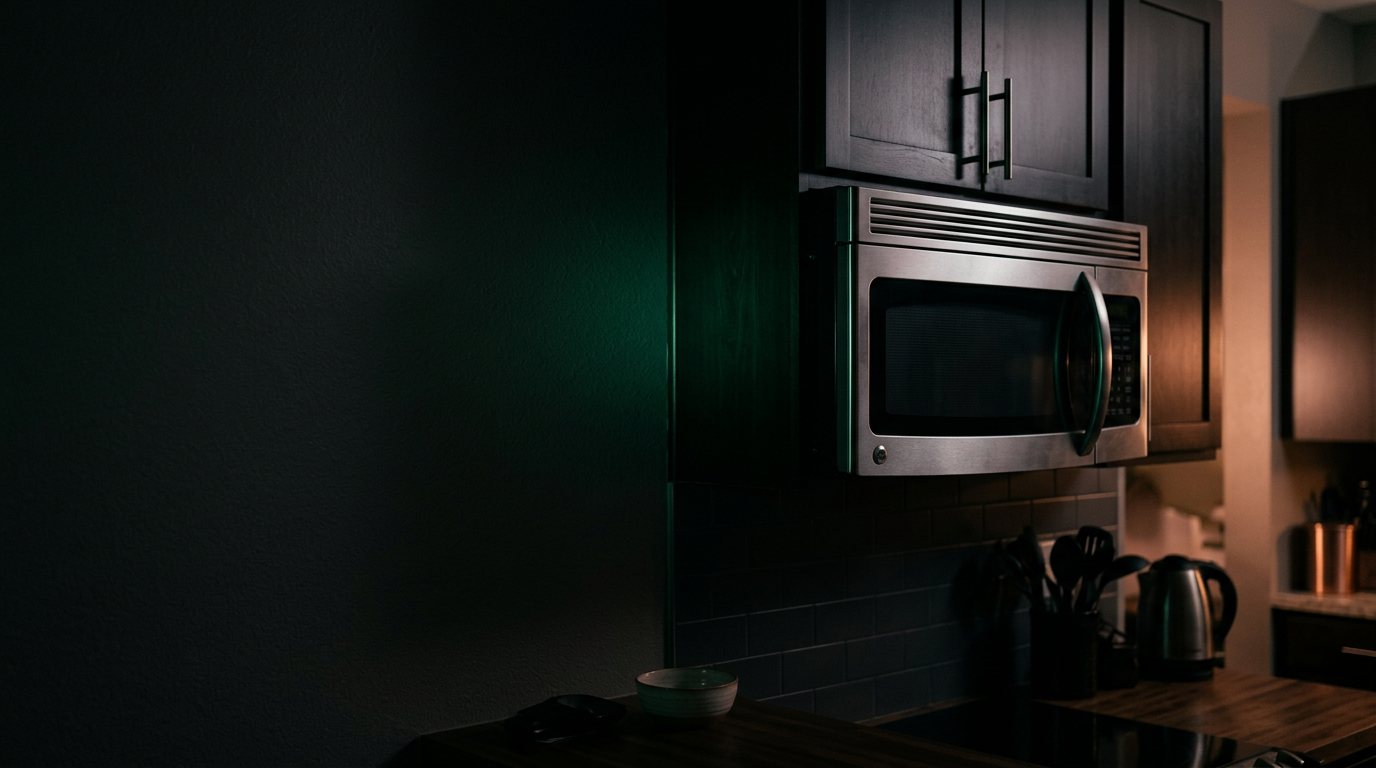
Whirlpool Microwave: Leaking Water
Usually condensation pooling, a steam-feature fault, or a blocked vent — true leaks are rare. Add a photo of your Whirlpool Microwave in the box below: the Triage Profile says what it is, how urgent it is, and who to call.
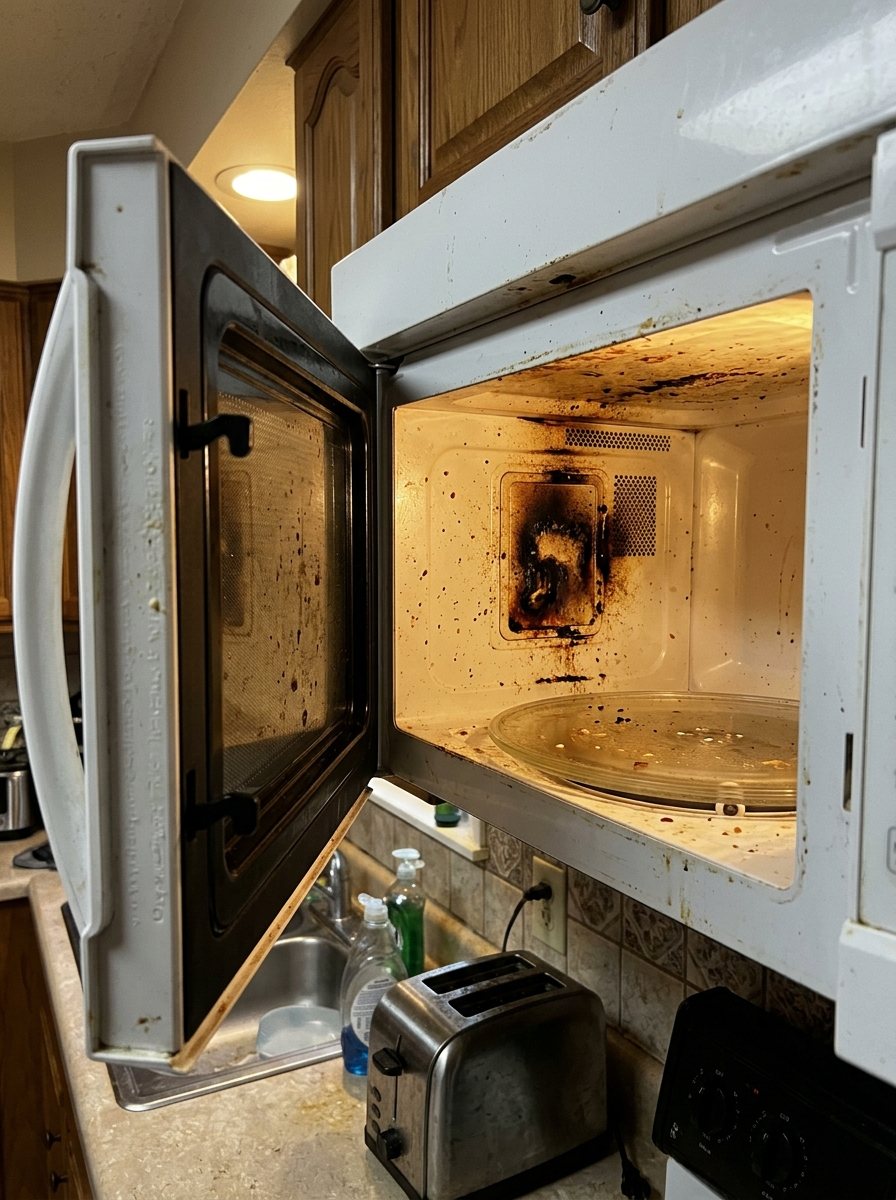
Show us the microwave.
Snap a photo — see what it is, how urgent, who to call. One photo of the problem. fixRAgent reads it and gives you a Triage Profile.
Or start with a sentence
AR Logic LLC · Privacy · Managing this for someone else? There is a version of this for whole portfolios. Managers: set it up for your buildings →
In the next five minutes
Safe first steps, before the call. Nothing here needs a tool.
If water is near the plug or outlet, don’t touch them. Switch off the microwave’s breaker first. Don’t stand in water to reach the breaker panel; if the panel is wet or you’d have to stand in water, leave it and call.
Don’t use the microwave until it’s dry and checked: parts inside hold a dangerous charge even when it’s off.
Take a photo of the microwave and where the water is coming from, without opening anything.
Everything else about this problem
Is it an emergency?
Is a Whirlpool microwave leaking water an emergency?
Usually urgent, and it can be an emergency. Turn off the water to it and unplug it or switch off its breaker, then soak up standing water. If water is reaching outlets or cords, switch off the breaker before touching anything; water coming through a ceiling is an emergency.
Symptoms & causes
Water pooling under your Whirlpool microwave or dripping from the door or vents, especially during or after cooking, often indicates a condensation issue or a compromised seal. This leakage is typically caused by excessive steam buildup not properly venting, a faulty door seal gasket, or sometimes a cracked water reservoir in models with steam functions. For Whirlpool units, poor ventilation or a worn door seal are the most common culprits leading to external water drips.
Tools & parts
You will primarily need a basic screwdriver set (Phillips and flathead) to access panels or remove mounting screws. A replacement Whirlpool door seal gasket is often required. A multimeter, while not always essential for a simple leak, can be useful for advanced tests.
Safety first
Always unplug your Whirlpool microwave from the wall outlet before attempting any inspection or repair to prevent severe electric shock. Be extremely cautious of the high-voltage capacitor inside the microwave, which can store a lethal electrical charge even after the unit is unplugged; never touch it without proper discharge knowledge. Wear insulated gloves and safety glasses to protect against electrical hazards and potential sharp edges during the repair process.
When to call a pro
If the leak persists after thoroughly checking and replacing the door seal and cleaning all vents, or if water appears to be originating from internal components, it may indicate a more serious issue like a cracked waveguide cover or a damaged magnetron housing. Internal component failures, such as a compromised water tank in a steam-enabled Whirlpool model or a faulty high-voltage transformer, require specialized testing tools and expertise. Any signs of arcing, burning smells, or unusual operational noises accompanying the water leak strongly suggest a critical internal electrical fault that must only be addressed by a certified appliance technician.
Questions people ask
Why is my Whirlpool microwave leaking water even when not in use?
This is quite unusual and could suggest a plumbing issue if your over-the-range model is connected to a water line for a steam function or ice maker. Otherwise, it might be residual condensation from a previous use slowly dripping out, indicating a very slow drainage or evaporation process.
Can a clogged vent cause water to leak from my Whirlpool microwave?
Yes, a clogged exhaust vent can significantly trap steam and condensation inside the microwave cavity during operation. This trapped moisture then condenses and can drip out through the door or bottom vents, mimicking a direct leak from an internal component. Ensuring clear ventilation is crucial for preventing this.
How do I know if my Whirlpool microwave door seal is the problem?
Inspect the door gasket for any visible tears, gaps, hardening, or signs of deterioration; if it doesn't form a tight seal when the door is closed, steam can easily escape and condense externally. You can also perform a 'dollar bill test' by closing the door on a dollar bill – if it pulls out easily from multiple points, the seal is likely weak and needs replacement.
Related problems
More Whirlpool microwave problems
Check another symptom for your Whirlpool Microwave.
Leaking water: other brands
A resident sent you this?
Water under an appliance: how a property manager sorts it into emergency, urgent or routine, and what moves it up.
The manager’s guide →Ask AI about this problem
What it is, how urgent, who to call
Add a photo of your Whirlpool Microwave in the box at the top. The Triage Profile says what it is, how urgent it is, and who to call.